¿Cuándo usar AAC o ACSR? Guía Práctica de Selección y Proyecto para Ingenieros de Líneas Eléctricas
¿Cuándo usar AAC o ACSR? Guía Práctica de Selección y Proyecto para Ingenieros de Líneas Eléctricas
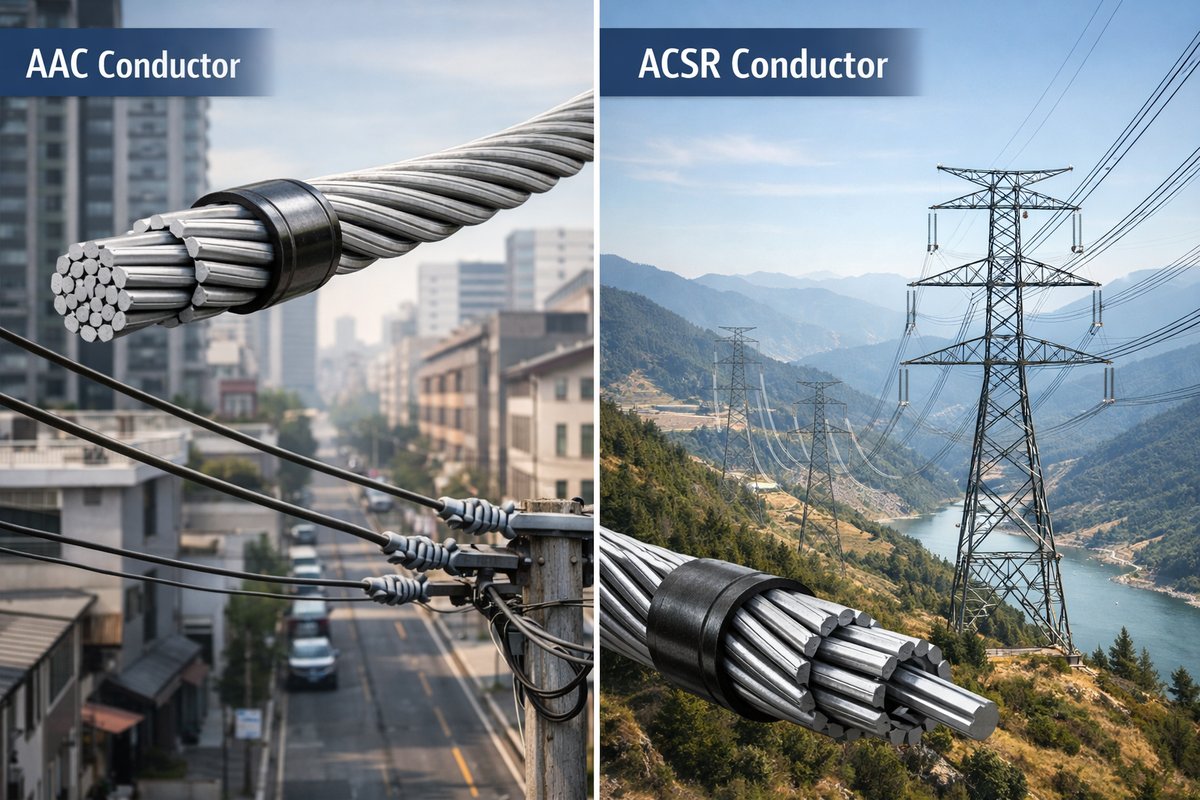
La selección entre un Conductor AAC (Conductor de Aluminio Puro / All Aluminum Conductor) y un Conductor ACSR (Conductor de Aluminio Reforzado con Acero / Aluminum Conductor Steel Reinforced) representa una de las decisiones más críticas en el diseño de líneas aéreas de transmisión y distribución eléctrica. Aunque ambos tipos utilizan aluminio de grado eléctrico de alta pureza para conducir la corriente, sus arquitecturas mecánicas y su comportamiento ante esfuerzos ambientales son radicalmente distintos.
Una especificación inadecuada puede provocar fallas prematuras de la línea, flechas (sag) excesivas a mitad del vano, corrosión galvánica acelerada en zonas costeras o un encarecimiento innecesario de las estructuras y obras civiles.
Esta guía técnica proporciona un marco de decisión práctico y probado en campo para ingenieros de empresas de servicios públicos (utilities), contratistas EPC y proyectistas. Analizamos las condiciones límite exactas: longitud del vano, tensión mecánica, corrosión salina, capacidad térmica (ampacidad), herrajes de instalación y costo total de propiedad (TCO).
1. Comparación Estructural y de Materiales
Para entender la aplicación óptima de cada conductor, primero debemos comparar su composición metalúrgica y su comportamiento mecánico:
Conductor AAC (Aluminio Puro 100%)          Conductor ACSR (Aluminio con Núcleo de Acero)
┌─────────────────────────────────┐        ┌─────────────────────────────────┐
│  ○ ○ ○ ○ ○ ○ ○ (Capa Exterior)  │        │  ○ ○ ○ ○ ○ ○ ○ (Alambres Al 1350)│
│   ○ ○ ○ ○ ○ ○  (Capa Intermedia)│        │   ○ ○ ○ ○ ○ ○  (Alambres Al Int.)│
│     ○ ○ ○ ○    (Al 1350-H19)    │        │     ● ● ● ●    (Núcleo Acero Galv│
│       ○ ○                       │        │       ● ●      de Alta           │
│        ○       (Alambre Central)│        │        ●        Resistencia)     │
└─────────────────────────────────┘        └─────────────────────────────────┘
 100% Aluminio Grado Eléctrico              Compuesto: Capas Al + Núcleo de Acero
 Máxima Conductividad / Resistencia Baja    Alta Resistencia Mecánica / Flecha Baja
Conductor AAC (All Aluminum Conductor) — Construcción y Normas
- Composición: 100% alambres de aluminio 1350-H19 cableados concéntricamente (pureza mínima de 99.5%), con una conductividad eléctrica mínima de 61.2% IACS (International Annealed Copper Standard).
- Núcleo: Estructura homogénea sin refuerzo de acero.
- Normas de fabricación: ASTM B231, IEC 61089, BS 215 Parte 1, DIN 48201-5 y EN 50182.
- Comportamiento mecánico: Resistencia a la tracción (UTS) relativamente baja, entre 160 MPa y 200 MPa por alambre.
Conductor ACSR (Aluminum Conductor Steel Reinforced) — Construcción y Normas
- Composición: Conductor cableado concéntrico con una o más capas exteriores de aluminio 1350-H19 que rodean un núcleo central de alambres de acero galvanizado de alta resistencia.
- Variantes del núcleo: Acero galvanizado Clase A, B o C según ASTM B498 / IEC 60888, o Acero Recubierto de Aluminio (ACSR/AW según ASTM B502) para alta resistencia a la corrosión.
- Formaciones comunes (Al/Acero): 6/1, 7/1, 18/1, 26/7, 30/7 y 54/7.
- Normas de fabricación: ASTM B232, IEC 61089, BS 215 Parte 2, DIN 48204 y CSA C49.
- Comportamiento mecánico: Resistencia mecánica extremadamente alta; el núcleo de acero soporta entre el 50% y el 60% de la tensión mecánica total de la línea, representando solo el 15% al 30% del peso total.
2. Matriz Técnica Comparativa de Parámetros de Ingeniería
La siguiente tabla compara calibres estándar de la industria (AAC 636 kcmil Orchid vs. ACSR 477 kcmil Hawk) bajo condiciones operativas equivalentes (temperatura ambiente 25°C, velocidad de viento 0.6 m/s, radiación solar 1000 W/m², temperatura máxima de operación 75°C):
| Parámetro Técnico | Conductor AAC (Ej. Orchid / 636 kcmil) | Conductor ACSR (Ej. Hawk / 477 kcmil) | Impacto e Importancia en el Diseño |
|---|---|---|---|
| Composición y Alambres | 37 alambres (100% Al 1350) | 26 Al / 7 Acero (Estructura Mixta) | Rigidez mecánica y distribución de peso propio |
| Área de Sección Nominal | 322.3 mm² | 241.7 mm² Al / 38.6 mm² Ac (Total 280.3 mm²) | Capacidad de transporte de corriente vs soporte |
| Diámetro Exterior Total | 23.2 mm | 21.8 mm | Carga transversal de viento y área de manguito de hielo |
| Peso Lineal Total | 886 kg/km | 976 kg/km | Carga vertical sobre crucetas y torres de suspensión |
| Tensión de Rotura (UTS) | ~51.9 kN | ~86.7 kN (+67% superior) | Límite de longitud de vano admisible y control de flecha |
| Resistencia CC a 20°C | 0.0894 Ω/km | 0.1196 Ω/km | Pérdidas por efecto Joule ($I^2R$) en la línea |
| Ampacidad Continua (75°C) | ~780 A | ~659 A | Límite de transferencia de potencia en régimen continuo |
| Módulo de Elasticidad Final | ~55 GPa | ~77 GPa a 82 GPa | Deformación elástica bajo sobrecargas de viento e hielo |
| Coeficiente de Dilatación Térmica | 23.0 × 10⁻⁶ / °C | 19.3 × 10⁻⁶ / °C | Incremento de flecha vertical por calentamiento en pico de carga |
3. Los 5 Criterios Clave de Decisión en Proyectos
Al evaluar el trazado de su línea aérea, analice su proyecto frente a estos cinco criterios de ingeniería:
                          DIAGRAMA DE DECISIÓN DEL PROYECTO
                                         │
                             ¿Longitud del Vano / Vanos?
                                  /                                   < 100-120 metros     > 120-150 metros
                             /                                         ¿Ambiente Marino?             ACSR Requerido
                        /          \          (Alta UTS, Flecha Controlada)
                      SÍ           NO
                     /                                AAC Preferido       Evaluar Cargas
            (Cero Riesgo Galvánico)  Mecánicas de Viento/Hielo
Criterio 1: Longitud de Vano y Vano Regulador
- Vanos Cortos (< 100–120 metros): El Conductor AAC es la solución estándar para redes de distribución urbana en baja (BT) y media tensión (MT, 11 kV a 33 kV). Como los postes están muy juntos para permitir las acometidas de servicio, la menor resistencia a la tracción del AAC no es un factor limitante.
- Vanos Medios y Largos (> 150 metros): El Conductor ACSR es indispensable en líneas de transmisión de alta y extra alta tensión (66 kV a 500 kV+). El núcleo de acero permite tensar el conductor a mayores cargas, manteniendo las distancias mínimas de seguridad al suelo sobre terrenos ondulados, autopistas y valles.
Criterio 2: Corrosión Ambiental y Clasificación Atmosférica
- Zonas Costeras y Niebla Salina (Ambientes C4 / C5): A menos de 5 a 10 km de la costa, la deposición salina genera un par galvánico entre el núcleo de acero galvanizado y las capas exteriores de aluminio del ACSR. Si la humedad penetra, la corrosión electroquímica desgasta el zinc y corroe el acero. El AAC, al ser 100% aluminio homogéneo, elimina por completo el riesgo de corrosión bimetálica.
- Zonas Interiores, Rurales y Desérticas: El ACSR ofrece un desempeño sobresaliente con vidas útiles superiores a 40–50 años. En caso de requerir ACSR en zonas moderadamente corrosivas, se debe especificar núcleo engrasado según IEC 61089 o acero recubierto de aluminio (ACSR/AW).
Criterio 3: Sobrecargas Mecánicas (Zonas de Viento Severo y Manguito de Hielo)
- Hielo Pesado y Nieve: En zonas propensas a congelamiento y vientos de tormenta, el peso del hielo hace que el AAC supere su límite elástico y sufra fluencia (creep) irreversible. El núcleo de acero del ACSR soporta estas sobrecargas compuestas sin deformación plástica permanente.
- Vibración Eólica: Debido a que el ACSR opera a mayor tensión, es más propenso a vibraciones eólicas de alta frecuencia. Es fundamental instalar amortiguadores Stockbridge y varillas de protección preformadas (Armor Rods).
Criterio 4: Eficiencia Eléctrica y Ampacidad
- Para un diámetro exterior dado, el AAC ofrece mayor sección transversal neta de aluminio y menor resistencia eléctrica que el ACSR, lo que se traduce en menores pérdidas Joule ($I^2R$) y mayor capacidad de corriente.
- En subestaciones eléctricas e instalaciones industriales, donde los vanos son cortos y se requiere máxima capacidad con mínimo peso sobre aisladores de soporte, el AAC es la especificación preferida.
Criterio 5: Obras Civiles y Costo Total Instalado (TCO)
Aunque el costo del material conductor por kilo es similar, el costo integral del proyecto depende de la obra civil: 1. Líneas de Transmisión: Usar AAC obligaría a instalar entre un 30% y un 50% más de torres por kilómetro para evitar violaciones de distancia al suelo por flecha excesiva. El costo adicional en acero estructural, fundaciones de hormigón y servidumbres de paso hace inviable el AAC en transmisión. El ACSR reduce drásticamente el CAPEX global al maximizar la distancia entre torres. 2. Distribución Urbana: Cuando los postes ya están fijados por el trazado de calles y cruces peatonales, no se aprovecha la resistencia mecánica del ACSR; en este caso, el AAC ofrece el menor costo de suministro y la mayor facilidad de maniobra e instalación.
4. Tabla Resumen de Aplicaciones Prácticas
| Escenario del Proyecto | Conductor Recomendado | Justificación Principal de Ingeniería |
|---|---|---|
| Distribución Urbana y Suburbana BT/MT (0.4 kV – 33 kV) | Conductor AAC | Vanos cortos (<80m), alta conductividad y facilidad para derivaciones en calles estrechas. |
| Líneas de Distribución Costeras (<5 km del mar) | Conductor AAC (o AAAC) | Elimina la corrosión galvánica; excelente resistencia química frente a niebla salina. |
| Barras Colectoras y Puentes en Subestaciones | Conductor AAC | Máxima ampacidad con peso ligero para no sobrecargar aisladores soporte y seccionadores. |
| Líneas de Transmisión Interurbanas (66 kV – 765 kV) | Conductor ACSR | Alta resistencia a la tracción que permite vanos de 300m a 500m con flechas controladas. |
| Grandes Cruces de Ríos, Valles y Cañones | Conductor ACSR (Alta Relación de Acero 54/7 o 30/7) | Máxima carga de rotura para evitar el corte del conductor en vanos de 800m a 1500m. |
| Zonas Montañosas de Fuertes Vientos e Hielo | Conductor ACSR (con amortiguadores) | Integridad estructural probada frente a sobrecargas mecánicas combinadas. |
5. Consideraciones de Instalación y Herrajes en Campo
La elección del conductor influye directamente en las herramientas y técnicas de tendido:
- Manguitos de Empalme a Plena Tensión:
- AAC: Requiere un manguito de compresión de aluminio de una sola pieza, fácil y rápido de prensar con matrices convencionales.
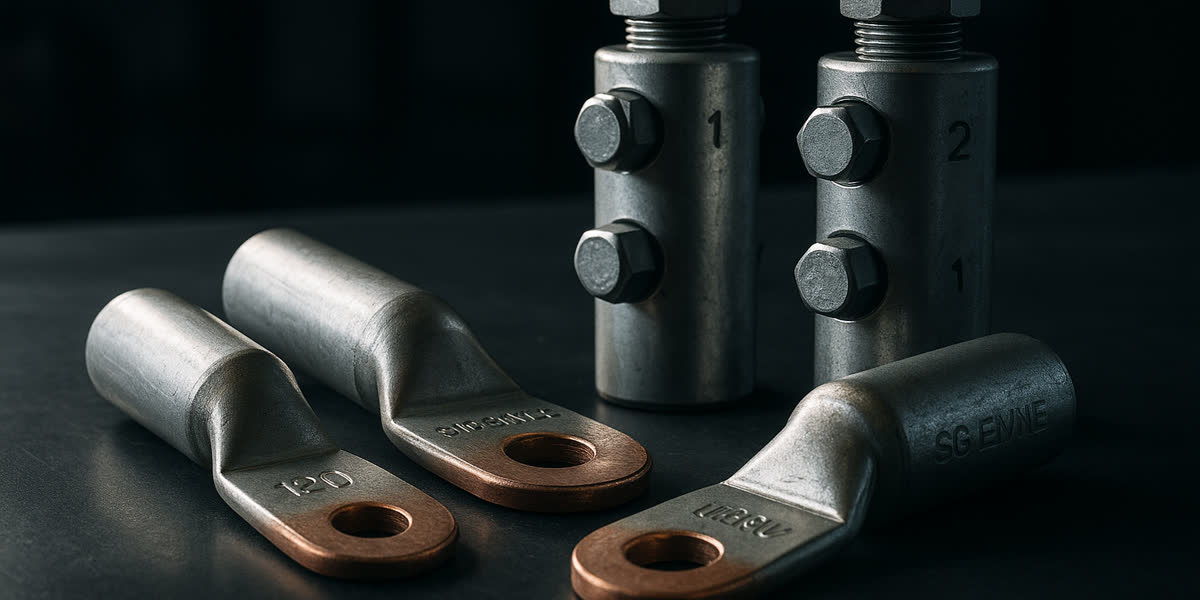
- ACSR: Requiere empalme de dos piezas: un manguito interno de acero prensado a alta presión sobre el núcleo de acero, y un manguito exterior de aluminio inyectado con grasa conductora para cerrar el circuito eléctrico.
- Grapas de Retención y Suspensión:
- AAC: Debe montarse con grapas con revestimiento de aluminio y varillas de armadura (Armor Rods) para evitar que los pernos dañen los alambres de aluminio puro.
- ACSR: Emplea grapas de compresión o tipo cuña de alta resistencia para garantizar un anclaje firme sin deslizamiento bajo tensiones elevadas.
- Alternativas Tecnológicas:
- Si el proyecto requiere la resistencia a la corrosión del AAC con la capacidad de vano del ACSR, se suele especificar Conductor AAAC (Aleación de Aluminio) o Cable Aislado Preensamblado (ABC) en zonas de arbolado denso.
6. Preguntas Frecuentes (FAQ)
P1: ¿Se puede utilizar el conductor AAC en líneas de transmisión de 115 kV o 230 kV?
En líneas de transmisión aéreas convencionales de gran vano, no se recomienda. El aluminio puro 1350-H19 carece de la resistencia mecánica necesaria para soportar vanos superiores a 300 metros sin sufrir flechas inaceptables. Sin embargo, en el interior de subestaciones de 115 kV y 230 kV, el AAC se utiliza ampliamente como barra colectora flexible y puentes de conexión en vanos menores a 30 metros.
P2: ¿Por qué el conductor ACSR sufre corrosión interna en zonas costeras?
El ACSR combina dos metales disímiles en contacto directo: acero galvanizado y aluminio. En atmósferas marinas con alta humedad salina, el agua con cloruros penetra en los intersticios del cableado y actúa como electrolito. La diferencia de potencial de ~1.22 V entre el aluminio y el acero activa una celda galvánica que degrada el recubrimiento de zinc y corroe el núcleo de acero. Para líneas costeras con ACSR, es indispensable ordenar núcleo con grasa protectora según IEC 61089 o conductores ACSR/AW (con alambres de acero recubiertos de aluminio).
P3: ¿Cuáles son los nombres en código normalizados para AAC y ACSR?
Según las normas norteamericanas ASTM, los conductores desnudos se identifican con nombres en clave estándar: - Nombres en clave AAC (Flores): Peachbell (6 AWG), Rose (4 AWG), Iris (397.5 kcmil), Orchid (636 kcmil), Bluebell (1033.5 kcmil). - Nombres en clave ACSR (Aves): Raven (1/0 AWG 6/1), Penguin (4/0 AWG 6/1), Hawk (477 kcmil 26/7), Drake (795 kcmil 26/7), Cardinal (954 kcmil 54/7).
P4: ¿Cómo difiere la dilatación térmica entre AAC y ACSR con cargas eléctricas pico?
El AAC tiene un coeficiente de dilatación térmica lineal mayor ($23.0 \times 10^{-6} / ^\circ\text{C}$) frente al ACSR ($19.3 \times 10^{-6} / ^\circ\text{C}$). A temperaturas elevadas (75°C a 90°C), el AAC se elonga más y experimenta un aumento pronunciado de flecha. En el ACSR, al llegar a su temperatura de transición ("knee-point"), el núcleo de acero asume la carga mecánica restante y estabiliza el incremento de flecha.
P5: ¿Qué datos técnicos deben suministrarse al solicitar una cotización de fábrica?
Para recibir una oferta técnica y económica precisa, especifique: 1. Tipo de conductor (AAC o ACSR) y norma de referencia (ej. ASTM B231/B232, IEC 61089, BS 215). 2. Formación de cableado (ej. 26/7, 54/7 para ACSR; 7, 19, 37 hilos para AAC). 3. Calibre nominal o nombre en clave (mm² o kcmil). 4. Clase de galvanizado del núcleo de acero (Clase A, B, C) o especificación ACSR/AW. 5. Requerimientos especiales (relleno de grasa anticorrosiva, longitudes por bobina y tipo de carrete).
7. Soluciones de Conductores Aéreos con SiTong Cable
Zhengzhou SiTong Cable Co., Ltd. es un fabricante líder y exportador global de conductores desnudos y cables de potencia. Nuestras instalaciones cuentan con cableadoras concéntricas de alta velocidad y un laboratorio de ensayos acreditado bajo estándares internacionales:
- Línea Completa de Productos: Amplio catálogo de AAC, ACSR, AAAC, ACAR y Cables Preensamblados ABC.
- Control de Calidad Riguroso (Pruebas FAT): Ensayos de tracción, elongación, resistencia eléctrica en CC, adherencia y masa de capa de zinc según IEC y ASTM.
- Soporte de Ingeniería Personalizado: Suministro con grasa anticorrosiva, formaciones especiales para grandes cruces y embalajes reforzados para exportación marítima.
¿Está desarrollando un proyecto de transmisión o distribución aérea? Contacte al equipo comercial y de ingeniería de SiTong Cable para solicitar hojas técnicas, certificados de prueba y cotizaciones directas de fábrica.