¿Qué es el Cable Blindado?
Comprender el Cable Blindado: Resistencia, Seguridad y Aplicaciones
El cable blindado es un componente crítico en los sistemas eléctricos modernos, que ofrece una protección y durabilidad mejoradas para las redes de energía y comunicación. Este artículo proporciona una visión general clara del cable blindado, su construcción, tipos y aplicaciones, diseñada tanto para audiencias técnicas como para lectores en general.
1. ¿Qué es el Cable Blindado?
El cable blindado (AC) es un cable eléctrico protegido por una capa de revestimiento metálico, típicamente de acero o aluminio, que proporciona resistencia mecánica, resistencia a impactos y mayor seguridad. Esta protección permite instalar el cable en entornos propensos a daños físicos, humedad o exposición química.
Características Clave:
- Protección Mecánica: Protege contra aplastamiento, cortes y abrasión.
- Resistencia al Fuego: Algunas variantes están diseñadas para entornos de alta temperatura.
- Resistencia a la Humedad: El blindaje metálico evita la entrada de agua en instalaciones subterráneas o al aire libre.
2. Estructura del Cable Blindado
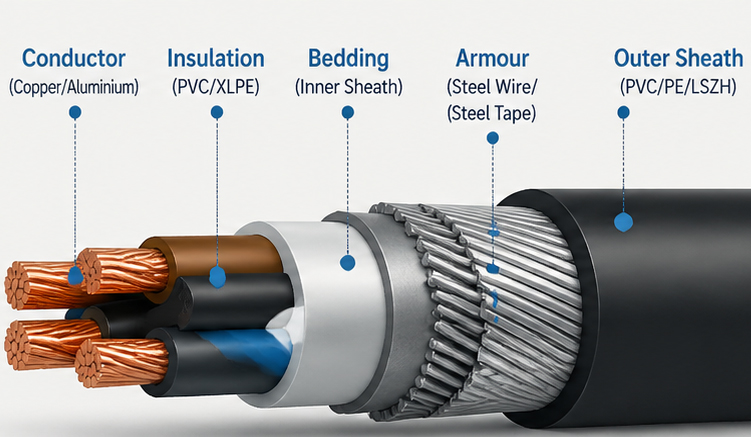
Los cables blindados constan de múltiples capas, cada una con una función específica. Comprender esta estructura ayuda a seleccionar el cable adecuado para aplicaciones específicas.
| Capa | Función |
|---|---|
| Conductor | Transporta corriente eléctrica, típicamente cobre o aluminio |
| Aislamiento | Proporciona aislamiento eléctrico y evita cortocircuitos |
| Capa de Relleno | Amortigua el aislamiento y lo separa de la armadura |
| Armadura | Alambre o cinta de acero para protección mecánica |
| Cubierta Externa | Protege contra factores ambientales como UV, productos químicos y humedad |
3. Tipos de Cables Blindados
Existen varios tipos de cables blindados, categorizados por su material de armadura, construcción y aplicación.
- Armado con Alambre de Acero (SWA): Común en distribución de energía al aire libre o subterránea
- Armado con Alambre de Aluminio (AWA): Alternativa liviana para aplicaciones de baja tensión
- Armado con Cinta de Cobre: A menudo utilizado para cables de comunicación o señal
- Doble Blindaje: Proporciona protección adicional para entornos industriales de alto riesgo
4. Aplicaciones del Cable Blindado
Los cables blindados son versátiles y se utilizan ampliamente en sectores que requieren durabilidad y fiabilidad:
- Instalaciones Industriales: Maquinaria, plantas de fabricación y sistemas de control
- Instalaciones Subterráneas y al Aire Libre: Carreteras, ferrocarriles y túneles
- Industria del Petróleo y Gas: Resistente a productos químicos, aceite y tensión mecánica
- Proyectos de Energías Renovables: Redes de energía solar y eólica
5. Ventajas de Usar Cable Blindado
- Mayor seguridad y reducción del riesgo de fallas eléctricas
- Vida útil extendida en entornos hostiles
- Cumplimiento de estándares eléctricos internacionales
- Fácil identificación y mantenimiento debido a su diseño robusto
Conclusión
El cable blindado es indispensable para la infraestructura eléctrica moderna, ya que combina seguridad, fiabilidad y versatilidad. Seleccionar el tipo correcto y comprender su construcción asegura un rendimiento óptimo en aplicaciones industriales, comerciales y residenciales.