¿Qué es el Cable ABC?
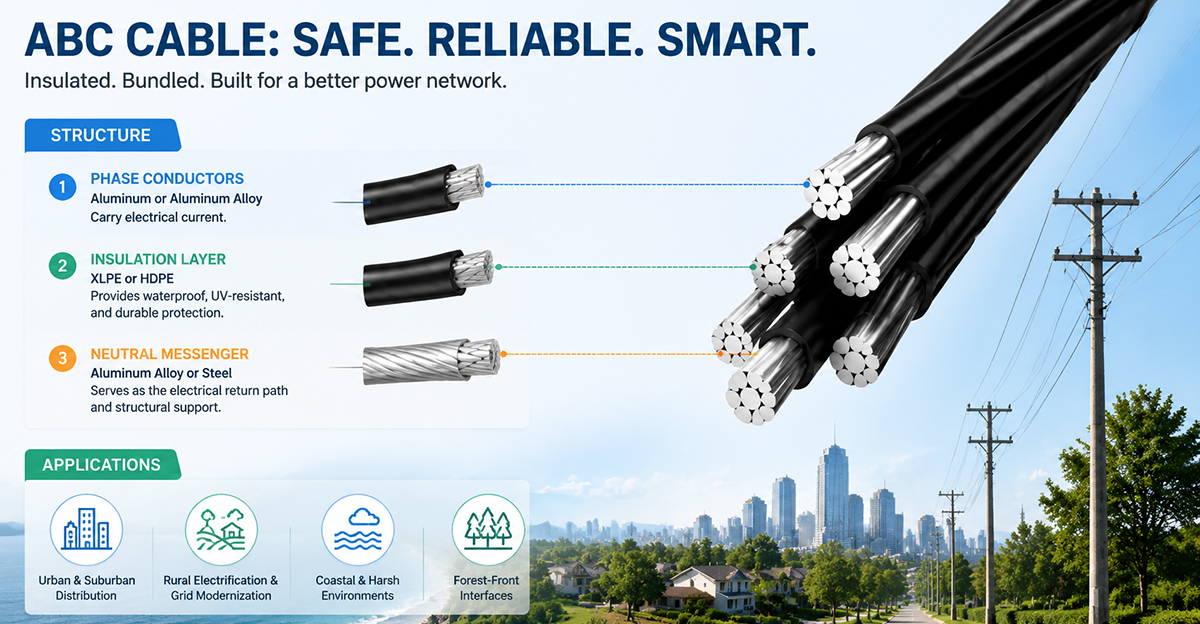
Cable ABC: La Chaqueta Inteligente para las Líneas Eléctricas Modernas
Introducción: De Cables Espagueti a Haces Elegantes
Las líneas eléctricas aéreas son una parte omnipresente de nuestro paisaje, pero su forma tradicional—cables desnudos tendidos entre postes—presenta desafíos significativos de seguridad y confiabilidad. Entra en escena el Cable ABC (Cable Aéreo de Haz Aislado), la solución ingenieril que está revolucionando la distribución de energía de baja tensión. Este sistema aislado y hazado actúa como una chaqueta protectora para la electricidad, transformando caóticas "telarañas" en redes seguras, eficientes y resilientes. Esta guía explora por qué el cable ABC se está convirtiendo en el estándar global para modernizar las redes eléctricas.
¿Qué es el Cable ABC?
El Cable ABC, o Cable Aéreo de Haz Aislado, es un sistema de cable aéreo aislado y preensamblado. Consiste en múltiples conductores de fase aislados trenzados alrededor de un cable mensajero neutro desnudo, formando un solo haz compacto. Este diseño es un alejamiento completo de las líneas tradicionales de conductores desnudos, ofreciendo protección y funcionalidad integradas.
Componentes Clave: Una Mirada Más Cercana
Un Cable Aéreo de Haz Aislado estándar es una maravilla de ingeniería simple y efectiva:
| Componente | Material y Función | Beneficio Clave |
|---|---|---|
| Conductores de Fase | Aluminio o Aleación de Aluminio. Transportan la corriente eléctrica. | Ligereza, excelente conductividad y rentabilidad. |
| Capa de Aislamiento | Polietileno Reticulado (XLPE) o HDPE. Cubre cada conductor de fase. | Proporciona una barrera protectora impermeable, resistente a los rayos UV y duradera. |
| Mensajero Neutro | Aleación de Aluminio de Alta Resistencia o Acero. Cable central, desnudo. | Sirve como camino de retorno eléctrico Y como soporte estructural, soportando la carga mecánica del cable. |
Ventajas Clave: ¿Por qué Elegir Cable ABC?
El cambio hacia los sistemas de Cable ABC está impulsado por beneficios convincentes para las empresas de servicios públicos, las comunidades y el medio ambiente.
🛡️ Mayor Seguridad Pública y de la Propiedad
- Elimina Fallos: El aislamiento evita cortocircuitos causados por contacto con árboles, animales o escombros arrastrados por el viento.
- Reduce el Riesgo de Incendio: Disminuye drásticamente la posibilidad de ignición, crucial en áreas propensas a incendios forestales y zonas urbanas densas.
- Mejora la Protección contra Descargas: Minimiza el peligro de electrocución por líneas caídas o contacto accidental.
💡 Confiabilidad Superior y Costos Reducidos
- Resistente a la Intemperie: Resiste mejor la lluvia, la niebla salina, la contaminación y la acumulación de hielo que las líneas desnudas.
- Minimiza las Interrupciones: Inmune a fallos comunes como el contacto fase-fase, lo que conduce a un suministro eléctrico más estable (mejoras en SAIDI/SAIFI).
- Costo de Ciclo de Vida Más Bajo: Aunque el costo inicial del cable ABC es mayor, el mantenimiento y las reparaciones de fallos drásticamente reducidos ofrecen un ROI a largo plazo superior.
🌳 Beneficios Ambientales y Estéticos
- Derecho de Vía Más Estrecho: El haz compacto requiere menos espacio, simplificando la instalación en corredores estrechos.
- Preserva los Árboles: Permite que las líneas se enruten a través de las ramas sin necesidad de podas agresivas.
- Línea del Cielo Más Limpia: Reemplaza el desorden visual con una sola línea organizada, mejorando la estética de la comunidad.
Aplicaciones Primarias: ¿Dónde se Utiliza el Cable ABC?
La instalación de Cable ABC es ideal para una amplia gama de escenarios de distribución aérea:
- Distribución Urbana y Suburbana: Modernización de infraestructura envejecida en ciudades y pueblos para mejorar la seguridad y confiabilidad.
- Electrificación Rural y Modernización de la Red: Despliegue de energía confiable a largas distancias y en terrenos desafiantes.
- Ambientes Costeros y Severos: Donde la salpicadura salina o la contaminación industrial corroen las líneas tradicionales.
- Interfaz Bosque-Zona Urbana: Fundamental para la prevención de incendios en áreas de interfaz urbano-forestal.
Tipos y Especificaciones Comunes de Cable ABC
No todos los cables ABC son iguales. La selección depende de los requisitos de la red local:
- Por Conductor: Aluminio (AAC) o Aleación de Aluminio (AAAC).
- Por Aislamiento: Cable Aislado con XLPE (para mayor temperatura nominal) o HDPE.
- Por Configuración: 3 Fases + Neutro, 1 Fase + Neutro, o con núcleos adicionales para alumbrado público.
- Por Voltaje: Comúnmente utilizado para sistemas de Baja Tensión (BT) hasta 1kV y Media Tensión (MT) hasta 35kV.
Cable ABC vs. Líneas Aéreas Desnudas Tradicionales: Una Comparación Rápida
| Característica | Cable ABC (Haz Aéreo) | Líneas Aéreas Desnudas Tradicionales |
|---|---|---|
| Seguridad | Alta. Conductores aislados evitan el contacto accidental. | Baja. Los cables vivos expuestos suponen un riesgo significativo. |
| Tasa de Fallos | Muy Baja. Inmune a cortocircuitos inducidos por clima/objetos. | Alta. Susceptible al viento, animales y árboles. |
| Derecho de Vía | Mínimo. El haz compacto requiere menos espacio libre. | Amplio. Se necesita un gran espaciado entre fases. |
| Instalación | Más Fácil y Rápida. Pre-hazado, utiliza herrajes más simples. | Más Compleja. Requiere separadores, aisladores y espaciado cuidadoso. |
| Estética | Limpia y organizada. Apariencia de una sola línea. | Desordenada. Múltiples cables y aisladores. |
| Costo Inicial | Mayor | Menor |
| Costo de Ciclo de Vida | Menor (debido a un mantenimiento mínimo) | Mayor (poda y reparación continua) |
Elegir el Cable ABC Correcto: Una Guía Simple
Seleccionar un Cable ABC implica evaluar algunos factores clave:
- Clima Local: Elija materiales estabilizados a los UV para regiones soleadas, y considere clasificaciones de carga de hielo para climas fríos.
- Carga Mecánica: Asegúrese de que la resistencia del cable mensajero neutro coincida con la longitud del vano y las condiciones locales de viento/hielo.
- Carga Eléctrica: Calcule la ampacidad requerida para seleccionar el tamaño de conductor correcto (por ejemplo, cable ABC 35mm o cable ABC 50mm).
- Cumplimiento de Normas: Especifique cables que cumplan con los estándares nacionales relevantes (por ejemplo, IEC, BS, o especificaciones de la empresa de servicios local).
El Futuro es Aislado e Integrado
La tecnología del Cable ABC continúa evolucionando. Las tendencias futuras incluyen la integración de fibras ópticas dentro del haz para comunicaciones de redes inteligentes y el desarrollo de materiales aislantes aún más duraderos y sostenibles. A medida que las redes de todo el mundo buscan una mayor resiliencia e inteligencia, el Cable Aéreo de Haz Aislado se erige como una solución fundamental y preparada para el futuro.
Conclusión: La Elección Clara para las Redes Modernas
El Cable ABC representa un enfoque más inteligente y seguro para la distribución aérea de energía. Al integrar protección y potencia en un sistema robusto, aborda las debilidades críticas de las líneas tradicionales. Para las empresas de servicios públicos que planean actualizaciones del sistema, nuevos desarrollos o proyectos de electrificación rural, invertir en un sistema de Cable ABC es una inversión en confiabilidad a largo plazo, seguridad pública y eficiencia operativa. Es la elección definitiva para construir las redes eléctricas resilientes del siglo XXI.