XHHW-2 Aluminum Wire vs THHN: Complete Comparison Guide
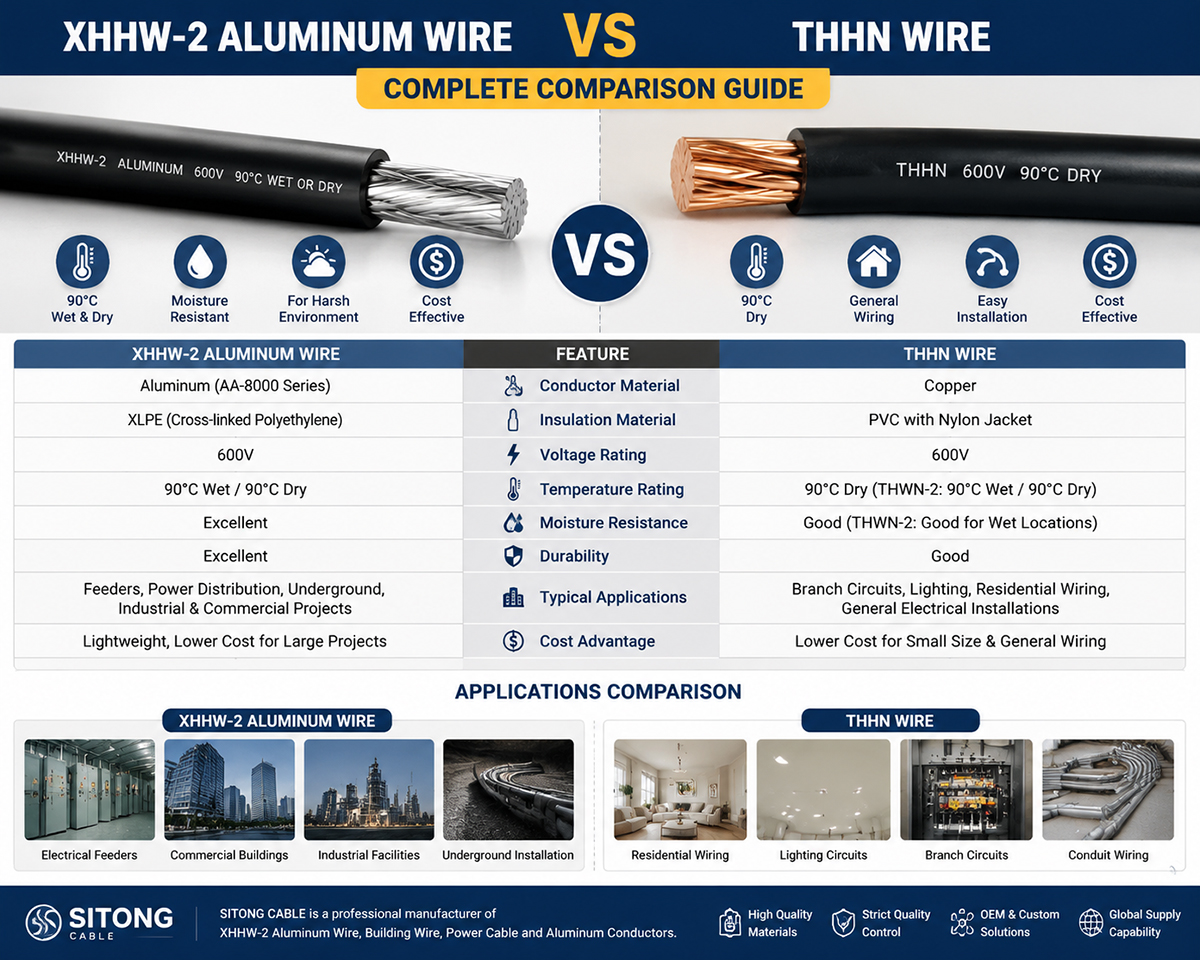
Understanding the Differences Between XHHW-2 and THHN Building Wires
When selecting electrical building wire for commercial, industrial, or power distribution projects, two common options are XHHW-2 Aluminum Wire and THHN Wire.
Both are widely used electrical conductors, but they are designed for different installation environments and project requirements.
The main differences between XHHW-2 and THHN wire include insulation material, moisture resistance, temperature rating, application range, and typical usage scenarios.
For large power distribution systems, many engineers and contractors prefer XHHW-2 Aluminum Building Wire because of its excellent wet-location performance and suitability for feeder applications.
What Is XHHW-2 Aluminum Wire?
XHHW-2 Aluminum Wire is a thermoset insulated building wire using an aluminum alloy conductor and XLPE (cross-linked polyethylene) insulation.
The XHHW-2 designation means:
- X – Cross-linked polyethylene insulation
- HH – High heat resistance
- W – Water resistant
- -2 – 90°C rating in both wet and dry locations
XHHW-2 wire is commonly used for:
- Electrical feeders
- Commercial buildings
- Industrial power systems
- Underground conduit installations
- Large distribution panels
The combination of aluminum conductor and XLPE insulation provides excellent durability, moisture resistance, and cost efficiency.
What Is THHN Wire?
THHN wire is one of the most common types of building wire used in North America.
THHN stands for:
- T – Thermoplastic insulation
- HH – High heat resistance
- N – Nylon coating
THHN wire normally uses PVC insulation with a nylon outer jacket.
It is widely applied in:
- Residential wiring
- Commercial branch circuits
- Lighting systems
- General electrical installations
Many modern THHN products are also rated as THWN-2, allowing use in wet locations.
XHHW-2 Aluminum Wire vs THHN: Key Differences
| Feature | XHHW-2 Aluminum Wire | THHN Wire |
|---|---|---|
| Conductor Material | Aluminum or Copper | Mainly Copper |
| Insulation Material | XLPE | PVC + Nylon |
| Voltage Rating | 600V | 600V |
| Dry Temperature Rating | 90°C | 90°C |
| Wet Temperature Rating | 90°C | Usually 90°C (THWN-2) |
| Moisture Resistance | Excellent | Good |
| Flexibility | Good | Excellent |
| Common Application | Feeders and power distribution | General wiring |
| Large Conductor Use | Very common | Less common |
| Long-Term Durability | Excellent | Good |
1. Insulation Material Difference
The biggest difference between XHHW-2 and THHN is the insulation system.
XHHW-2 Uses XLPE Insulation
XLPE provides:
- Higher thermal stability
- Excellent moisture resistance
- Strong electrical insulation performance
- Better resistance to environmental stress
Because of these advantages, XHHW-2 is commonly selected for demanding environments.
THHN Uses PVC and Nylon Insulation
THHN typically uses:
- PVC insulation layer
- Nylon protective jacket
Advantages include:
- Easy pulling during installation
- Good mechanical protection
- Cost-effective for general wiring
However, PVC insulation generally has lower thermal performance compared with XLPE.
2. Wet Location Performance Comparison
One of the most important factors when selecting building wire is moisture resistance.
XHHW-2
Rated:
90°C Wet / 90°C Dry
Suitable for:
- Underground conduits
- Outdoor raceways
- Damp environments
- Industrial facilities
THHN
Traditional THHN:
- 90°C dry rating
- Limited wet location use
However, most modern THHN products are manufactured as THHN/THWN-2, allowing:
- 90°C wet rating
- 90°C dry rating
Therefore, always confirm the actual cable marking before selection.
3. XHHW-2 vs THHN Applications
XHHW-2 Aluminum Wire Applications
XHHW-2 is commonly selected for:
Electrical Feeders
Used between:
- Transformers
- Main distribution panels
- Electrical equipment
Commercial Buildings
Including:
- Office buildings
- Shopping centers
- Large facilities
Industrial Power Systems
Including:
- Factories
- Manufacturing plants
- Warehouses
Underground Installations
Especially where cables are installed inside:
- PVC conduit
- Raceway systems
THHN Applications
THHN is commonly used for:
- Lighting circuits
- Branch circuits
- Residential wiring
- Control circuits
- General conduit wiring
4. Aluminum XHHW-2 vs Copper THHN Cost Comparison
For large electrical projects, conductor material is an important consideration.
Aluminum XHHW-2 Advantages
Aluminum provides:
- Lower material cost
- Reduced cable weight
- Easier transportation
- Lower installation costs
For large feeders, aluminum XHHW-2 is often selected to optimize project budgets.
Copper THHN Advantages
Copper provides:
- Higher conductivity
- Excellent flexibility
- Smaller conductor size for the same ampacity
Copper THHN is often preferred where space is limited or flexibility is important.
Which One Should You Choose?
The choice between XHHW-2 Aluminum Wire and THHN depends on the project requirements.
Choose XHHW-2 Aluminum Wire When:
✔ Large electrical feeders are required
✔ Underground installation is needed
✔ Long-distance power distribution is involved
✔ Cost efficiency is important
✔ Harsh environments are expected
Choose THHN Wire When:
✔ General building wiring is required
✔ Branch circuits are the main application
✔ Flexible installation is important
✔ Smaller conductor sizes are used
Why XHHW-2 Aluminum Wire Is Popular for Modern Power Distribution
With increasing demand for efficient electrical infrastructure, XHHW-2 Aluminum Building Wire has become a preferred solution for many commercial and industrial projects.
Its advantages include:
- 90°C wet and dry temperature rating
- Excellent XLPE insulation performance
- Lightweight aluminum conductor
- Reliable long-term operation
- Cost-effective feeder solution
For electrical contractors and distributors, XHHW-2 provides a balance between performance, installation efficiency, and project cost.
How to Select a Reliable XHHW-2 Aluminum Wire Supplier?
When purchasing XHHW-2 Aluminum Wire, consider:
1. Manufacturing Capability
A professional supplier should provide:
- Advanced production equipment
- Strict quality control
- Consistent electrical performance
2. Material Quality
Confirm:
- AA-8000 series aluminum conductor
- XLPE insulation quality
- Compliance with project requirements
3. Technical Support
A reliable manufacturer should provide:
- Product specifications
- Customized solutions
- Engineering support
Conclusion: XHHW-2 Aluminum Wire vs THHN
Both XHHW-2 and THHN are reliable building wires, but they serve different purposes.
THHN wire is widely used for general electrical wiring applications, while XHHW-2 Aluminum Wire is better suited for large feeders, underground installations, and commercial or industrial power distribution.
For projects requiring high moisture resistance, long service life, and cost-effective large-scale power transmission, XHHW-2 Aluminum Building Wire is often the preferred choice.
Sitong Cable provides reliable XHHW-2 Aluminum Building Wire solutions for global electrical contractors, distributors, and engineering projects.
Contact us for technical specifications and customized cable solutions.