How to Choose Overhead Cables: Complete Technical Guide for ACSR, AAAC, AAC & Covered Conductors

2025-10-13 | SiTong Cable | guide
How to Choose Overhead Cables: Complete Technical Guide for ACSR, AAAC, AAC & Covered Conductors

How to Choose Overhead Cables: Complete Technical Guide for Power Transmission & Distribution

Choosing the right overhead cable is one of the most critical decisions in power transmission and distribution projects. The wrong selection can lead to excessive line losses, premature conductor failure, and even catastrophic grid outages. This comprehensive guide walks through every factor—conductor type, mechanical strength, environmental conditions, electrical performance, industry standards, and total cost of ownership—so you can make an informed decision for your specific application.

Whether you are upgrading an urban distribution network, building a long-distance transmission line in mountainous terrain, or designing a coastal industrial power system, this guide covers the full technical landscape.


Key Takeaways

  • Mechanical strength and environmental resistance are the primary selection criteria for overhead conductors
  • ACSR is the most versatile and widely used conductor for long spans and harsh climates
  • AAAC offers superior corrosion resistance for coastal and industrial environments
  • AAC provides the highest conductivity-to-weight ratio for short, low-stress spans
  • Covered/insulated conductors are ideal for urban grid renovation and tree-line corridors
  • Always verify conductor selection against IEC 61089, ASTM B232, or BS 215 standards
  • Consider total lifecycle cost, not just upfront purchase price

1. Understanding Overhead Cable Types

The first step in selection is understanding the core conductor types available. Each has distinct mechanical and electrical properties that suit different applications.

Bare Conductors

Conductor Type Material Key Strength Best Application
AAC (All-Aluminum Conductor) 1350-H19 aluminum Highest conductivity-to-weight ratio Short spans, urban distribution, coastal areas
AAAC (All-Aluminum Alloy Conductor) 6201-T81 aluminum alloy Superior corrosion resistance + good strength Coastal zones, industrial areas, medium spans
ACSR (Aluminum Conductor Steel Reinforced) Aluminum strands + galvanized steel core Highest tensile strength, excellent sag characteristics Long spans, high-ice/wind zones, river crossings, EHV transmission
ACAR (Aluminum Conductor Alloy Reinforced) Aluminum + aluminum alloy strands Balance of strength and conductivity Medium-to-long spans, substation applications

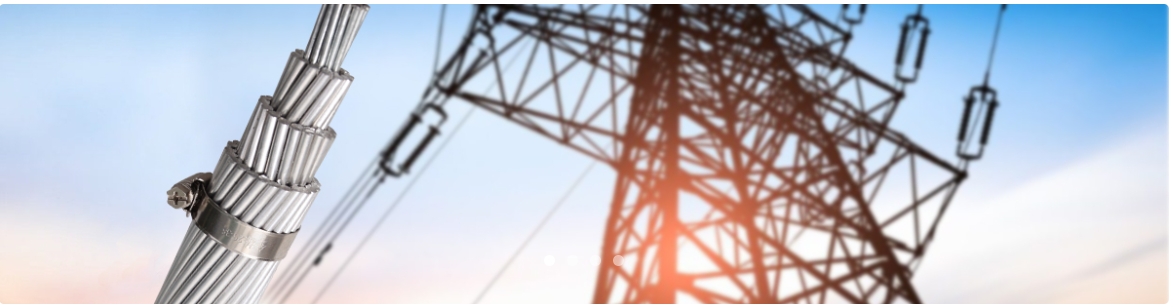
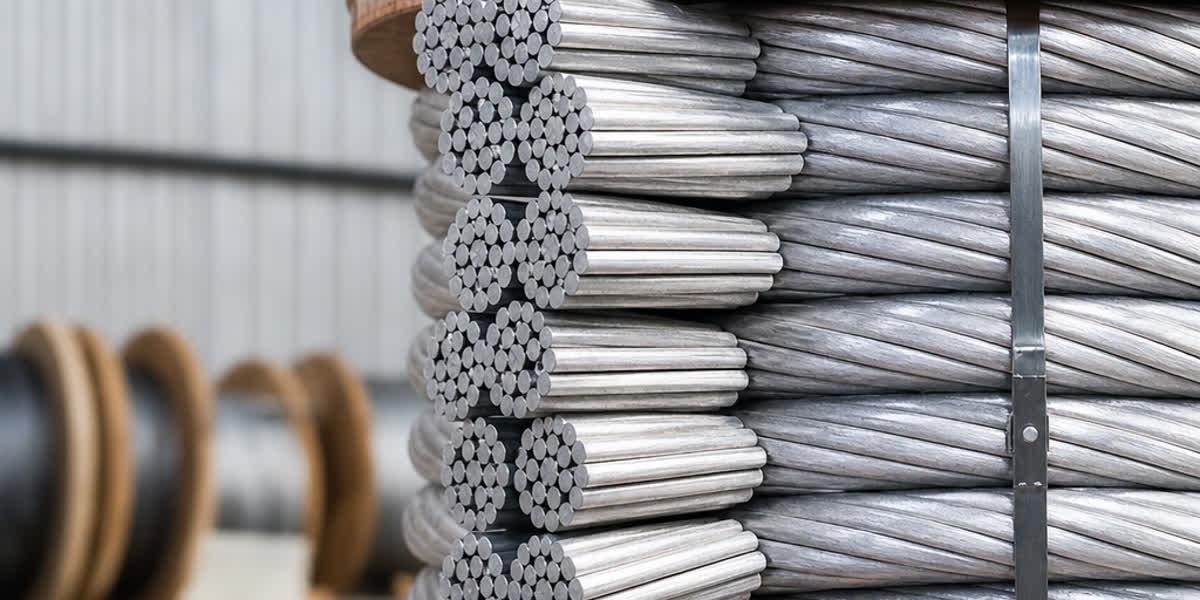
Our ACSR conductors remain the global standard for overhead transmission lines, combining high-purity EC-grade aluminum with a galvanized steel reinforcing core. For applications requiring lighter weight and higher corrosion resistance, AAAC conductors are the preferred choice. See our full range of bare overhead conductors for detailed specifications.

Covered & Insulated Conductors

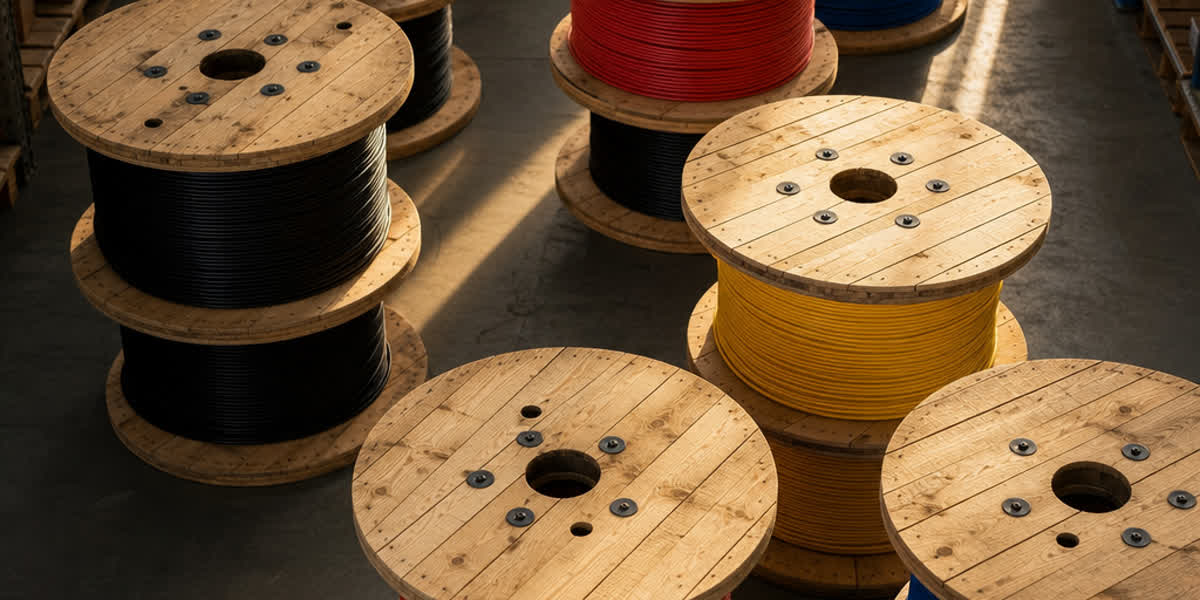
For urban grid renovation and areas with dense vegetation, covered conductors (also known as aerial bundled cables or ABC) provide an additional layer of safety. The XLPE insulation layer prevents phase-to-phase contact even when conductors touch tree branches or building walls. Browse our overhead cable product line for urban distribution solutions.


2. Mechanical Performance: Tensile Strength & Installation Durability

Tensile Strength Ratings

Mechanical strength is often the deciding factor in conductor selection. The rated tensile strength (RTS) of a conductor determines maximum allowable span length and sag behavior.

Property ACSR (typical) AAAC (6201) AAC (1350)
Tensile Strength (MPa) 280–420 (varies by steel/alu ratio) 290–330 160–200
Modulus of Elasticity (GPa) 70–85 69 62
Coefficient of Linear Expansion (×10⁻⁶/°C) 18–21 23 23
Density (g/cm³) 3.0–3.5 2.7 2.7

ACSR significantly outperforms AAC and AAAC in tensile strength due to its galvanized steel core. This makes it the only practical choice for: - Long-span river crossings (>1000 m) - High ice-load regions (>25 mm radial ice) - Extreme wind zones (typhoon-prone regions) - High-temperature low-sag (HTLS) applications

AAAC offers roughly 60% better strength than AAC while maintaining excellent corrosion resistance, making it ideal for coastal environments where ACSR would suffer from galvanic corrosion over time.

Installation & Handling

During installation, conductors experience bending, tension, and abrasion against fittings and hardware. PVC and XLPE insulated cables offer better resistance to mechanical damage during pulling compared to bare conductors. For overhead insulated cables, the co-extruded inner XLPE + outer PVC sheath construction provides excellent abrasion resistance against tree branches and building edges during and after installation.


3. Environmental Adaptation by Region

Environmental conditions vary dramatically across installation sites. Here is a detailed selection guide for different environments:

Environment Recommended Conductor Key Rationale Specific Considerations
High ice/snow (≥25 mm radial ice) ACSR Steel core provides 2–3× tensile strength needed for ice loading Use higher steel/alu ratio (e.g., 30/7 or 54/19 stranding)
Strong wind / typhoon zones AAAC or stranded ACSR Stranded structures absorb 60% more wind-induced vibration than single-wire Consider Stockbridge dampers for vibration control
Coastal / offshore / salt spray AAAC 6201 aluminum alloy resists corrosion without galvanic coupling to steel Avoid ACSR unless galvanized steel is heavily coated
Industrial / polluted atmosphere AAAC or covered conductor Chemical resistance of aluminum alloy or XLPE insulation layer Covered conductors prevent pollution-induced flashovers
Urban distribution Overhead insulated cable XLPE insulation allows safe proximity to buildings/trees Aerial bundled cable (ABC) for multi-phase distribution
High-altitude (>2000 m) ACSR (higher strength) Lower air density reduces cooling — larger conductor may be needed Ampacity derating required; check IEC 61597
Long-span river/valley ACSR (high-strength steel core) Minimal sag over spans >1000 m EHS (extra high strength) steel core grade recommended
Desert / high UV index XLPE-covered conductor UV-stabilized outer sheath prevents degradation Black UV-stabilized XLPE or PE sheath required
Seismic zones AAAC (lighter, more flexible) Lower weight reduces tension loads on structures Reduced dynamic loading on poles/towers
Tropical / high humidity AAC or AAAC No steel components to corrode Ensure connectors are corrosion-resistant

For more detailed product specifications, explore our bare conductor range.


4. Electrical Performance Considerations

Ampacity & Current-Carrying Capacity

The ampacity of an overhead conductor depends on ambient temperature, solar heating, wind speed, and emissivity. General ampacity rankings for equivalent cross-sections:

AAC > AAAC > ACSR (by approximately 5–10% per step)

AAC conducts best because there is no steel core to increase resistance. However, ACSR's higher operating temperature tolerance (up to 100°C continuous, 120°C emergency for standard, 150–210°C for HTLS variants) compensates in many applications.

Voltage Drop & Line Losses

For long transmission lines (>50 km), voltage drop becomes a critical constraint. Use the following rule of thumb:

  • ACSR (16% steel): ~3–5% higher resistance than equivalent AAC
  • AAAC (6201): ~7–10% higher resistance than AAC
  • AAC: Lowest resistance, best for short distribution runs

Corona & Radio Interference

For EHV lines (>220 kV), conductor surface voltage gradient must be controlled to minimize corona discharge and radio interference. ACSR with larger diameter strands and smooth surface finish is the standard choice for EHV applications.


5. Economic Optimization: Total Cost of Ownership

A common mistake is selecting conductors based solely on initial purchase price. The true cost includes:

Cost Factor Typical Impact (% of Total Lifecycle)
Initial purchase 30–40%
Installation & stringing 15–25%
Maintenance & inspection 10–15% over life
Line losses (I²R) 15–25% over life
Replacement & early failure 5–15% (only if poor selection)

When ACSR Wins on Total Cost

Despite higher per-meter cost against AAC, ACSR often wins on lifecycle value for long spans because: 1. Fewer support structures needed (wider span capability) 2. Lower maintenance (galvanized steel resists corrosion when properly specified) 3. Higher operating temperature margin reduces line loss at peak load

When AAAC Wins on Total Cost

AAAC beats both AAC and ACSR in lifecycle cost for coastal and industrial zones where: 1. No galvanic corrosion (no steel core) 2. Better strength-to-weight ratio than AAC 3. Lower installation costs (easier handling than heavy ACSR)

When Covered Conductors Win on Total Cost

Overhead insulated cables and overhead cables reduce lifecycle cost in urban environments by: 1. Eliminating tree-trimming programs 2. Reducing fault rates from branch/animal contact 3. Allowing narrower right-of-way corridors


6. Industry Standards & Compliance

All overhead conductors should comply with relevant international standards to ensure safety, interoperability, and performance:

Standard Scope Applicable Conductor Types
IEC 61089 Round wire concentric lay overhead stranded conductors AAC, AAAC, ACSR, ACAR
IEC 61597 Calculation methods for bare overhead conductors All bare conductors
ASTM B232 Concentric-lay stranded aluminum conductors, steel-reinforced ACSR
ASTM B399 Concentric-lay stranded 6201-T81 aluminum-alloy conductors AAAC
ASTM B230 Aluminum 1350-H19 wire for electrical purposes AAC
BS 215 Specification for aluminum conductors and aluminum conductors, steel-reinforced for overhead power transmission ACSR (UK/EU standard)
GB/T 1179 Round wire concentric lay overhead electrical stranded conductors (Chinese national standard) AAC, AAAC, ACSR

SiTong Cable manufactures all bare conductors in full compliance with these international standards, with third-party testing available upon request.


7. Frequently Asked Questions

Q: What is the difference between XLPE and PVC overhead cables?

A: XLPE (cross-linked polyethylene) offers higher temperature tolerance (continuous 90°C vs PVC's 70°C), better mechanical strength, and superior aging resistance. PVC is the more economical option and has better UV resistance when properly compounded. For overhead applications, co-extruded XLPE inner + PVC outer sheath designs capture the benefits of both materials.

Q: Which overhead cable is best for high wind areas?

A: Stranded AAAC (all-aluminum alloy) is generally best for high wind areas. Its stranded structure absorbs wind-induced vibration 60% better than solid wire. ACSR with proper vibration dampers (Stockbridge type) is also suitable for longer spans in windy regions.

Q: How long do overhead cables last?

A: With proper selection and installation: - AAC: 40–50 years in clean environments - AAAC: 50–60 years, even in coastal areas - ACSR: 40–60 years (steel core may limit life in highly corrosive environments) - XLPE-covered: 30–40 years (sheath life depends on UV exposure)

Q: What conductor is best for river crossings?

A: ACSR with extra-high-strength (EHS) steel core is the standard choice for river crossings. The steel core provides the highest tensile strength and lowest sag characteristics, essential for spans exceeding 500 meters.

Q: What is the difference between AAC, AAAC, and ACSR?

A: AAC (all-aluminum conductor) is the most conductive but weakest mechanically. AAAC (all-aluminum alloy conductor) uses 6201-T81 alloy for 60% better strength than AAC with nearly the same corrosion resistance. ACSR (aluminum conductor steel reinforced) has a galvanized steel core that provides the highest strength, making it the preferred choice for long spans and harsh environments.

Q: Do I need covered conductors or bare conductors for urban distribution?

A: For urban areas with trees, narrow right-of-ways, or proximity to buildings, covered/insulated overhead cables are strongly recommended. They prevent flashovers from branch contact and reduce maintenance costs. For open rural areas, bare conductors (ACSR or AAAC) are more cost-effective.


8. Technology & Design Tools

Modern overhead line design uses specialized software to optimize conductor selection:

  • Sag-tension calculations — Determine conductor behavior across temperature ranges and loading conditions
  • Ampacity modeling — Predict conductor temperature under varying ambient conditions (IEC 61597)
  • Corona analysis — Ensure surface gradient stays below critical levels for >220 kV lines
  • Economic conductor selection — Optimize conductor size and type for minimum total cost over project life

SiTong Cable provides complete technical datasheets, sag-tension tables, and selection guidance for all our overhead conductor products. Contact us for project-specific recommendations and technical support.


Conclusion

Selecting the right overhead cable requires balancing mechanical strength, environmental resilience, electrical performance, and total cost of ownership. No single conductor type is ideal for every situation—the best choice depends on your specific project conditions.

ACSR remains the workhorse of global power transmission, ideal for long spans, heavy loading, and extreme climates. AAAC excels in coastal and corrosive environments where longevity matters more than minimal cost. AAC delivers maximum conductivity for short distribution runs, while covered conductors solve the safety and maintenance challenges of urban networks.

For personalized selection assistance and complete technical specifications, contact SiTong Cable—we deliver to over 60 countries with full IEC, ASTM, and BS 215 compliance.

This guide is for informational purposes. Always verify conductor selection with a qualified electrical engineer and reference the applicable national and international standards for your project.