How to Import Cables from China: 2026 Buyer Guide (Costs, QC & Suppliers)
Introduction
Importing electrical cables from China has become a cornerstone procurement strategy for utility companies, electrical contractors, EPC firms, and distributors across more than 120 countries. China manufactures over 35% of the world's power cables and overhead conductors, offering cost savings of 30% to 50% compared to North American or European manufacturers.
However, realizing these savings requires a structured approach to technical specification, factory auditing, quality inspection, Incoterms logistics, and international standards compliance. This comprehensive 2026 guide provides a step-by-step roadmap for overseas buyers to source, verify, and import electrical cables safely.
⚡ 2026 Quick Sourcing Checklist & Key Takeaways
- Direct Manufacturer vs. Trader: Prioritize verified direct mills with in-house wire drawing, stranding, and testing labs to save 10-15% intermediary markup.
- Certifications & Type Tests: Require full type test reports issued by accredited third-party labs (e.g., TUV, KEMA, CNAS/ILAC) matching IEC, ASTM, BS, or DIN standards.
- Inspection Protocol: Never skip pre-shipment quality control (QC). Verify DC resistance, conductor diameter, insulation thickness, and seaworthy drum packaging.
- Payment Security: For first-time orders, utilize Irrevocable L/C at sight or T/T 30% deposit with 70% balance against scanned original Bill of Lading (B/L).
- HS Codes & Logistics: Bare conductors fall under HS 7614, while insulated power cables fall under HS 8544. Plan for 20-40 days ocean transit time.
Table of Contents
- Why Import Cables from China in 2026
- Most Commonly Imported Cable Categories & Standards
- How to Find, Screen, and Audit Chinese Cable Factories
- International Standards & Certification Verification
- How to Draft an Airtight Request for Quotation (RFQ)
- Sampling, Testing, and Pre-Production Approval
- Safe Payment Terms & Financial Risk Mitigation
- Incoterms, Shipping Logistics, and Drum Packaging
- Customs Clearance, HS Codes, and Required Documents
- Factory Quality Control & Third-Party Pre-Shipment Inspection
- 7 Critical Mistakes to Avoid When Importing Cables
- Frequently Asked Questions (FAQ)
- Conclusion & Direct Factory Consultation
1. Why Import Cables from China in 2026
China remains the global epicenter of cable manufacturing, backed by complete industrial supply chain clustering in provinces like Henan, Jiangsu, and Zhejiang. Key advantages for international buyers include:
- Substantial Cost Savings: Raw material clustering (direct aluminum smelting, copper cathode refining, and PVC/XLPE compounding within industrial clusters) reduces manufacturing costs by 30% to 50% compared to Western manufacturers.
- Massive Production Capacity: Major Tier-1 manufacturers operate continuous casting, rolling, and high-speed multi-wire stranding lines, delivering massive project volumes within 15-30 days.
- Global Standards Compliance: Established Chinese exporters engineer cables tailored strictly to IEC (International), ASTM (American), BS (British), DIN (German), AS/NZS (Australian), and SABS (South African) specifications.
- Customization & Engineering Support: Highly flexible minimum order quantities for specialized lengths, drum dimensions, non-standard stranding, and customized color coding.
2. Most Commonly Imported Cable Categories & Standards
Understanding product specifications and standard alignments ensures you source from the right specialized production facility:
| Cable Category | Benchmark Standards | Core Applications | Manufacturing Key Requirements |
|---|---|---|---|
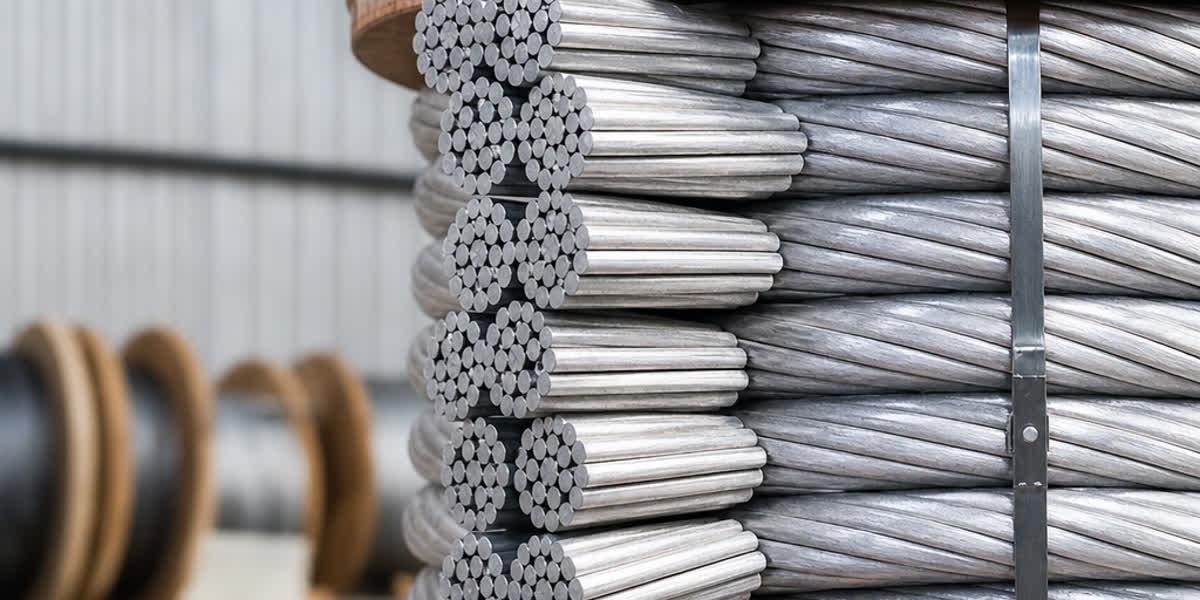
| ACSR (Aluminum Conductor Steel Reinforced) | IEC 61089, ASTM B232, BS 215, DIN 48204 | Overhead high-voltage transmission | Multi-wire steel core stranding, grease coating |
| AAC / AAAC (All-Aluminum / Alloy) | IEC 61089, ASTM B231/B399, BS 3242 | Distribution lines, coastal grid projects | High-conductivity aluminum alloy heat treatment |
| ABC Cable (Aerial Bundled Cable) | IEC 60502, BS 7870, NF C 33-209 | Overhead low-voltage distribution | Cross-linked polyethylene (XLPE) weather-resistant extrusion |
| Power Cable (LV / MV / HV) | IEC 60502-1/2, BS 5467, BS 6622 | Industrial plants, underground grid | Triple extrusion, water-blocking tape, SWA steel armor |
| OPGW (Optical Ground Wire) | IEC 61395, IEEE 1138 | Overhead lines with integrated fiber telecom | Hermetically sealed stainless steel optical fiber tube |
| Control & Shielded Cable | IEC 60227, BS 5308, EN 50288 | Instrumentation, industrial automation | Copper braid shielding, twisted pairs, flame-retardant sheath |
For utility and infrastructure projects, source overhead lines directly from mills specialized in ACSR conductors and AAC conductors. For substations and industrial facilities, specify power cables and control cables with certified insulation.
3. How to Find, Screen, and Audit Chinese Cable Factories
3.1 Sourcing Channels
- Direct Factory Websites: Established manufacturers operate dedicated technical portals with published type test certificates and spec sheets.
- Industry Exhibitions: The Canton Fair (Guangzhou), Wire China (Shanghai), and Middle East Energy (Dubai).
- B2B Marketplaces: Made-in-China and Alibaba (filter for verified on-site audited manufacturers with export licenses).
3.2 Manufacturer Due Diligence Checklist
| Verification Item | What to Check | Why It Matters |
|---|---|---|
| Business License | Unified Social Credit Code, registered capital (≥ RMB 50M for major mills), business scope | Ensures the entity is an actual producer, not a broker charging 10-15% margin |
| Export Track Record | Customs export declarations, container bills of lading for target markets | Proves practical experience with overseas port compliance |
| In-House Testing Facility | Tensile testing machine, resistance bridge, partial discharge lab, aging oven | Validates that routine and sample tests are performed on every batch |
| Factory Audit | Live video walkthrough, Google Earth verification, or 3rd-party audit (SGS/BV) | Verifies physical factory footprint and actual production lines |
📌 Pro Tip: Always ask the supplier to provide a video audit showing the high-voltage test room and continuous CCV extrusion lines in active operation.
🏭 Need a Verified Factory Direct Quote?
SiTong Cable is an established Chinese cable manufacturer with a 100,000+ m² production base, ISO 9001/14001/45001 certifications, and routine exports to 60+ countries.
🔹 Browse All Product Specifications & Standards | 🔹 Contact Our Engineering & Sales Team
4. International Standards & Certification Verification
Electrical cables must comply strictly with target country electrical regulations:
- IEC (International Electrotechnical Commission): IEC 60502 (Power Cables), IEC 61089 (Conductors), IEC 60228 (Conductor Classes). Widely accepted in Europe, Asia, Africa, and South America.
- ASTM / ICEA (North & Latin America): ASTM B232 (ACSR), ICEA S-95-658 (Power Cables).
- British Standards (BS): BS 5467 (Steel Wire Armored / SWA), BS 7870 (ABC Cable). Popular across the UK, Middle East, and Commonwealth nations.
- Laboratory Accreditation: Ensure product type test reports are issued by labs accredited by CNAS (China), ILAC-MRA (International), TUV, KEMA, or SABS.
5. How to Draft an Airtight Request for Quotation (RFQ)
Vague RFQs result in misleading prices. When requesting quotes, provide complete technical parameters:
- Conductor Material & Stranding: E.g., Hard-drawn aluminum EC1350, 54/3.50mm Al + 7/3.50mm Steel.
- Insulation & Sheath Material: XLPE, PVC (Type 9), LSZH (Low Smoke Zero Halogen), UV-resistant carbon black content.
- Voltage Grade: E.g., 0.6/1 kV (Low Voltage), 8.7/15 kV, or 18/30 kV (Medium Voltage).
- Drum Length & Packaging: Continuous 1,000m / 2,000m / 3,000m on treated wooden drums or non-returnable steel-wood drums.
- Trade Term: Specify exact port (e.g., FOB Qingdao Port or CIF Rotterdam).
6. Sampling, Testing, and Pre-Production Approval
Before releasing volume production: 1. Sample Verification: Order a 10m to 50m sample drum for physical laboratory testing. 2. Key Laboratory Tests: * Conductor Resistance: Measure DC resistance at 20°C (must not exceed max limits in IEC 60228). * Dimensions: Measure minimum insulation wall thickness and overall cable outer diameter. * Tensile & Elongation: Test conductor and insulation tensile strength before and after thermal aging. 3. Golden Sample Retention: Seal and sign the approved sample; keep it as the baseline for pre-shipment inspection.
7. Safe Payment Terms & Financial Risk Mitigation
| Payment Method | Buyer Risk | Seller Risk | Recommendation for Importers |
|---|---|---|---|
| L/C at Sight (Letter of Credit) | Very Low | Low | Best for first orders over USD $30,000 via tier-1 international banks |
| T/T (30% Deposit, 70% against B/L) | Moderate | Moderate | Standard industry practice for verified established manufacturers |
| T/T (100% Advance Payment) | Extreme | None | Never accept for volume production orders |
| Alibaba Trade Assurance / Escrow | Low | Low | Suitable for smaller trial orders under $20,000 |
8. Incoterms, Shipping Logistics, and Drum Packaging
8.1 Incoterms Comparison
- FOB (Free On Board - e.g., Qingdao / Shanghai): Supplier handles inland transport and Chinese export customs. You manage ocean freight and marine insurance with your freight forwarder. (Recommended for experienced buyers).
- CIF (Cost, Insurance & Freight): Supplier arranges and pays for ocean transit and insurance to your destination port. (Convenient for one-stop procurement).
- DDP (Delivered Duty Paid): Supplier delivers directly to your warehouse with customs duties paid.
8.2 Drum Packaging & Container Utilization
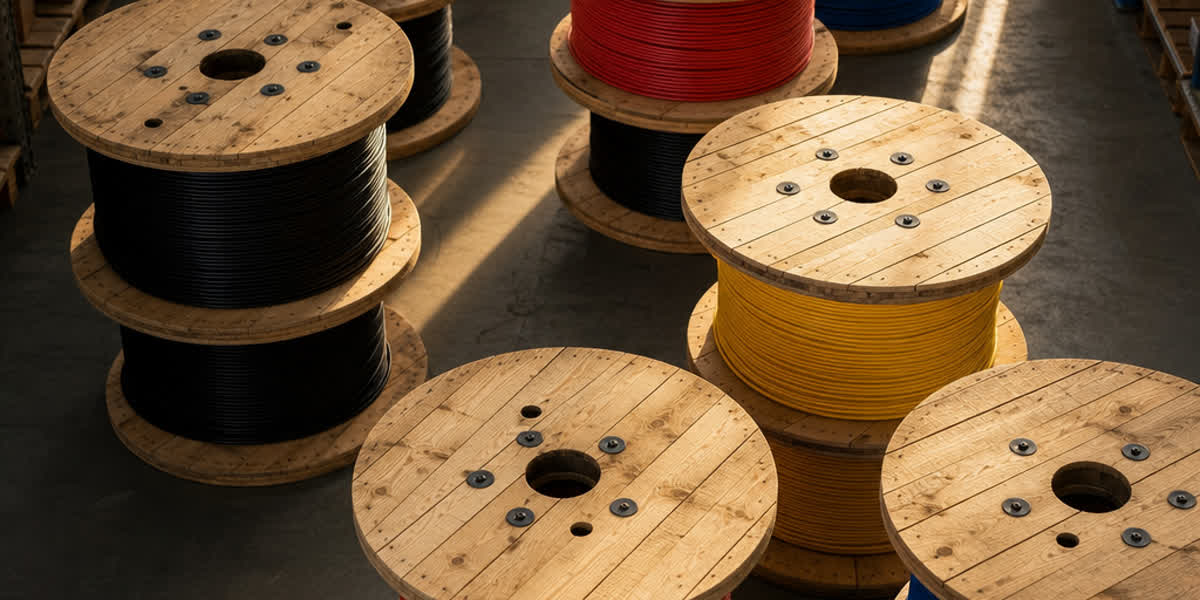
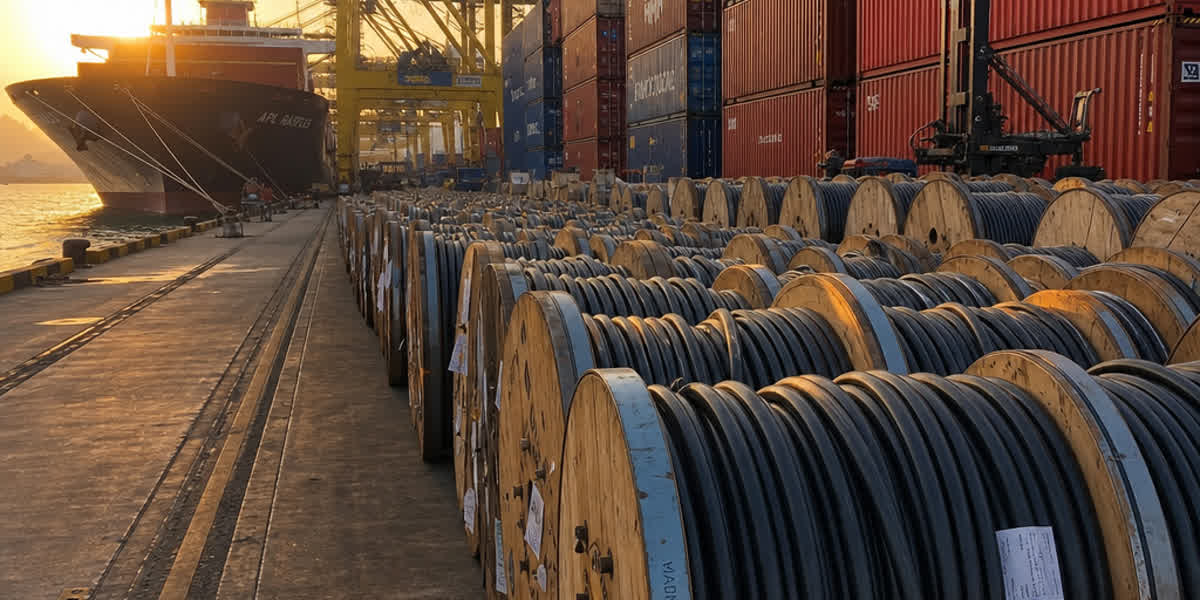
- Seaworthy Packaging: Fumigated solid wood drums (ISPM 15 certified), steel-wood composite drums, or all-steel drums for heavy conductors.
- Protection: Full lagging with wooden battens, multi-layer waterproof plastic film wrapping, and steel edge banding.
- Container Loading: A standard 20-foot container (20'GP) holds approximately 18 to 22 metric tons of cable drums. Ensure drums are strapped with heavy-duty chains and wooden chocks to prevent transit shifting.
9. Customs Clearance, HS Codes, and Required Documents
Common Harmonized System (HS) Codes
- HS 7614.10 / 7614.90: Aluminum stranded wire, cables, and conductors without electrical insulation (ACSR, AAC, AAAC).
- HS 8544.49: Insulated electric conductors for voltage ≤ 1,000 V (ABC cables, LV power cables, building wire).
- HS 8544.60: Insulated electric conductors for voltage > 1,000 V (Medium and High Voltage power cables).
- HS 8544.70: Optical fiber cables (including OPGW).
Standard Import Documentation Package
- Commercial Invoice (Itemized quantities, unit price, HS codes, terms).
- Packing List (Gross/net weight, drum dimensions, serial numbers).
- Bill of Lading (Clean on Board B/L).
- Certificate of Origin (COO / Form E / Form F / RCEP / CO) for preferential import tariff rates.
- Factory Mill Test Certificate (MTC) and Type Test Reports.
10. Factory Quality Control & Third-Party Pre-Shipment Inspection
To ensure zero-defect delivery, implement a 4-stage quality gate:
[Raw Material Testing] ➔ [In-Process Extrusion & Stranding] ➔ [Routine Electrical Factory Tests] ➔ [3rd-Party Pre-Shipment Audit]
- Spark Testing: 100% online spark testing on core insulation lines to detect microscopic pinholes.
- High Voltage Withstand Test: 5-minute immersion AC high-voltage test on finished drums.
- Third-Party Pre-Shipment Inspection (PSI): Hire independent agencies (such as SGS, Bureau Veritas, Intertek, or CCIC) to conduct random drum sampling before container sealing.
11. 7 Critical Mistakes to Avoid When Importing Cables
- Evaluating Quotes Solely on Lowest Price: Unusually low prices often indicate reduced copper/aluminum cross-section or recycled insulation polymers.
- Omitting Detailed Cable Standards in Contracts: Specifying only "IEC cable" without specific clauses (e.g., IEC 60502-2 Table 5) invites substandard construction.
- Overlooking Drum Dimensions and Handling: Forgetting to confirm maximum drum flange diameter and arbor hole dimensions needed for your cable pullers.
- Neglecting Destination Country Port Requirements: Forgetting pre-export conformity certificates (such as SONCAP for Nigeria or SASO for Saudi Arabia).
- Paying 100% Balance Prior to B/L Issuance: Always retain the balance payment until proof of container loading and clean B/L issuance.
- Ignoring Conductor DC Resistance: DC resistance is the ultimate proof of electrical grade purity—always test resistance per kilometer.
- Skipping Marine Cargo Insurance: Cable is high-density and high-value cargo; always ensure Institute Cargo Clauses (A) all-risk coverage.
FAQ
Q1: What is the typical minimum order quantity (MOQ) for cable imports from China? For standard overhead conductors (ACSR, AAC, ABC), the standard factory MOQ is typically 1 to 3 metric tons (equivalent to 1-2 standard wooden drums). For specialized or custom-colored cables, MOQs range from 3,000 to 5,000 meters. Trial and project-based prototype orders can frequently be accommodated.
Q2: What is the typical production and shipping lead time from China? Standard factory production turnaround is 15 to 25 calendar days for container-load orders. Ocean freight transit times range from 15-25 days (Middle East / Southeast Asia), 25-35 days (Europe / Mediterranean), to 30-45 days (Latin America / West Africa / North America).
Q3: Can Chinese manufacturers produce cables strictly to ASTM, BS, or IEC standards? Yes. Professional tier-1 export manufacturers regularly produce cables strictly adhering to IEC, ASTM, BS, DIN, NF, and AS/NZS standards. Always request official type test reports issued by accredited independent third-party laboratories to verify compliance before volume production.
Q4: How do I verify that a Chinese cable factory is an authentic manufacturer rather than a trading company? Request an official business license and check the registered scope of business (which must state "manufacturing/production" rather than "trading/wholesale"). Request a live video walkthrough of the stranding workshops, CCV extrusion towers, and in-house testing labs. You can also commission a third-party audit report from SGS, Bureau Veritas, or CCIC.
Q5: What are the safest payment terms for importing cables for the first time? For first-time procurement, the safest options are an Irrevocable Letter of Credit at Sight (L/C at Sight) through a major international commercial bank, or a 30% T/T advance deposit with the remaining 70% balance payable against scanned original shipping documents (Bill of Lading, Packing List, Invoice, and Test Certificates).
Q6: What documents are required for smooth customs clearance of imported cables? The core documentation set includes: Commercial Invoice, Packing List, Clean on Board Bill of Lading, Certificate of Origin (CO / Form E / Form F / RCEP), Factory Mill Test Certificate (MTC), and third-party Type Test Reports. Certain jurisdictions also mandate pre-shipment conformity inspection certificates (such as SONCAP, PVOC, or SASO).
Q7: How are cable drums packed to prevent damage during long ocean voyages? Export cable drums are built from heat-treated and fumigated solid wood (ISPM 15 compliant) or heavy-duty steel-wood frames. Finished cable is sealed with waterproof shrink caps, wrapped in multi-layer protective plastic sheeting, fully enclosed with protective wooden battens (drum lagging), and strapped with heavy steel strapping.
Conclusion
Importing electrical cables directly from Chinese manufacturers offers an unbeatable balance of cost efficiency, manufacturing speed, and technical customization—provided that buyers enforce rigorous supplier due diligence, precise technical RFQs, and structured quality testing.
About SiTong Cable Co., Ltd.
Zhengzhou SiTong Cable Co., Ltd. is a leading Chinese cable manufacturer established in 2002, operating an expansive 100,000+ m² modernized facility with automated continuous casting, stranding, and extrusion lines. We provide comprehensive OEM/ODM power transmission and distribution solutions to electric utilities, EPC contractors, and distributors in over 60 countries.
- Product Range: ACSR Conductor, AAC Conductor, AAAC Conductor, Aerial Bundled Cable (ABC), LV/MV XLPE Power Cables, OPGW Cable, and Control Cables.
- Certifications: ISO 9001, ISO 14001, ISO 45001, CE, and comprehensive type test reports from CNAS/ILAC-accredited international test laboratories.
🚀 Ready to Source High-Quality Cables for Your Project?
Contact our engineering and export team today for direct factory pricing, technical spec sheets, and free sample evaluation:
📧 Email: sales@sitongcable.com
📞 Phone / WhatsApp: +86 156 1755 1896
🌐 Factory Direct Inquiries: Submit RFQ via Online Contact Form
📍 Address: No.1 Shengding Road, Entrepreneurship Park, Xinmi, Zhengzhou, Henan, China