Technical Guide: The Critical Role of ASTM Standards in Power Cables
Technical Guide: The Critical Role of ASTM Standards in Power Cables
In power transmission, cable quality directly impacts grid safety and efficiency. As globally recognized technical specifications, ASTM (American Society for Testing and Materials) standards are the gold standard for measuring cable performance.
1. What are ASTM Standards?
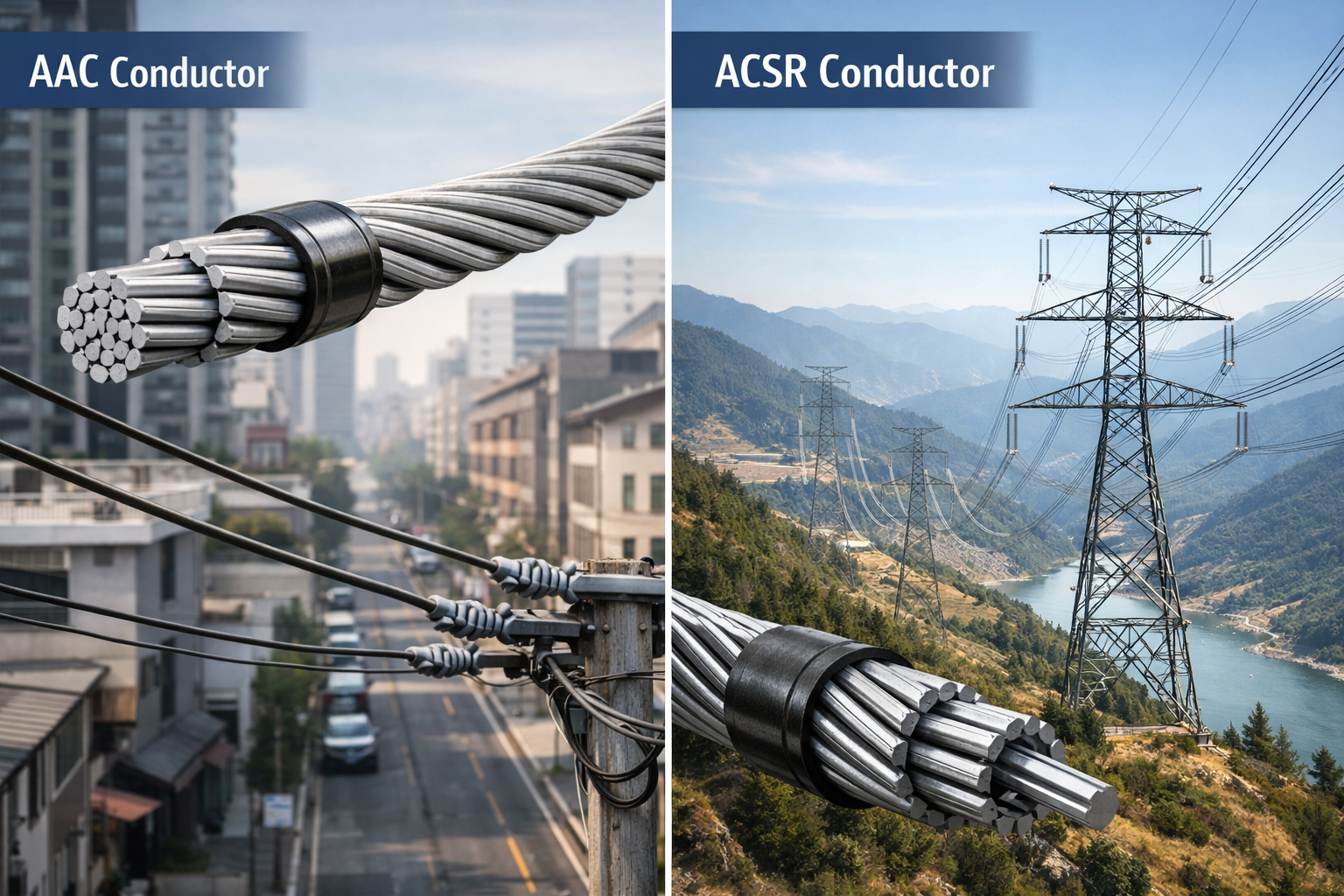
ASTM International specifies rigorous metrics ranging from raw material purity and tensile strength to electrical conductivity. For our core products—AAC, ACSR, and AAAC—ASTM ensures reliability under extreme conditions.
2. Core ASTM Standards for Overhead Conductors
| Product Type | ASTM Standard | Technical Highlights |
|---|---|---|
| AAC | ASTM B231 | Concentric-lay-stranded 1350-H19 aluminum wire specs |
| ACSR | ASTM B232 | Strength coordination between steel core and aluminum strands |
| AAAC | ASTM B399 | Fatigue resistance for 6201-T81 aluminum alloy |
| Aluminum Wire | ASTM B230 | Mechanical/Electrical properties for 1350-H19 wire |
3. Why ASTM Matters for Your Infrastructure?
- Physical Integrity: ACSR cables certified under ASTM B232 offer superior tensile strength for long-span installations, minimizing line sag.
- Conductivity Assurance: ASTM B230 ensures aluminum wires maintain over 61.0% IACS conductivity, significantly reducing transmission losses.
- Market Access: In international tenders across the Americas and Southeast Asia, ASTM compliance is often a mandatory prerequisite.
4. Sitong Cable: Commitment to ASTM Precision
Our production lines are equipped with advanced testing systems to perform tensile and resistivity tests on every batch of bare conductors, ensuring 100% compliance with ASTM specifications.
Author: Harvey Date: 2026-02-11