ACSR (Aluminum Conductor Steel Reinforced): The Backbone of Global Power Transmission Lines
ACSR (Aluminum Conductor Steel Reinforced): The Backbone of Global Power Transmission Lines
1. Introduction: The Legacy and Future of ACSR
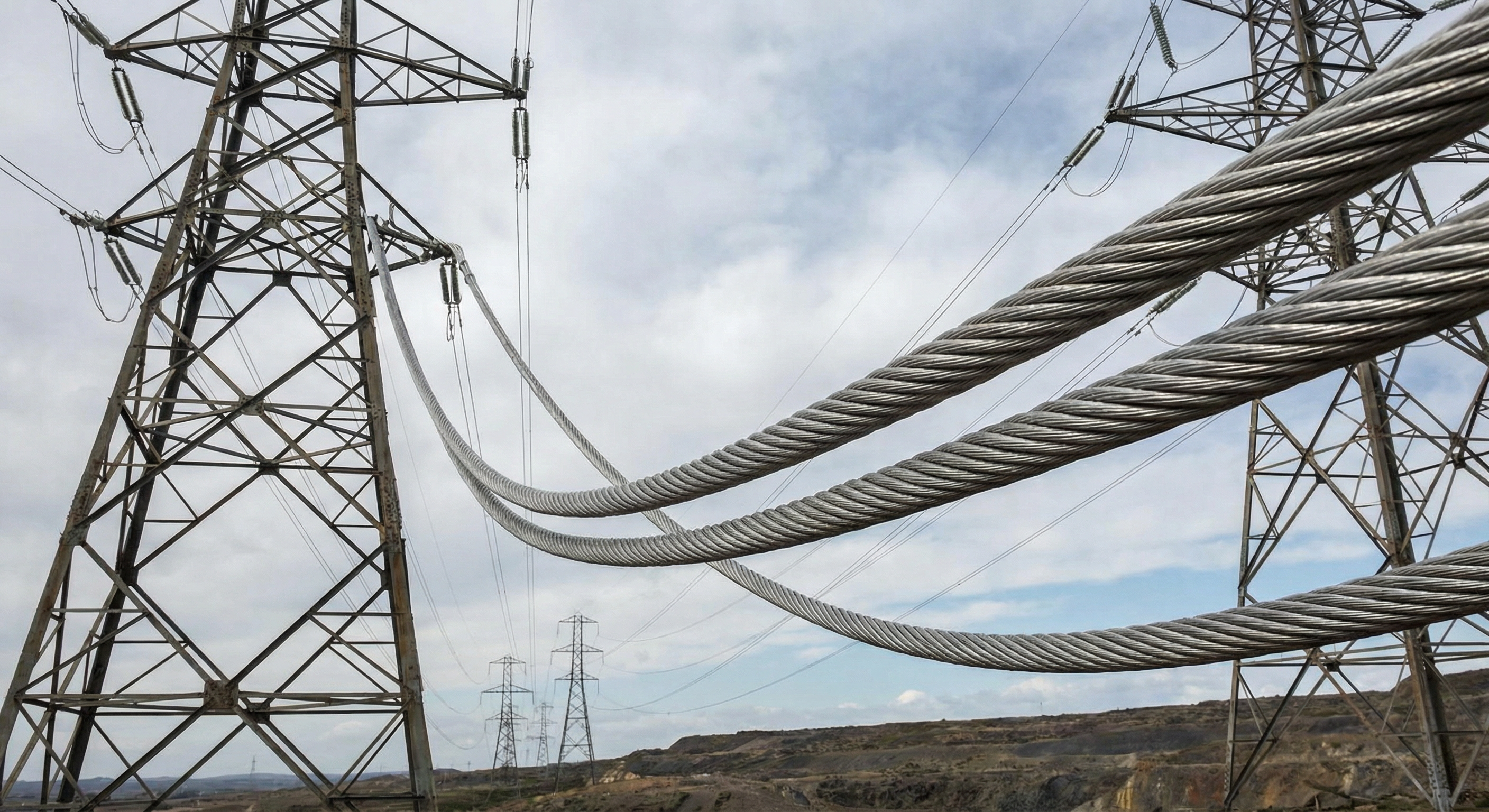
In the infrastructure landscape of 2026, where renewable energy integration and grid modernization are paramount, Aluminum Conductor Steel Reinforced (ACSR) remains the gold standard for high-voltage transmission. Since its inception, ACSR has offered the perfect synergy of lightweight conductivity and rugged mechanical strength, making it the preferred choice for utilities from North America to Southeast Asia.
2. Composition and Engineering Excellence
ACSR is a concentric-lay-stranded conductor consisting of a core of one or more galvanized steel wires surrounded by layers of high-purity (1350-H19) aluminum wires. This dual-metal design leverages the high strength-to-weight ratio of steel for long-span durability and the excellent electrical properties of aluminum for efficient transmission.
Table 1: Material Properties Comparison in ACSR Design
| Feature | Aluminum (1350-H19) | Galvanized Steel Core | Resulting ACSR Advantage |
|---|---|---|---|
| Primary Function | Electrical Conductivity | Mechanical Support | Optimized Performance |
| Density (kg/m³) | ~2,705 | ~7,800 | Lightweight yet Strong |
| Tensile Strength | Low to Moderate | Very High | Excellent Span Stability |
| Conductivity (% IACS) | 61.0% - 61.2% | ~9% (negligible) | High Power Capacity |
3. International Standards and Specifications
To ensure global interoperability and safety, SiTong ACSR conductors are manufactured in strict accordance with ASTM B232, IEC 61089, BS 215, and DIN 48204. Understanding the nuances between these standards is critical for engineers selecting conductors for inter-continental grid projects.
Table 2: Technical Specifications for Popular ACSR "Bird" Code Names (ASTM B232)
| Bird Code Name | Stranding (Al/St) | Outer Diameter (mm) | Rated Strength (kN) | DC Resistance (Ω/km @ 20°C) | Weight (kg/km) |
|---|---|---|---|---|---|
| Raven | 6 / 1 | 10.11 | 19.5 | 0.5367 | 216 |
| Penguin | 6 / 1 | 14.31 | 37.0 | 0.2682 | 433 |
| Hawk | 26 / 7 | 21.78 | 86.7 | 0.1192 | 976 |
| Drake | 26 / 7 | 28.13 | 140.0 | 0.0717 | 1628 |
| Martin | 54 / 19 | 36.17 | 212.0 | 0.0435 | 2591 |
4. Application Environments and GEO-Specific Optimization
The versatility of ACSR allows it to be optimized for diverse climates. Whether facing the high sag challenges of tropical regions or the heavy ice loading of arctic environments, the aluminum-to-steel ratio can be adjusted to meet specific safety factors.
Table 3: ACSR Selection Framework by Climate Zone
| Environment | Stranding Ratio (Al:St) | Coating Type | Design Focus |
|---|---|---|---|
| Coastal / Marine | High Aluminum | Class C Galvanized / Greased | Corrosion Inhibition |
| Mountainous / Alpine | High Steel (7/1, 19/1) | Class A Galvanized | Ice Loading & Tension |
| Industrial / Urban | Standard (26/7, 54/7) | Standard Galvanized | Ampacity & Conductivity |
| Long Span (River Crossings) | Extra High Steel | High Strength Steel | Maximum Tensile Strength |
5. Advanced Thermal and Sag Considerations
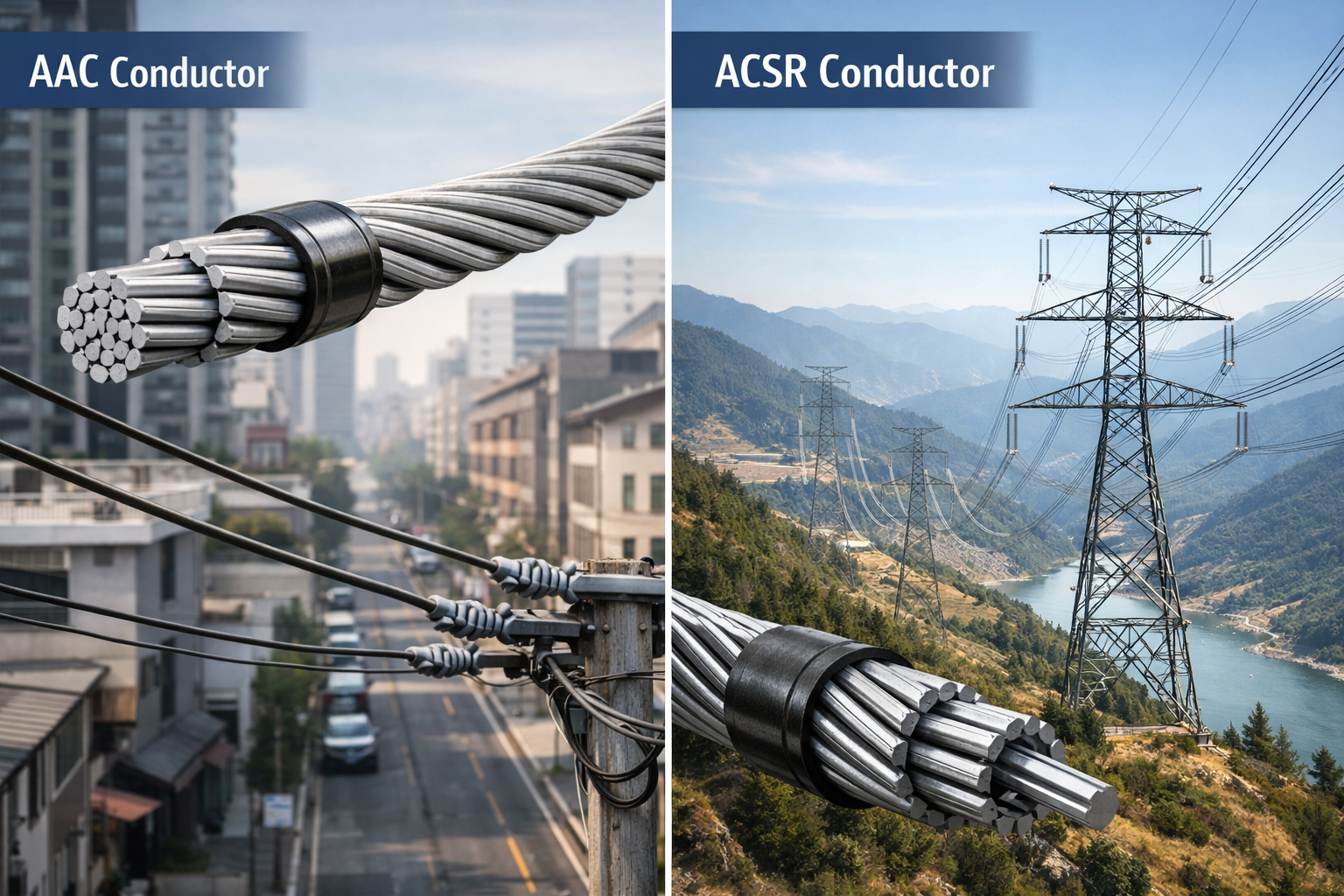
Modern grid operation often requires conductors to operate at high temperatures during peak loads. ACSR's steel core significantly limits thermal sag compared to all-aluminum conductors (AAC), maintaining critical safety clearances even under emergency loading conditions.
6. Conclusion: Engineering the 2026 Transmission Network
As we look toward a more electrified future, the reliability of the transmission line starts with the conductor. ACSR provides the most cost-effective, proven, and reliable solution for bulk power transfer. At SiTong Cable, we combine decades of manufacturing expertise with rigorous quality control to deliver ACSR solutions that power the world.