ACSR (Aluminum Conductor Steel Reinforced): The Backbone of Global Power Transmission Lines
ACSR (Aluminum Conductor Steel Reinforced): The Backbone of Global Power Transmission Lines
Aluminum Conductor Steel Reinforced (ACSR) — a galvanized steel core wrapped in concentric layers of 1350-H19 aluminum strands — remains the world's most widely used overhead conductor, combining the strength to span long distances with the conductivity to move bulk power efficiently. This guide covers ACSR construction, governing standards, bird-code specifications, comparisons with AAC and AAAC, selection methodology, and FAQs for engineers and procurement teams.
1. Introduction: The Legacy and Future of ACSR
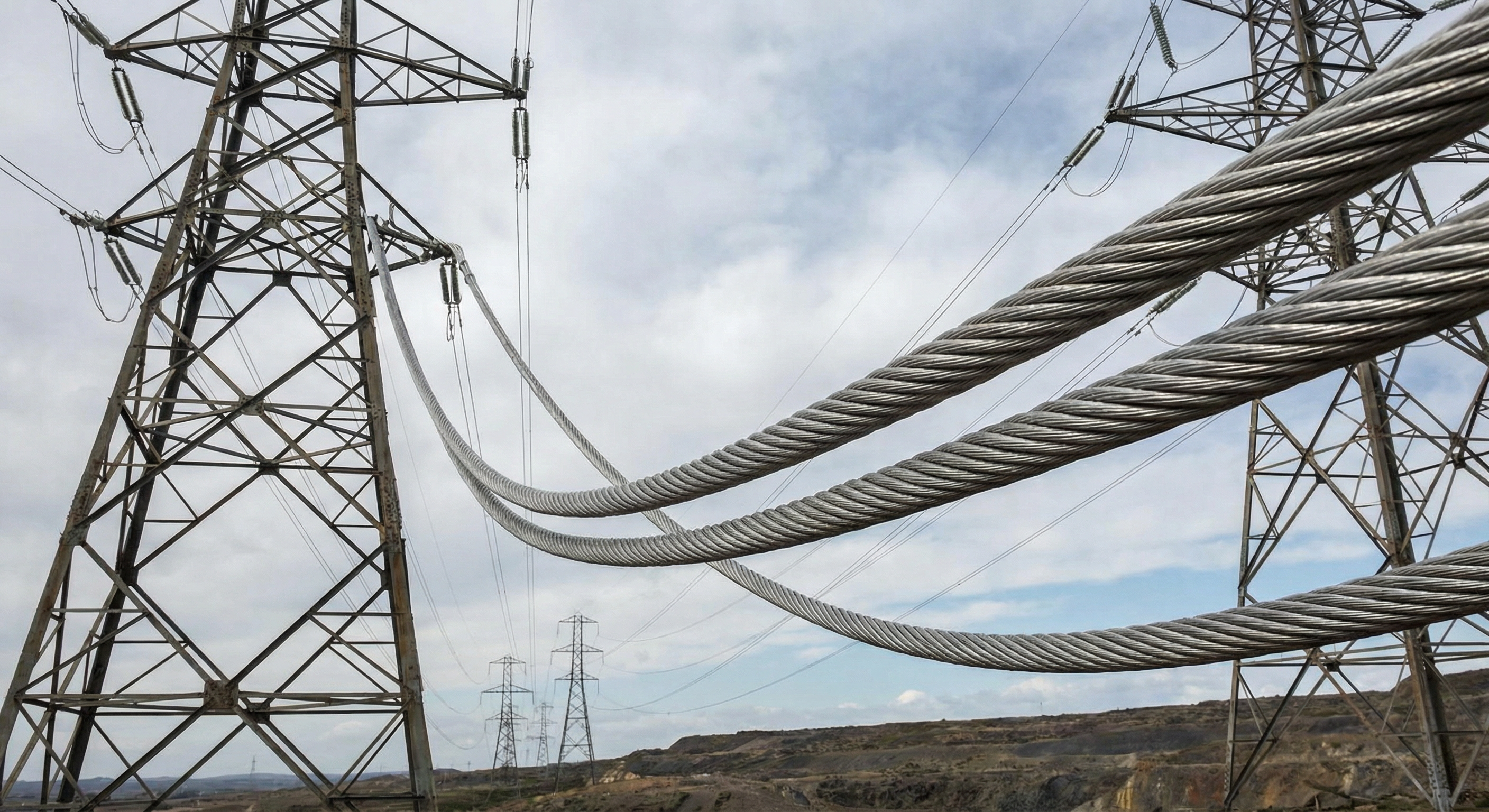
For more than a century, ACSR has been the workhorse of the world's transmission and distribution networks. Its dual-metal design resolves the fundamental tension of overhead line engineering: aluminum conducts electricity well but is mechanically weak, while steel is strong but a poor conductor. By stranding high-purity aluminum wires around a galvanized steel core, ACSR delivers a conductor that is light enough to minimize tower loading yet strong enough to handle long spans, ice, wind, and emergency tension events.
In the 2026 grid landscape — dominated by renewable energy integration, long-distance transmission corridors, and large-scale line upgrades — ACSR retains its position as the default choice for utilities from North America to Southeast Asia. Its decades-long service record, well-understood sag-tension behavior, and mature hardware ecosystem make it the low-risk option for projects of every scale, from 11 kV rural feeders to 500 kV extra-high-voltage lines.
2. Construction: Concentric-Lay Stranding of Aluminum over Steel
ACSR is built in concentric layers. The core consists of one or more galvanized steel wires — the "St" in ACSR — surrounded by one or more layers of EC-grade aluminum wires, typically 1350-H19, which form the "Al" component. The stranding notation states the number of aluminum strands over the number of steel core strands: for example, 26/7 means 26 aluminum wires over a 7-wire steel core.
Table 1: Material Properties in ACSR Design
| Feature | Aluminum (1350-H19) | Galvanized Steel Core | Resulting ACSR Advantage |
|---|---|---|---|
| Primary Function | Electrical Conductivity | Mechanical Support | Optimized Performance |
| Density (kg/m³) | ~2,705 | ~7,800 | Lightweight yet Strong |
| Tensile Strength | Low to Moderate | Very High | Excellent Span Stability |
| Conductivity (% IACS) | 61.0% – 61.2% | ~9% (negligible) | High Power Capacity |
The steel core is zinc-coated in accordance with ASTM B498, with galvanizing classes A, B, or C selected according to exposure: Class A for inland environments, Class B for coastal or industrial areas, and Class C extra-heavy coating for severe marine conditions. Where corrosion risk is extreme, aluminum-clad steel core wire per ASTM B341 offers an alternative. Core strength governs the conductor's rated breaking strength, while the aluminum layers determine current-carrying capacity.
3. International Standards and Specifications
To ensure global interoperability and safety, SiTong manufactures ACSR conductors in strict accordance with the following standards:
Table 2: Governing Standards for ACSR
| Standard | Scope | Region |
|---|---|---|
| ASTM B232 | Concentric-lay-stranded ACSR (governing standard) | USA / Americas |
| ASTM B498 | Zinc-coated steel core wire for ACSR | USA / Americas |
| ASTM B341 | Aluminum-clad steel core wire (marine alternative) | USA / Americas |
| IEC 61089 | Round-wire concentric-lay overhead conductors | International |
| BS 215-2 | ACSR specification | UK / Commonwealth |
| DIN 48204 | ACSR specification | Germany / Europe |
| IEC 61284 | Overhead line fittings and accessories | International |
💡 Project tip: For intercontinental tenders, specify IEC 61089 as the primary reference and confirm compatibility with the local utility's national standard (ASTM B232 in the Americas, BS 215 in the UK, DIN 48204 in Central Europe). Fittings and hardware should then be selected to IEC 61284 to match.
4. Bird-Code Designations and Technical Specifications
Utilities worldwide identify ACSR sizes by traditional "bird" code names rather than bare numbers. Each bird code maps to a specific AWG/kcmil size and stranding. The table below lists the most commonly specified codes with their rated strength per ASTM B232.
Table 3: Popular ACSR Bird Codes (ASTM B232)
| Bird Code | Size (AWG/kcmil) | Stranding (Al/St) | Rated Strength (kN) | Typical Application |
|---|---|---|---|---|
| Sparrow | #2 | 6/1 | 12.7 | Rural distribution, service drops |
| Raven | 1/0 | 6/1 | 19.5 | Rural and light urban distribution |
| Penguin | 4/0 | 6/1 | 37.1 | Urban distribution, secondary lines |
| Partridge | 266.8 | 26/7 | 77.0 | Sub-transmission (11–33 kV), main feeders |
| Drake | 795 | 26/7 | 197.9 | HV transmission (66–220 kV) |
| Cardinal | 954 | 54/7 | 240.5 | HV/EHV transmission, heavy loading |
💡 Selection note: The stranding ratio (Al/St) describes geometry only — 26/7 is a 26-aluminum-strand layer over a 7-wire steel core. Always specify the bird code together with the governing standard, since the same code name can appear with minor dimensional differences across ASTM, IEC, and BS versions.
5. ACSR vs AAC, AAAC, and ACAR: Choosing the Right Conductor
ACSR is often compared with its bare-conductor relatives: all-aluminum conductor (AAC), all-aluminum alloy conductor (AAAC), and aluminum conductor alloy reinforced (ACAR). Each has a distinct strength-cost-conductivity profile.
Table 4: Bare Conductor Family Comparison
| Property | AAC | AAAC (6201-T81) | ACSR | ACAR |
|---|---|---|---|---|
| Construction | All aluminum | All 6201 alloy | Steel core + Al strands | Alloy core + Al strands |
| Conductivity | Highest (~62% IACS) | ~53% IACS | ~61% IACS | High |
| Strength | Lowest | High | Highest (steel core) | High |
| Weight | Lightest | Light | Heavier | Medium |
| Corrosion | Good | Excellent (no bimetallic) | Needs coating in coastal zones | Good |
| High-temp sag | Poor | Good | Good (to 100 °C) | Good |
| Best suited for | Short spans, urban feeders | Long spans, corrosive atmospheres | Long spans, HV/EHV transmission | Long spans with high conductivity |
In short: AAC is chosen where conductivity per dollar matters and spans are short; AAAC where corrosion resistance and strength-to-weight ratio dominate; ACSR where maximum strength and economy at high voltage are required; and ACAR where a balance of high conductivity and good strength is needed. For a deeper comparison, see our AAC vs AAAC vs ACSR analysis.
6. Thermal Performance, Ampacity, and Sag
Modern grid operation frequently requires conductors to operate at elevated temperatures during peak loads and contingencies. ACSR is typically rated for 75 °C continuous operation, with 100 °C permitted during emergency overloads for most designs. Above 100 °C, the aluminum strands begin to anneal and lose strength — at that point, ACSS (fully annealed aluminum) or HTLS conductor designs are the appropriate upgrade.
As an order-of-magnitude reference, a 795 kcmil Drake ACSR conductor can carry roughly 900 A under standard 75 °C, 0.61 m/s wind conditions — enough for a typical 220 kV double-circuit corridor. The steel core also significantly limits thermal sag compared with all-aluminum AAC, maintaining critical safety clearances to ground and adjacent structures even under emergency loading. This combination of high ampacity and controlled sag is why ACSR remains the standard for long transmission spans.
7. Applications and Selection by Environment
ACSR's versatility allows the aluminum-to-steel ratio to be tuned for diverse climates — from the high-sag challenges of tropical regions to the heavy ice loading of arctic environments. The table below summarizes the design focus per environment.
Table 5: ACSR Selection Framework by Climate Zone
| Environment | Stranding Ratio (Al:St) | Coating Type | Design Focus |
|---|---|---|---|
| Coastal / Marine | High Aluminum | Class C Galvanized / Greased | Corrosion Inhibition |
| Mountainous / Alpine | High Steel (7/1, 19/1) | Class A Galvanized | Ice Loading & Tension |
| Industrial / Urban | Standard (26/7, 54/7) | Standard Galvanized | Ampacity & Conductivity |
| Long Span (River Crossings) | Extra High Steel | High Strength Steel | Maximum Tensile Strength |
Size selection follows the application voltage and span profile: #6–#2 AWG for rural distribution feeders and service drops; 1/0–4/0 AWG for urban distribution and secondary lines; 266.8–477 kcmil for 11–33 kV sub-transmission; 477–954 kcmil for 66–220 kV HV transmission; and 1,113 kcmil and above for EHV lines and major river crossings.
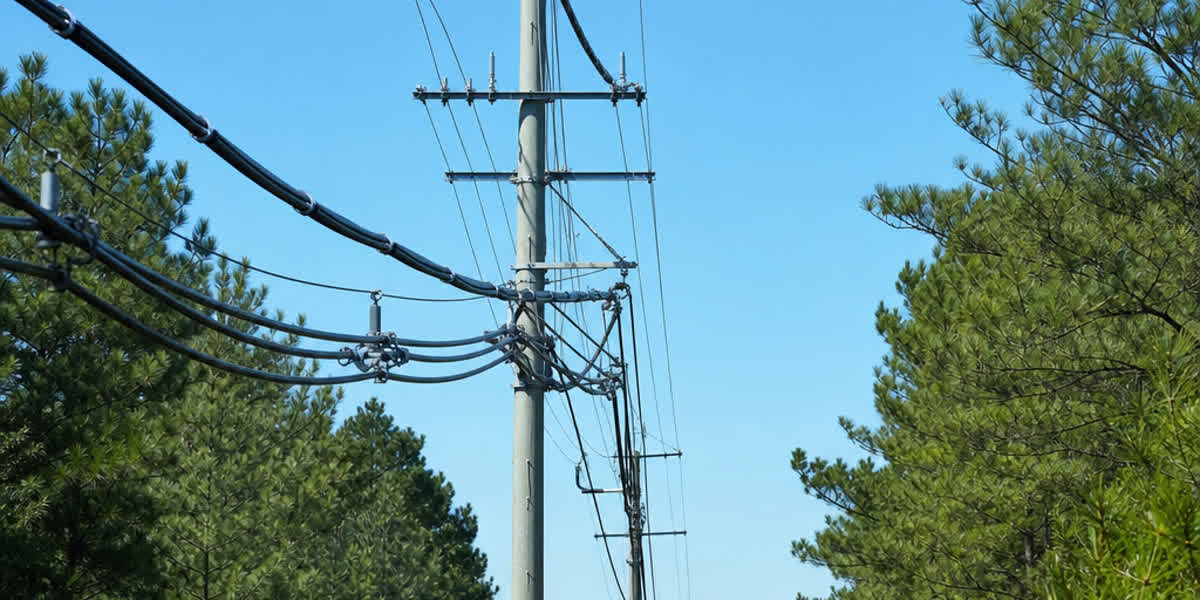
On modern transmission towers, ACSR is frequently strung alongside optical ground wire (OPGW), which doubles as the shield wire and the communications backbone. A complete tower design therefore considers both the power conductor and its fiber-optic companion.
8. Selection Framework: Five Steps
- Define electrical requirements — voltage class, design load current, and allowable voltage drop at the receiving end.
- Select the conductor size — start from the bird-code table above, then apply derating factors for ambient temperature, solar heating, and wind.
- Check voltage drop — for a three-phase line,
Vd = √3 × I × L × (R cos φ + X sin φ), where R and X are per-km values. Adjust the size until the drop meets the utility's limit (typically 3–5%). - Verify mechanical strength — confirm the conductor's rated strength covers the design tension with the required safety factor under ice and wind loading, using catenary sag-tension calculations.
- Evaluate economics — compare installed cost, losses, and sag performance against AAC, AAAC, and ACAR alternatives over the project life.
9. Frequently Asked Questions
1. Is ACSR the same as AAAC? No. ACSR uses a galvanized steel core with aluminum strands, giving it the highest strength of the bare-conductor family. AAAC is made entirely of 6201-T81 aluminum alloy, which offers superior corrosion resistance (no bimetallic contact) and a better strength-to-weight ratio, at slightly lower conductivity.
2. What does the stranding notation 26/7 mean? It means the conductor is built from 26 aluminum strands laid over a 7-wire steel core. The first number always refers to the aluminum layer(s); the second to the steel core strands.
3. What is the maximum operating temperature of ACSR? Typically 75 °C continuous and 100 °C for emergency overloads. Operating above 100 °C for sustained periods anneals the aluminum strands and permanently reduces strength — for high-temperature applications, specify ACSS or HTLS designs instead.
4. Can ACSR be used in coastal or marine environments? Yes, with the correct protection: Class B or Class C galvanizing, greased cores, or aluminum-clad steel core wire per ASTM B341. The zinc coating grade should be matched to the actual chloride exposure at the site.
5. What is the difference between ACSR and ACSS? ACSS (Aluminum Conductor Steel Supported) uses fully annealed aluminum strands over the steel core, allowing continuous operation up to about 200 °C with minimal loss of strength. ACSR is more economical for standard applications, while ACSS is specified where high-temperature operation or sag control is critical.
10. Conclusion: Engineering the 2026 Transmission Network
The reliability of a transmission line starts with the conductor. ACSR provides the most cost-effective, proven, and reliable solution for bulk power transfer — combining the ampacity of aluminum with the strength of steel, backed by a century of field experience and a complete family of international standards.
At SiTong Cable, we combine decades of manufacturing expertise with rigorous quality control to deliver ACSR solutions that power the world.
👉 Browse our ACSR conductor range 👉 ACSR installation & maintenance guide 👉 Contact our team
📬 Sales inquiries: sales@sitongcable.com | 📞 Phone: +86-371-69176007
This guide was prepared by the SiTong Cable engineering team. All technical data references ASTM B232, IEC 61089, and associated standards.