Cable Aéreo Bundled (ABC) vs Conductor Desnudo de Línea Aérea: Comparación Técnica Completa y Guía de Selección
Cable Aéreo Bundled (ABC) vs Conductor Desnudo de Línea Aérea: Comparación Técnica Completa y Guía de Selección
Introducción
Al planificar infraestructuras de distribución eléctrica aérea, una de las decisiones más críticas que enfrentan los ingenieros y profesionales de compras es elegir entre el Cable Aéreo Bundled (ABC) y los conductores desnudos tradicionales. Cada opción ofrece ventajas técnicas distintas, escenarios de aplicación y consideraciones económicas.
Los conductores desnudos — incluyendo ACSR (Aluminio con Alma de Acero), AAC (Conductor Totalmente de Aluminio) y AAAC (Conductor de Aleación de Aluminio) — tienen una trayectoria exitosa de más de un siglo, valorados por su bajo costo e instalación sencilla. El Cable Aéreo Bundled (ABC), por otro lado, ha ganado una rápida adopción global desde la década de 1980, convirtiéndose en la opción preferida para redes de distribución urbanas, electrificación rural y áreas forestales debido a su seguridad y confiabilidad superiores.
Esta guía completa proporciona un análisis comparativo en seis dimensiones — cubriendo especificaciones técnicas, rendimiento eléctrico, características mecánicas, instalación y mantenimiento, relación costo-beneficio, y seguridad e impacto ambiental — referenciando los últimos estándares internacionales (IEC 60502, IEC 60228, IEC 61089, IEEE 524, BS 7870, GB/T 12527, y más) para respaldar la toma de decisiones de su proyecto.
1. ¿Qué es el Cable Aéreo Bundled (ABC)?
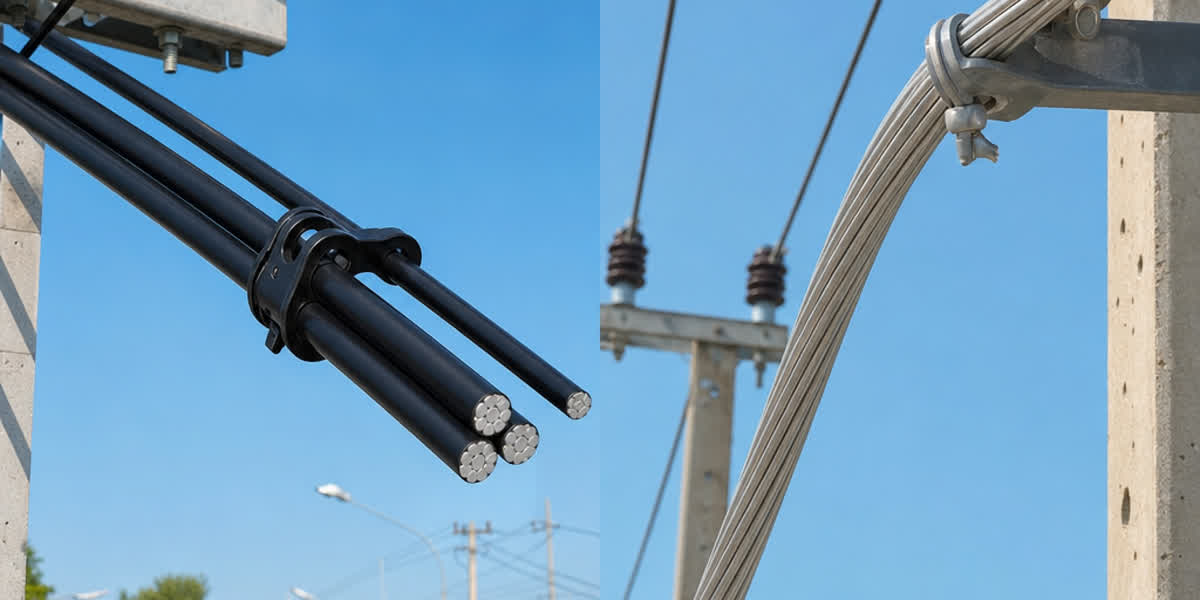
El Cable Aéreo Bundled (ABC) es un sistema de conductores aislados agrupados — ya sea con un cable mensajero/soporte separado o con un diseño autosoportante — instalado directamente en postes de servicios públicos para distribución eléctrica aérea.
Estándares Clave
- IEC 60502: Cables de energía con extrusión aislante para tensiones nominales de 1kV a 30kV
- IEC 60228: Conductores de cables aislados
- BS 7870: Cables ABC de BT y MT para distribución aérea
- GB/T 12527: Cables aislados aéreos para tensión nominal hasta 1kV
- GB/T 14049: Cables aislados aéreos para tensión nominal 10kV y 35kV
- NFC 33-209: Estándar francés de cable ABC (reconocido internacionalmente)
Construcción Típica
| Componente | Material | Función |
|---|---|---|
| Conductor | Aluminio / Aleación de Aluminio (estirado duro o recocido) | Conducción eléctrica |
| Aislamiento | XLPE (Polietileno Reticulado) o PVC | Aislamiento eléctrico |
| Mensajero/Soporte | Alambre de acero galvanizado o aleación de aluminio | Soporte de tensión mecánica |
| Método de agrupación | Enlace en espiral o disposición paralela | Estabilidad estructural |
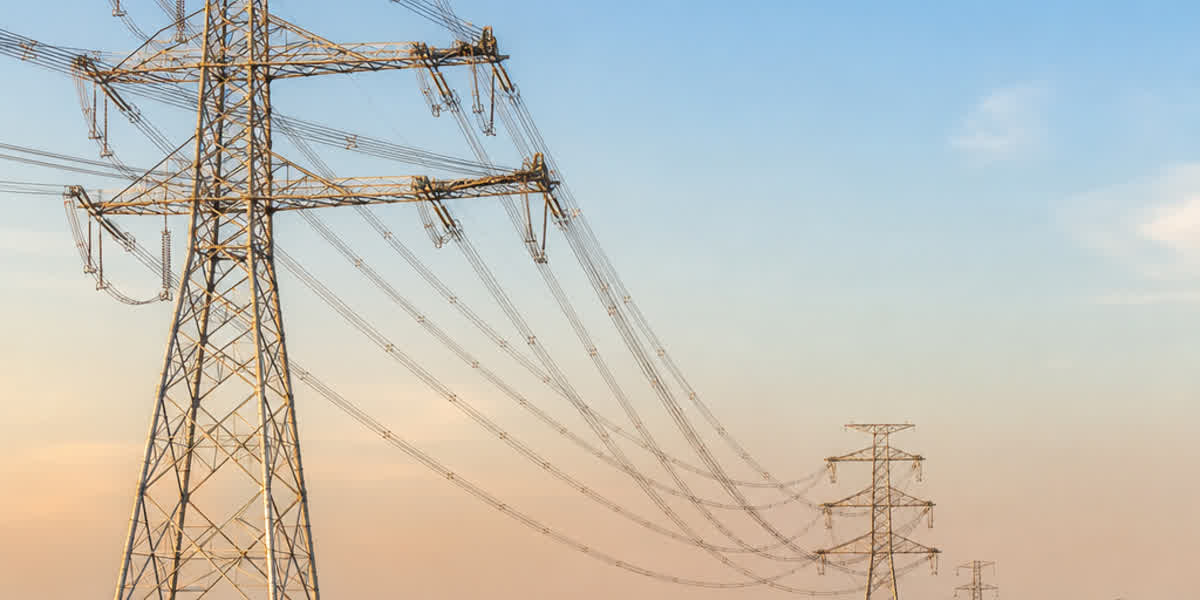
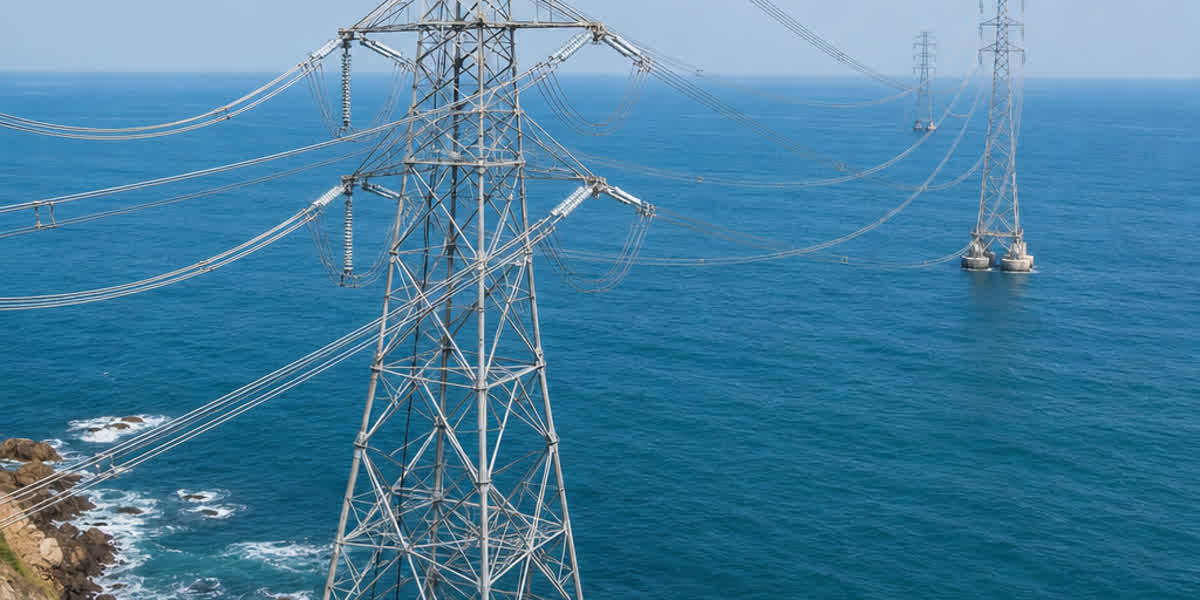
2. ¿Qué es un Conductor Desnudo de Línea Aérea?
Los conductores desnudos son alambres metálicos sin ningún tipo de aislamiento, montados sobre aisladores y fijados a postes o torres. Los tipos principales incluyen:
- ACSR (Aluminio con Alma de Acero): Hilos de aluminio sobre un núcleo de acero — excelente conductividad combinada con alta resistencia
- AAC (Conductor Totalmente de Aluminio): Totalmente de aluminio trenzado — la conductividad más alta
- AAAC (Conductor de Aleación de Aluminio): Hilos de aleación de aluminio — mayor resistencia que AAC
Estándares Clave
- ASTM B230/B231: Estándar para alambre de aluminio y conductores de aluminio trenzados
- IEC 61089: Conductores trenzados concéntricos de hilo redondo para líneas eléctricas aéreas
- BS EN 50182: Conductores para líneas aéreas
- GB/T 1179: Conductores trenzados concéntricos de hilo redondo para líneas eléctricas aéreas
Construcción Típica
| Componente | Material | Función |
|---|---|---|
| Capa conductora | Aluminio grado EC / aleación de aluminio | Conducción eléctrica |
| Núcleo de refuerzo (ACSR) | Alambre de acero galvanizado | Soporte de tensión mecánica |
| Superficie | Metal desnudo (sin aislamiento) | Expuesta directamente al entorno |
3. Análisis Comparativo en Seis Dimensiones
3.1 Comparación de Rendimiento Eléctrico
| Parámetro | Cable ABC | Conductor Desnudo |
|---|---|---|
| Tensión de aislamiento | 0.6/1kV ~ 12/20kV (estándar) | Sin aislamiento, depende de distancia al aire |
| Corriente de fuga | Mínima (bloqueada por aislamiento) | Mayor (aumenta en lluvia) |
| Pérdida de potencia | Menor (distancias cortas) | Menor (grandes secciones) |
| Temp. operación conductor | XLPE: 90°C (normal) / 250°C (cortocircuito) | Aluminio: 80-90°C (normal) |
| Corriente capacitiva | Mayor (aislamiento añade capacitancia) | Muy baja |
| Rendimiento ante rayos | Requiere pararrayos | Tolerancia natural a rayos |
Conclusión clave: El cable ABC proporciona seguridad eléctrica superior en áreas densamente pobladas; los conductores desnudos tienen menores pérdidas capacitivas en transmisión de larga distancia.
3.2 Comparación de Características Mecánicas
| Parámetro | Cable ABC | Conductor Desnudo |
|---|---|---|
| Resistencia a la tracción | Determinada por mensajero (30-50kN típico) | Determinada por alma de acero (ACSR hasta 100kN+) |
| Radio mín. de curvatura | 6-15× diámetro exterior | Sin restricción (hilos individuales) |
| Capacidad de vano | 40-60m (típico) | 100-300m (vanos largos) |
| Carga de viento | Mayor (diámetro más grande) | Menor (diámetro más pequeño) |
| Tolerancia a hielo/nieve | Menor (diámetro más grande, más hielo) | Mejor |
| Características de flecha | Flecha menor (autosoportante) | Flecha calculada según temperatura |
Conclusión clave: Los conductores desnudos son superiores en vanos largos y condiciones climáticas severas; el cable ABC es ideal para distribución urbana y rural de vanos más cortos.
3.3 Comparación de Instalación y Mantenimiento
| Aspecto | Cable ABC | Conductor Desnudo |
|---|---|---|
| Herramientas de instalación | Requiere herramientas especializadas de pelado y empalme | Herramientas básicas suficientes |
| Velocidad de instalación | Más lenta (pelado, empalme) | Rápida (tendido directo) |
| Espaciado de postes | 40-60m | 50-120m |
| Requisito de aisladores | Solo en terminaciones (o sin aisladores) | Aisladores de pin/post en cada poste |
| Frecuencia de mantenimiento | Baja (aislamiento protege conductores) | Limpieza regular (nidos, ramas) |
| Localización de fallas | Más difícil (fallas no visibles) | Identificación visual posible |
| Dificultad de reparación | Requiere corte de suministro | Posible trabajo en vivo (bajo condiciones) |
Conclusión clave: El cable ABC reduce significativamente la carga de mantenimiento, pero la instalación es más lenta y requiere mano de obra más calificada.
3.4 Comparación de Seguridad (Ventaja Principal del ABC)
| Aspecto | Cable ABC | Conductor Desnudo |
|---|---|---|
| Riesgo de electrocución | Extremadamente bajo (aislado) | Alto (conductores expuestos) |
| Distancia a árboles | Puede contactar árboles (aislamiento lo permite) | Requiere 1-3m de distancia |
| Electrocución de aves | Casi nula | Alta (miles de aves al año) |
| Riesgo de robo de electricidad | Muy bajo (requiere pelar aislamiento) | Existe (conexión directa) |
| Confiabilidad en tormentas | Alta (aislamiento evita cortocircuitos) | Baja (choque de conductores) |
| Seguridad pública | Peatones pueden estar cerca | Debe mantener distancia segura |
Conclusión clave: La seguridad es la mayor ventaja del cable ABC. En áreas residenciales, escuelas, parques y espacios públicos, ABC es la opción indiscutible.
3.5 Análisis de Costo-Beneficio
Comparemos un proyecto típico de mejora de red de distribución de 10km a 11kV:
| Elemento de costo | Cable ABC (10km) | Conductor Desnudo (10km) |
|---|---|---|
| Material del conductor | $8,000-12,000/km | $3,000-5,000/km |
| Aisladores | $500-1,000/km | $1,500-3,000/km |
| Mano de obra de instalación | $4,000-6,000/km | $2,000-3,000/km |
| Mantenimiento anual | $200-400/km | $500-1,000/km |
| Inversión inicial | $12,500-19,000/km | $6,500-11,000/km |
| Costo total a 5 años | $13,500-21,000/km | $9,000-16,000/km |
| Costo total a 10 años | $14,500-23,000/km | $11,500-21,000/km |
Conclusión clave: - La inversión inicial en ABC es aproximadamente 80-90% mayor que en conductores desnudos - Sin embargo, la reducción en costos de mantenimiento y pérdidas por cortes permite paridad de costos en 3-5 años - En escenarios que requieren bajo mantenimiento y riesgo cero de electrocución, el costo total del ciclo de vida del ABC es a menudo menor
3.6 Impacto Ambiental y Social
| Aspecto | Cable ABC | Conductor Desnudo |
|---|---|---|
| Campo electromagnético | Menor (aislamiento proporciona cierto blindaje) | Mayor |
| Impacto visual | Más limpio y estético | Apariencia más desordenada |
| Poda de árboles | Significativamente reducida | Poda frecuente requerida |
| Protección de vida silvestre | Protege aves de electrocución | Alta tasa de electrocución de aves |
| Ruido de corona | Casi ninguno | Ruido audible (especialmente en lluvia) |
| Ancho de servidumbre | Corredor estrecho (5-8m) | Corredor ancho (15-30m) |
4. Guía de Decisión de Selección
Priorizar Cable ABC Cuando
- ✅ Distribución urbana y residencial: Distancia de seguridad limitada, alta densidad poblacional
- ✅ Áreas forestales y parques: El contacto de árboles con líneas es inevitable
- ✅ Zonas costeras y de alta contaminación: El aislamiento protege los conductores de la corrosión
- ✅ Áreas de conservación de vida silvestre: Protección de aves contra electrocución
- ✅ Alrededor de escuelas y hospitales: Altos requisitos de confiabilidad, estrictos estándares de seguridad
- ✅ Restricciones de servidumbre: Optimización del espacio urbano
Priorizar Conductores Desnudos Cuando
- ✅ Líneas de transmisión de larga distancia (>50km): Clara ventaja de costo
- ✅ Líneas rurales remotas: Acceso de mantenimiento difícil, necesita solución robusta
- ✅ Regiones de gran altitud y hielo pesado: Los conductores desnudos manejan mejor el hielo
- ✅ Vanos largos (>200m): Rendimiento mecánico superior
- ✅ Transmisión EAT (110kV y superior): Solo existe opción de conductor desnudo
- ✅ Electrificación básica de bajo costo: Minimizar inversión inicial
Diagrama de Decisión
Análisis de Requisitos del Proyecto
    │
    ├── ¿Tensión > 35kV? ──→ Elegir Conductor Desnudo
    │
    ├── ¿Vano > 200m? ──→ Elegir Conductor Desnudo
    │
    ├── ¿Línea pasa por bosque/área residencial? ──→ Elegir Cable ABC
    │
    ├── ¿Equipo de mantenimiento limitado? ──→ Priorizar Cable ABC
    │
    └── ¿Presupuesto limitado? ──→ Conductor Desnudo (pero calcular TCO a 5 años)
5. Referencia de Especificaciones Técnicas
Especificaciones Comunes de Cable ABC
| Tipo | Conductor (mm²) | Tensión (kV) | Capacidad (A) | DE (mm) | Peso (kg/km) |
|---|---|---|---|---|---|
| ABC 4×16 | 16 | 0.6/1 | 85 | 12×19 | 350 |
| ABC 4×25 | 25 | 0.6/1 | 110 | 14×22 | 480 |
| ABC 4×35 | 35 | 0.6/1 | 135 | 15×24 | 600 |
| ABC 4×50 | 50 | 0.6/1 | 165 | 17×27 | 770 |
| ABC 4×70 | 70 | 0.6/1 | 205 | 19×30 | 980 |
| ABC 4×95 | 95 | 0.6/1 | 250 | 21×34 | 1,250 |
| ABC 3×50+54.6 | 50+54.6 | 12/20 | 165 | 22×35 | 1,100 |
| ABC 3×95+54.6 | 95+54.6 | 12/20 | 250 | 26×42 | 1,600 |
Especificaciones Equivalentes de Conductores Desnudos
| Tipo | Sección (mm²) | Resistencia DC (Ω/km, 20°C) | Capacidad (A) | DE (mm) | Peso (kg/km) |
|---|---|---|---|---|---|
| ACSR 16/2.5 | 18.5 | 1.811 | 105 | 5.4 | 61 |
| ACSR 25/4 | 29.5 | 1.131 | 140 | 6.9 | 98 |
| ACSR 35/6 | 41.2 | 0.823 | 175 | 8.2 | 136 |
| ACSR 50/8 | 58.1 | 0.595 | 210 | 9.7 | 196 |
| ACSR 70/10 | 80.6 | 0.422 | 260 | 11.4 | 270 |
| ACSR 95/15 | 109.5 | 0.307 | 315 | 13.3 | 369 |
| ACSR 120/20 | 138.1 | 0.242 | 370 | 15.0 | 464 |
6. Preguntas Frecuentes (FAQ)
P1: ¿Se puede instalar cable ABC en rutas existentes de conductores desnudos?
R: Sí. El hardware de terminación del cable ABC es compatible con aisladores estándar, permitiendo el reemplazo directo. Sin embargo, considere si el espaciado de postes necesita ajuste — ABC requiere vanos más cortos que los conductores desnudos.
P2: ¿Cuánto dura el cable ABC?
R: En condiciones normales, el cable ABC con aislamiento XLPE tiene una vida útil de diseño de 30-40 años. La vida real depende de la calidad de instalación, condiciones ambientales y factores de carga. Los conductores desnudos en entornos no corrosivos pueden durar 40-50 años.
P3: ¿Se puede usar cable ABC para instalaciones submarinas?
R: No. El cable ABC está diseñado exclusivamente para instalación aérea. Las aplicaciones submarinas requieren cables blindados especialmente diseñados con bloqueo de agua, como los cables submarinos tipo HYJXF con aislamiento XLPE.
P4: ¿Cómo se desempeña el cable ABC ante rayos?
R: El aislamiento del cable ABC puede soportar sobretensiones moderadas inducidas por rayos, pero los impactos directos pueden perforar el aislamiento. Se recomiendan pararrayos, especialmente en regiones con alto nivel isoceratínico.
P5: ¿El cable ABC acumula más hielo que los conductores desnudos?
R: Sí. El diámetro exterior más grande del cable ABC presenta una superficie de captura de hielo mayor. En regiones de hielo pesado (espesor promedio anual >10mm), se recomiendan conductores desnudos o cables ABC anti-hielo especializados.
P6: ¿Cómo seleccionar el tamaño del mensajero para cable ABC?
R: La sección del mensajero depende de la longitud del vano y las condiciones climáticas. Guía general: - Vanos <40m: Mínimo 25mm² de mensajero - Vanos 40-60m: Mínimo 35mm² de mensajero - Vanos >60m: Requiere diseño de ingeniería especial
P7: ¿Cuál es la diferencia entre aislamiento XLPE y PVC en cables ABC?
R: XLPE (Polietileno Reticulado) ofrece mayor temperatura nominal (90°C vs 70°C), mejores propiedades eléctricas y vida útil más larga que PVC (Cloruro de Polivinilo). XLPE es el aislamiento preferido para cables aislados aéreos; PVC solo se usa en aplicaciones de baja tensión y baja exigencia.
P8: ¿Qué debo considerar al importar cables ABC?
R: Consideraciones clave: 1. Cumplimiento de estándares: Confirmar si aplican estándares IEC, BS o locales 2. Tensión nominal: Verificar que la tensión del sistema coincida con la tensión nominal del cable 3. Adaptación ambiental: Protección UV para regiones tropicales, flexibilidad a baja temperatura para climas fríos 4. Embalaje: Los cables ABC se envían típicamente en tambores de madera; asegurar protección contra humedad para flete marítimo
7. Enlaces Internos y Productos Relacionados
Ofrecemos una gama completa de productos de cable ABC y conductores desnudos:
- Productos de Cable Aéreo Bundled (ABC) — Gama completa de cables ABC, 0.6/1kV a 12/20kV
- Productos de Conductor ACSR — Gama completa de 16mm² a 800mm²
- Productos de Conductor AAC — Conductores aéreos de alta conductividad
- Productos de Conductor AAAC — Conductores de aleación de aluminio de alta resistencia
8. Conclusión
El Cable Aéreo Bundled (ABC) y los conductores desnudos tienen cada uno sus escenarios de aplicación óptimos — no existe una "mejor solución universal":
- Cable ABC se destaca en seguridad, confiabilidad y bajo mantenimiento — la mejor opción para distribución urbana, rutas forestales y áreas residenciales
- Conductores Desnudos siguen siendo insustituibles para transmisión de larga distancia, vanos largos y condiciones climáticas severas
Para requisitos específicos de proyecto, recomendamos una evaluación holística considerando nivel de tensión, longitud del vano, condiciones ambientales, requisitos de seguridad, restricciones presupuestarias y costo total del ciclo de vida.
SiTong Cable aporta más de 15 años de experiencia en fabricación tanto de cables ABC como de conductores desnudos, cumpliendo estrictamente con los estándares internacionales IEC, BS, ASTM y otros. Proporcionamos productos de conductores eléctricos de alta calidad y servicios de consultoría técnica profesional a clientes de todo el mundo.
Contáctenos para cotizaciones y hojas de datos técnicos detallados.
Referencias: IEC 60502, IEC 60228, IEC 61089, IEEE 524, BS 7870, GB/T 12527, GB/T 14049, ASTM B230/B231, ASTM B232