Solar Photovoltaic (PV) Cable: Complete Technical Guide, Standards & Selection Best Practices
Solar Photovoltaic (PV) Cable: Complete Technical Guide, Standards & Selection Best Practices
As global renewable energy installations grow at an unprecedented pace, dedicated cables for photovoltaic (PV) power generation systems are in ever-increasing demand. Solar PV cables are critical components connecting solar modules, inverters, combiner boxes, and grid interconnection equipment — their performance directly determines the safety, efficiency, and service life of the entire PV system. Unlike ordinary power cables, PV cables must withstand harsh outdoor conditions for 25+ years: intense UV radiation, extreme temperature swings (-40°C to +120°C), ozone, moisture, and mechanical stress. This comprehensive guide provides electrical engineers, PV project procurement professionals, and installers with everything you need to know about solar PV cables — from international standards and technical specifications to selection methods and installation best practices.
Product Overview
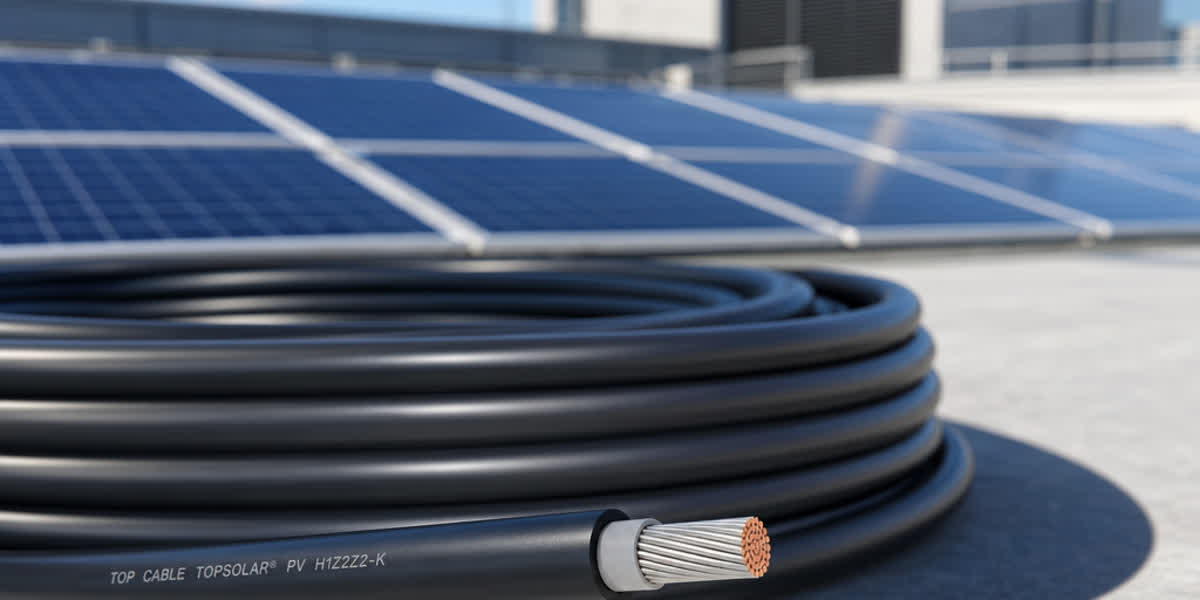
Solar PV cable is a single-core, cross-linked polyolefin (XLPO/XLPE) insulated cable specifically designed for photovoltaic power systems. Unlike ordinary PVC cables, PV cables use halogen-free, low-smoke, flame-retardant (LSZH) materials and radiation cross-linking technology to meet the demanding 25+ year service life requirements of outdoor PV installations.
Key advantages of PV cables include:
- Exceptional weatherability: UV-resistant, ozone-resistant, extreme temperature range (-40°C to +120°C), design life ≥25 years
- Halogen-free, low-smoke, flame-retardant (LSZH/FRNC): No toxic halogen gases or dense smoke in fire conditions
- High voltage rating: Rated voltage DC 1.5kV/1.8kV (dual insulation system), meeting rising system voltage requirements
- Excellent mechanical properties: High tensile strength, cut resistance, torsion resistance
- Chemical resistance: Resists acids, alkalis, salt spray, and oil contamination
International Standards System
PV cable design, production, and testing must comply with the following major international standards:
Core Standards Comparison
| Standard | Title | Scope |
|---|---|---|
| IEC 62930 | Halogenated cables for photovoltaic systems (PV1-F) | International, adopted by EU |
| EN 50618 | Cables for photovoltaic systems — European harmonized standard | Mandatory for EU market |
| TÜV 2PfG 1169 | Cables for photovoltaic systems | Germany/Europe market access (being superseded by EN 50618) |
| UL 4703 | Photovoltaic Wire | North American standard |
| UL 44 / UL 854 | Thermoset-Insulated Wires / Service-Entrance Cables | North America supplementary |
| AS/NZS 5000.1 | Electric cables — Polymeric insulated | Australia/New Zealand |
| GB/T 33348 | Cables for photovoltaic systems | Chinese market |
| ISO 9001 | Quality management systems | Manufacturing quality assurance |
Key Certification Bodies
| Certification | Corresponding Standard | Primary Market |
|---|---|---|
| TÜV Rheinland | EN 50618 / 2PfG 1169 | Europe |
| CE | IEC 62930 / EN 50618 | Europe |
| UL | UL 4703 | North America |
| CQC | GB/T 33348 | China |
| DEKRA / SAA | AS/NZS 5000.1 | Australia |
Technical Specifications
Conductor Specifications
PV cables use Class 5 flexible stranded copper conductors (IEC 60228 Class 5) for ease of installation.
| Nominal Cross-section (mm²) | Stranding (No. × mm) | Max DC Resistance at 20°C (Ω/km) | Current Rating (A) at 40°C Ambient |
|---|---|---|---|
| 1.5 | 30×0.25 | ≤13.7 | 20 |
| 2.5 | 50×0.25 | ≤8.21 | 27 |
| 4.0 | 56×0.30 | ≤5.09 | 36 |
| 6.0 | 84×0.30 | ≤3.39 | 46 |
| 10 | 84×0.40 | ≤1.95 | 63 |
| 16 | 126×0.40 | ≤1.24 | 85 |
| 25 | 196×0.40 | ≤0.795 | 112 |
| 35 | 276×0.40 | ≤0.565 | 140 |
| 50 | 396×0.40 | ≤0.393 | 168 |
| 70 | 360×0.50 | ≤0.277 | 213 |
| 95 | 475×0.50 | ≤0.210 | 256 |
| 120 | 608×0.50 | ≤0.164 | 295 |
Insulation and Sheath Performance
| Parameter | PV1-F (EN 50618) | UL 4703 (North America) |
|---|---|---|
| Rated Voltage | DC 1.5kV | DC 600V / 1000V / 2000V |
| Insulation Material | Cross-linked polyolefin (XLPO) | XLPE / EPDM / XLPO |
| Insulation Thickness | ≥0.5mm (DC 1.5kV) | Per voltage class |
| Max Operating Temperature | 120°C | 90°C / 105°C / 125°C |
| Min Installation Temperature | -40°C | -40°C |
| Short-circuit Temperature | 280°C (5s) | 250°C |
| Flame Test | IEC 60332-1-2 | UL VW-1 / FT1 |
| Halogen-free Test | IEC 60754-1/2 | — |
| Smoke Density | IEC 61034 | — |
| UV Resistance | ≥2000 hours (EN 50618) | ≥720 hours (UL 4703) |
| Heat Shock | 150°C / 1 hour | 136°C / 1 hour |
Construction
The typical construction of a PV cable is single-core, from inside to outside:
- Conductor: Tinned stranded copper (Class 5 flexible). The tin coating prevents copper from reacting with sulfur compounds released during the cross-linking process.
- Insulation: Cross-linked polyolefin (XLPO), providing excellent electrical insulation and weather resistance.
- Sheath (on dual-insulation models): An additional outer layer over the insulation, providing double physical protection.
Note: Under EN 50618/2PfG 1169, the insulation and sheath may be the same material (XLPO) applied via dual-layer co-extrusion, forming a "pseudo-dual-insulation" construction meeting DC 1.5kV requirements.
Main Types of PV Cables
By Certification Standard
| Type | Standard | Rated Voltage | Primary Market |
|---|---|---|---|
| PV1-F | EN 50618 / TÜV 2PfG 1169 | DC 1.5kV | Europe, Asia, Africa, Middle East |
| UL 4703 | UL 4703 | DC 600V-2000V | North America |
| PV Wire | UL 4703 / UL 44 | DC 1000V | United States |
| USE-2 | UL 854 | DC 600V | United States (underground) |
| H1Z2Z2-K | EN 50618 (legacy) | DC 1.5kV | Europe (being superseded by PV1-F) |
By Construction
| Type | Features | Typical Application |
|---|---|---|
| Single Insulation (single-layer XLPO) | Lightweight, cost-effective | Indoor / protected environments |
| Dual Insulation | Insulation + sheath | Outdoor, rooftop, aerial |
| Armored (SWA/AWA) | Steel or aluminum wire armor | Direct burial, rodent-prone areas |
| Flat/Twin Core | Two parallel conductors | Module jumpers, tracking systems |
By Shape
| Shape | Features | Application |
|---|---|---|
| Round (Single Core) | Most common PV cable form | General PV wiring |
| Flat (Twin/Triple Core) | Parallel conductors, easy conduit installation | Inverter AC output, string jumpers |
| Coaxial PV Cable | Center conductor + shield + outer insulation | Sensitive equipment requiring EMI shielding |
Selection Guide
1. Voltage Rating Selection
System voltage in PV installations continues to rise. Select accordingly:
| System Voltage | Recommended Cable Rating |
|---|---|
| ≤ 600V DC | DC 600V (UL 4703) or DC 1.5kV |
| 600V - 1000V DC | DC 1.0kV - 1.5kV (PV1-F) |
| 1000V - 1500V DC | DC 1.5kV / 1.8kV (PV1-F / EN 50618) |
| > 1500V DC | DC 2.0kV (UL 4703) or specialized HV PV cable |
⚠️ Modern large-scale ground-mounted PV plants commonly operate at 1500V DC. Cables rated at least DC 1.5kV are mandatory.
2. Cross-section Selection
Cross-section selection must consider:
- Current-carrying capacity: Depends on cross-section, ambient temperature, installation method (aerial/conduit/buried)
- Voltage drop: For long runs (>50m), verify voltage drop ≤ 3%
- Short-circuit thermal stability: Ensure cable withstands short-circuit thermal effects
- Economic cross-section: LCOE optimization balancing initial investment and long-term losses
Simplified selection reference (DC 1500V system, 40°C ambient, aerial installation):
| String Power (kW) | String Current (A) | Recommended Cross-section (mm²) |
|---|---|---|
| ≤ 15 | ≤ 30 | 4 |
| 15 - 25 | 30 - 45 | 6 |
| 25 - 35 | 45 - 65 | 10 |
| 35 - 50 | 65 - 80 | 16 |
| 50 - 70 | 80 - 110 | 25 |
| 70 - 100 | 110 - 140 | 35 |
3. Environmental Factors
| Condition | Considerations | Recommended Solution |
|---|---|---|
| High temp (>60°C rooftop) | Current derating required | XLPO insulation, derating per IEC 60364-5-52 |
| High altitude (>2000m) | Reduced cooling, lower air insulation strength | Increase one cross-section class |
| Coastal/salt spray | Salt corrosion of conductor | Tinned stranded copper + salt-spray-resistant sheath |
| High humidity/rain | Moisture ingress | Dual insulation construction |
| Chemical plant/corrosive environment | Acid/alkali exposure | PV1-F + chemical-resistant sheath |
| Direct burial | Mechanical protection | Armored PV cable |
| Module backside high temp | Contact with hot modules | PV1-F rated at 120°C |
Installation Guidelines
1. Minimum Bending Radius
| Condition | Minimum Bending Radius |
|---|---|
| During installation | ≥ 5× outer diameter |
| After installation (fixed) | ≥ 4× outer diameter |
2. Cable Spacing
- For multiple parallel cables, maintain spacing ≥ 2× cable outer diameter (ensure heat dissipation)
- Install protective conduit at contact points with metal structures
3. Fixing Spacing
| Installation Orientation | Maximum Fixing Spacing |
|---|---|
| Horizontal | 800mm |
| Vertical | 1000mm |
4. Color Coding
| Function | Recommended Color |
|---|---|
| Positive (DC+) | Red |
| Negative (DC-) | Black |
| AC (Alternating Current) | Brown/Gray/Black (3-phase) |
| Ground (PE) | Yellow-Green |
Application Scenarios
| Application | Recommended Cable Type | Key Requirements |
|---|---|---|
| Rooftop Distributed PV | PV1-F (EN 50618) dual insulation | UV-resistant, lightweight, high-temp rated |
| Large-scale Ground-mounted PV | PV1-F (EN 50618) / UL 4703 | Economic cross-section, long-distance voltage drop |
| Agrivoltaic / Fishery PV | PV1-F + armored | Moisture-resistant, rodent-proof |
| BIPV (Building Integrated PV) | PV1-F flat twin-core | Aesthetic, slim profile |
| Floating PV | PV1-F dual insulation + waterproof | Hydrolysis-resistant, UV-resistant |
| Central Inverter DC Side | PV1-F 35-120mm² | Large cross-section, easy termination |
| String Inverter AC Side | PV1-F or standard YJV cable | Voltage class matching |
| Battery Energy Storage (BESS) | PV1-F or specialized storage cable | High-temp, chemical-resistant |
PV Cable vs. Ordinary Power Cable
| Comparison Item | PV Cable (PV1-F) | Ordinary PVC Power Cable |
|---|---|---|
| Weatherability | ⭐⭐⭐⭐⭐ UV-resistant ≥2000 hours | ⭐ Aged within 1-2 years outdoors |
| Temperature Range | -40°C to +120°C | -15°C to +70°C |
| Flame Performance | Halogen-free, low-smoke (LSZH) | Halogenated, toxic smoke in fire |
| Rated Voltage | DC 1.5kV / 1.8kV | AC 0.6/1kV |
| Design Life | ≥25 years | ≤15 years (outdoor) |
| Flexibility | Class 5 flexible conductor | Class 2 rigid conductor |
| Certification | TÜV / UL / CE | PVC standard only |
| Unit Cost | Higher | Lower |
| 25-year TCO | Low (no replacement needed) | High (requires periodic replacement) |
Important: Using ordinary PVC power cables in PV systems as a substitute for dedicated PV cables may save costs in the short term, but PVC cables will crack and lose insulation integrity within 1-2 years of UV exposure outdoors, leading to system failure, leakage, and even fire hazards. Life-cycle cost (TCO) analysis over 25 years consistently demonstrates that certified PV cables are the most economical choice.
Frequently Asked Questions (FAQ)
Q1: Can PV cables and ordinary cables be used interchangeably?
No. PV cables are specially formulated and radiation cross-linked for UV resistance, high temperature tolerance (120°C), and halogen-free flame retardance. Ordinary PVC cables lack these properties and will degrade within 1-2 years outdoors, causing power loss and DC arc fire risks.
Q2: Why do PV cables use tinned copper conductors?
PV insulation materials (XLPO) may release trace sulfur compounds during cross-linking. Copper reacts with sulfur at high temperatures to form copper sulfide, increasing contact resistance and causing overheating at connection points. The tin coating creates an effective barrier between copper and insulation, preventing this reaction.
Q3: What is the difference between EN 50618 and TÜV 2PfG 1169?
TÜV 2PfG 1169 was the first PV cable standard published by TÜV Rheinland (2004). EN 50618 is the European harmonized standard released in 2014. Technical requirements are highly aligned, but EN 50618 has mandatory EU status and is gradually replacing 2PfG 1169. New certifications are now primarily performed to EN 50618.
Q4: What is the difference between PV1-F and H1Z2Z2-K?
Both are model designations for cables conforming to EN 50618. PV1-F (Photovoltaic 1-core Flexible) is the primary designation; H1Z2Z2-K (Harmonized cable, halogen-free, 1.5kV, flexible) is the European harmonized designation. In practice, PV1-F = H1Z2Z2-K.
Q5: Can PV cables be used on AC circuits?
Yes. PV cable (PV1-F) insulation performance exceeds that of ordinary AC cables, making it fully suitable for AC circuits. Many inverter manufacturers recommend PV1-F cable for the AC output side, especially for outdoor-mounted inverters.
Q6: Is dedicated cable mandatory for 1500V PV systems?
Yes. The peak voltage of a 1500V DC system can reach 1500V×1.2=1800V (considering temperature-compensated open-circuit voltage). Cables rated ≥DC 1.5kV (PV1-F or H1Z2Z2-K) are mandatory. Using ordinary 1000V-rated cables presents a risk of insulation breakdown.
Q7: Do PV cables require special termination?
Yes. PV cable terminations should use dedicated MC4-compatible connectors and crimping tools. PV connectors must comply with IEC 62852, ensuring reliable contact and IP67 protection rating.
Product Range
SiTong Cable offers a complete range of solar PV cables serving diverse markets and project requirements:
- PV1-F Solar Cable (TÜV/CE Certified) — Compliant with EN 50618, DC 1.5kV, for European and international markets
- UL 4703 Solar Cable (UL Listed) — North American market PV cable
- Twin Core Solar Cable — Dedicated cable for module jumpers
- Battery & Storage System Cable — High-temperature, chemical-resistant cable for BESS
- DC 1.8kV Solar Cable — High voltage rating for ultra-large PV plants
Why Choose SiTong Cable?
- 15+ years of export experience, PV cables shipped to 40+ countries worldwide
- Full certification: TÜV, CE, UL, ISO 9001 compliance
- Flexible customization: Custom cross-sections, colors, and sheath materials
- Comprehensive after-sales support: Installation guidance, technical support, quality warranty
- Factory-direct pricing with robust supply chain cost control
For product quotations or technical consultation, please contact us:
📧 sales@sitongcable.com 📞 +86-371-69176007 🌐 https://www.sitongcable.com