Conductor ACSS (Annealed Steel Supported / Aluminio Recocido con Alma de Acero): Guía Técnica Completa sobre Estándares, Especificaciones y Aumento de Capacidad en Líneas de Transmisión
Conductor ACSS (Annealed Steel Supported / Aluminio Recocido con Alma de Acero): Guía Técnica Completa sobre Estándares, Especificaciones y Aumento de Capacidad en Líneas de Transmisión
El conductor ACSS (Annealed Steel Supported, Aluminio Recocido con Alma de Acero) es un miembro clave de la familia de conductores HTLS (High Temperature Low Sag, Alta Temperatura Baja Flecha). Utilizando hebras de aluminio completamente recocido alrededor de un alma de acero galvanizado (o acero aluminizado), el ACSS puede operar continuamente a 200°C–250°C, ofreciendo entre un 50% y 100% más de ampacidad que un ACSR convencional del mismo tamaño. Esta guía completa cubre estándares técnicos, especificaciones, metodología de selección y aplicaciones de ingeniería.
Introducción
El aumento de capacidad de las líneas de transmisión se ha convertido en una prioridad global, impulsado por el crecimiento de la demanda energética, la integración de energías renovables y las transferencias de energía entre regiones. La tecnología de conductores HTLS (Alta Temperatura Baja Flecha) aborda estos desafíos permitiendo que las líneas existentes operen a temperaturas más elevadas sin exceder los límites de flecha — eliminando la necesidad de construir nuevas torres o adquirir nuevos derechos de vía.
Entre las tecnologías de conductores HTLS, el ACSS (Aluminio Recocido con Alma de Acero) destaca como la solución más madura comercialmente y ampliamente desplegada. A diferencia del STACIR/AW, que depende del coeficiente de expansión térmica ultrabajo de la aleación Invar, el ACSS emplea un mecanismo fundamentalmente diferente: las hebras de aluminio están completamente recocidas (templado O), lo que provoca que experimenten relajación plástica en lugar de elongación elástica a altas temperaturas. Este comportamiento único permite que el ACSS logre:
- Mayor conductividad: 63% IACS (vs 58%–60% IACS de aleaciones termorresistentes estándar)
- Mayor temperatura de operación: 200°C continua, 250°C corta duración en emergencia
- Excelente flexibilidad: El aluminio recocido es mucho más flexible que el aluminio duro
- Reemplazo directo de ACSR: Diámetro exterior y peso idénticos para el mismo código
SiTong Cable fabrica conductores ACSS en estricta conformidad con las normas ASTM B857, IEC 61089 e IEEE 524, ofreciendo soluciones completas para proyectos de aumento de capacidad en líneas de 69kV a 500kV. Esta guía está diseñada para ingenieros de transmisión, planificadores de redes y gestores de proyectos que buscan una referencia técnica integral sobre la tecnología ACSS.
Fundamentos Técnicos del Conductor ACSS
Construcción
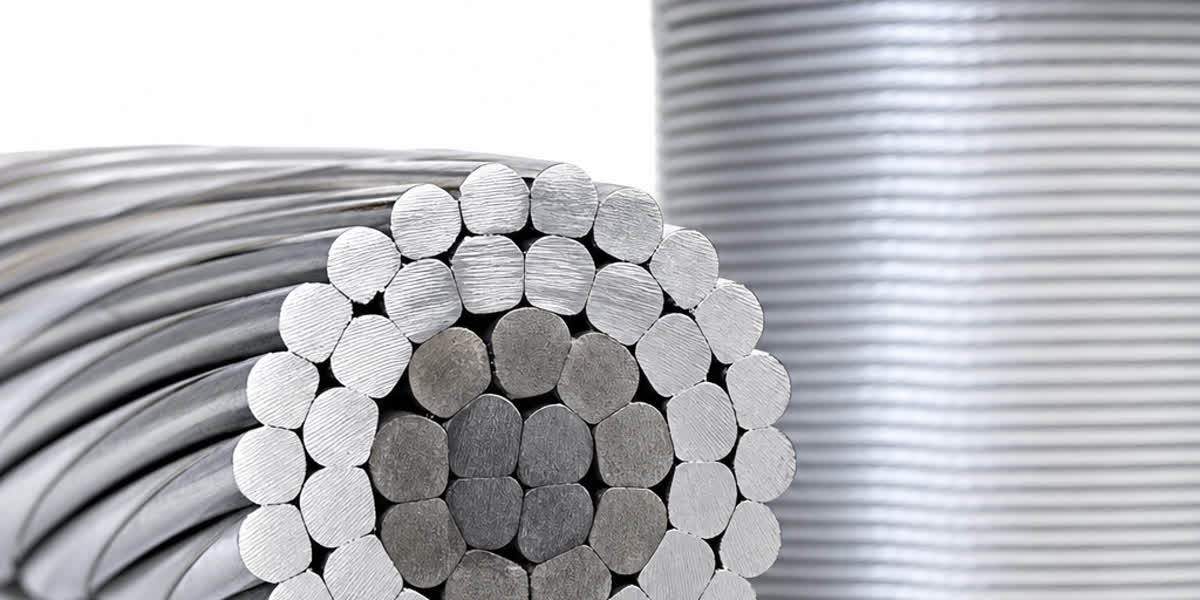
Los conductores ACSS presentan una construcción trenzada concéntrica con dos componentes principales:
- Alma: Hebras de acero galvanizado (o acero aluminizado) que proporcionan resistencia mecánica
- Capas exteriores: Hebras de aluminio de grado EC (Electrical Conductor) completamente recocidas que transportan la corriente eléctrica
Las hebras de aluminio recocido tienen aproximadamente el 50%–60% de la resistencia a la tracción del aluminio duro (80–100 MPa vs 160–200 MPa), pero ofrecen mayor conductividad (63% IACS vs 61% IACS) y una flexibilidad muy superior. Fundamentalmente, el aluminio completamente recocido no se recupera elásticamente a altas temperaturas — en su lugar, experimenta relajación plástica, transfiriendo casi toda la carga de tracción al alma de acero.
Mecanismo de Operación a Alta Temperatura
El principio de funcionamiento del ACSS sigue estas etapas:
- Instalación inicial: El conductor se tensa hasta la flecha de diseño, con el alma de acero y las hebras de aluminio compartiendo la carga de tracción
- Primer aumento de temperatura: Al alcanzar 80°C–100°C, el aluminio recocido comienza a ablandarse y su elongación elástica se convierte progresivamente en deformación plástica
- Relajación plástica: A temperaturas altas sostenidas (175°C+), las hebras de aluminio se relajan casi por completo (la tensión se aproxima a cero), transfiriendo prácticamente toda la tensión al alma de acero
- Operación estable: A partir de este punto, el comportamiento de expansión térmica del conductor está gobernado principalmente por el coeficiente del alma de acero (~11.5×10⁻⁶/°C). La elongación plástica del aluminio compensa una parte de la expansión térmica, resultando en un aumento de flecha significativamente menor que el predicho por la teoría elástica
Este comportamiento de "punto de rodilla" (KCM, Knee Point Creep Model) — donde ocurre un aumento permanente de flecha durante el primer ciclo de alta temperatura — es una característica definitoria del ACSS. Después del asentamiento inicial, la relación flecha-temperatura se vuelve estable y predecible para todos los ciclos térmicos subsiguientes.
ACSS vs ACSR: Diferencias Clave
| Característica | ACSR (Estándar) | ACSS |
|---|---|---|
| Temple del aluminio | Duro (H19) | Completamente recocido (O) |
| Resistencia a tracción del aluminio | 160–200 MPa | 80–100 MPa |
| Conductividad del aluminio | 61% IACS | 63% IACS |
| Temperatura máxima continua | 75°C–90°C | 200°C |
| Temperatura máxima de emergencia | 100°C (≤1h) | 250°C (≤2h) |
| Flecha a alta temperatura | Pobre (gran elongación elástica) | Excelente (mecanismo de relajación plástica) |
| Reparto de carga (Al vs Acero) | Ambos comparten carga | El aluminio se relaja; casi toda la carga va al acero |
| Flexibilidad | Moderada | Excelente |
| Peso vs ACSR | — | Idéntico (mismo código) |
| Diámetro exterior vs ACSR | — | Idéntico (mismo código) |
Estándares Internacionales
Los conductores ACSS se diseñan, fabrican y prueban de acuerdo con los siguientes estándares internacionales:
| Norma | Título | Alcance |
|---|---|---|
| ASTM B857 | Especificación Normalizada para Conductores de Aluminio Trenzados Concéntricamente con Alma de Acero Recubierto (ACSS) | Norma principal para ACSS |
| ASTM B856 | Especificación Normalizada para Conductores de Aluminio Trenzados Concéntricamente con Alma de Invar (ACIR) | Estándar HTLS relacionado |
| ASTM B802/B802M | Especificación Normalizada para Alambre de Acero con Recubrimiento de Zinc para Alma de Conductores de Aluminio | Galvanizado del alma de acero |
| ASTM B498/B498M | Especificación Normalizada para Alambre de Acero Galvanizado para Alma de Conductores de Aluminio | Propiedades mecánicas del alma |
| ASTM B230/B230M | Especificación Normalizada para Alambre de Aluminio 1350–H19 para Fines Eléctricos | Aluminio duro |
| ASTM B609/B609M | Especificación Normalizada para Alambre Redondo de Aluminio 1350, Recocido (Templado O) para Fines Eléctricos | Aluminio recocido |
| IEC 61089 | Conductores Eléctricos Trenzados Concéntricos de Alambre Redondo para Líneas Aéreas | Genérico internacional |
| IEC 61395 | Conductores Eléctricos Aéreos — Procedimientos de Ensayo de Fluencia para Conductores Trenzados | Validación de fluencia |
| IEEE 524 | Guía para la Instalación de Conductores de Líneas de Transmisión Aéreas (incluye ACSS) | Instalación |
| IEEE 738 | Norma para el Cálculo de la Relación Corriente-Temperatura de Conductores Aéreos Desnudos | Cálculo de ampacidad |
| CIGRE TB 244 | Comportamiento Térmico de Conductores Aéreos | Referencia técnica |
| CIGRE TB 324 | Métodos de Cálculo de Flecha-Tensión para Líneas Aéreas | Metodología flecha-tensión |
Nota clave: ASTM B857 es la norma principal para conductores ACSS, que especifica la conductividad del aluminio recocido (≥63% IACS), los requisitos de tracción, la construcción trenzada y la validación del rendimiento a alta temperatura. IEEE 524 dedica su Capítulo 15 a directrices específicas de instalación de ACSS, incluyendo control de tensión, selección de herrajes y mitigación de vibraciones.
Especificaciones Técnicas del ACSS
Tamaños Estándar por Código
Los conductores ACSS utilizan las mismas designaciones por código que los ACSR, permitiendo el reemplazo directo uno por uno. A continuación se presentan los parámetros técnicos para los tamaños más comúnmente especificados:
| Código | Sección Transversal (mm²) | Cableado Al/Ac | Diámetro (mm) | RTS (kN) | Peso (kg/km) | Resistencia DC 20°C (Ω/km) | Ampacidad 200°C (A) | Ampacidad 250°C (A) |
|---|---|---|---|---|---|---|---|---|
| ACSS Dog | 99.3 | 6/1 | 12.7 | 36.8 | 338 | 0.283 | 425 | 490 |
| ACSS Rabbit | 129.0 | 6/1 | 14.5 | 47.5 | 437 | 0.218 | 500 | 580 |
| ACSS Horse | 161.1 | 12/7 | 16.2 | 63.4 | 548 | 0.175 | 575 | 665 |
| ACSS Drake | 402.8 | 26/7 | 28.1 | 127.0 | 1605 | 0.070 | 1140 | 1320 |
| ACSS Cardinal | 347.8 | 54/7 | 26.1 | 115.8 | 1344 | 0.081 | 1060 | 1225 |
| ACSS Rail | 506.7 | 30/7 | 31.5 | 157.6 | 1906 | 0.056 | 1310 | 1520 |
| ACSS Kiwi | 605.0 | 36/1 | 34.4 | 171.0 | 2150 | 0.047 | 1450 | 1680 |
| ACSS Bluebird | 653.1 | 54/7 | 35.8 | 192.3 | 2365 | 0.043 | 1520 | 1770 |
| ACSS Chukar | 654.4 | 84/7 | 35.8 | 214.0 | 2433 | 0.043 | 1525 | 1775 |
| ACSS Falcon | 805.6 | 72/7 | 39.7 | 244.7 | 2901 | 0.035 | 1730 | 2010 |
| ACSS Lapwing | 990.0 | 72/7 | 44.0 | 298.0 | 3550 | 0.028 | 1970 | 2290 |
Notas: - Los valores de ampacidad se basan en: temperatura ambiente 40°C, velocidad del viento 0.61 m/s, radiación solar 1000 W/m², coeficiente de absorción 0.5, emisividad 0.5 - La ampacidad real debe calcularse según IEEE 738 para condiciones específicas del sitio - Operación continua recomendada: ≤200°C. Emergencia de corta duración: ≤250°C (≤2 horas por evento) - Los códigos coinciden con los tamaños ACSR — diámetro y peso idénticos para reemplazo directo
ACSS/TW (Alambre Trapezoidal)
El ACSS/TW utiliza hebras de aluminio de forma trapezoidal en lugar de alambres redondos tradicionales, mejorando significativamente el factor de relleno de aproximadamente 75% a más del 90%. Esto permite más aluminio dentro del mismo diámetro total, reduciendo la resistencia y aumentando la ampacidad.
| Característica | ACSS Estándar | ACSS/TW |
|---|---|---|
| Forma de las hebras | Redonda | Trapezoidal |
| Factor de relleno | ~75% | ~91% |
| Ampacidad (mismo DE) | Base | +15% a +20% |
| DE (misma conductividad) | Base | –10% a –15% |
| Carga de viento/hielo | Base | –10% a –15% |
| Costo de fabricación | Base | +10% a +20% |
El ACSS/TW es particularmente valioso para corredores con capacidad restringida o torres que están cerca de sus límites de carga de diseño, ofreciendo mayor capacidad sin aumentar el diámetro del conductor ni las cargas de viento/hielo.
Comparación: ACSS vs STACIR/AW vs ACSR
| Parámetro | ACSS | STACIR/AW | ACSR Convencional |
|---|---|---|---|
| Temp. máxima continua | 200°C | 150°C–210°C | 75°C–90°C |
| Temp. de emergencia | 250°C (≤2h) | 210°C (≤2h) | 100°C (≤1h) |
| Conductividad del aluminio | 63% IACS | 58%–60% IACS | 61% IACS |
| Control de flecha a alta temp. | Excelente (relajación plástica) | Superior (bajo CTE del Invar) | Pobre |
| Estabilidad de flecha (ciclos térmicos) | Requiere período de asentamiento inicial | Excelente (estable a través de ciclos) | Moderada |
| Flexibilidad | Excelente (Al recocido) | Moderada (Invar rígido) | Moderada |
| Costo vs ACSR | 1.5–2.0x | 2.5–3.5x | 1.0x (base) |
| Dificultad de instalación | Baja (flexible, fácil manipulación) | Alta (control de tensión preciso) | Moderada |
| Requisito de herrajes | Alta temperatura (200°C+) | Alta temperatura (150°C+) | Estándar |
| Material del alma | Acero galvanizado/aluminizado | Aleación Invar (Fe-Ni) | Acero galvanizado |
| Resistencia a la corrosión | Moderada (acero depende del recubrimiento) | Excelente (Invar resiste la corrosión) | Moderada |
Guía de Selección
Elija ACSS cuando: - El presupuesto es limitado pero necesita un aumento de ampacidad de 1.5–2× - La máxima conductividad del aluminio (63% IACS) es una prioridad - Se esperan temperaturas de operación de 200°C+ - El acceso para construcción es limitado, requiriendo un conductor flexible para facilitar la instalación - Es esencial un reemplazo directo de ACSR sin modificación de torres
Elija STACIR/AW cuando: - Las restricciones de flecha son extremadamente estrictas (carreteras, edificios, cruces sensibles) - Se necesita el coeficiente de expansión ultrabajo del Invar para vanos muy largos - Se requiere la máxima combinación de capacidad a alta temperatura y control de flecha - El entorno es corrosivo (costero, industrial) donde la resistencia del Invar proporciona ventaja
Escenarios de Aplicación
| Aplicación | Desafío | Solución ACSS | Beneficios |
|---|---|---|---|
| Aumento de capacidad en línea de 138kV | No se pueden elevar torres, no hay expansión del derecho de vía | Reemplazar ACSR con ACSS del mismo código (ej. Drake→ACSS Drake) | Aumento de capacidad del 80%–120%, cero modificaciones de torres |
| Refuerzo de red troncal de 230kV | Conductor existente en límite térmico, crecimiento de carga anual del 5%+ | Actualización a ACSS Rail/Falcon | Capacidad duplicada, satisface proyección de carga de 10–15 años |
| Aumento de capacidad en circuito doble | Ambos circuitos acercándose a la capacidad juntos | Reemplazar ambos circuitos con ACSS simultáneamente | Ahorro del 40% en el proyecto total |
| Reemplazo de línea envejecida | Conductor en servicio 30+ años, fatiga del aluminio | Reemplazar con ACSS mientras se aumenta la capacidad | Vida extendida de 20+ años, aumento de capacidad del 60%+ |
| Resiliencia ante olas de calor | Temperaturas extremas fuerzan reducción de carga | Clasificación de emergencia de 250°C proporciona margen de seguridad | Capacidad de carga completa mantenida durante clima extremo |
| Corredor urbano restringido | Derecho de vía estrecho, vecinos sensibles a CEM | ACSS/TW reduce el diámetro con la misma capacidad | Huella de CEM reducida, menor impacto visual |
| Cruce de río/vanos largos | Vanos de 1000m+ con límites de flecha estrictos | ACSS con diseño de flecha inicial precompensada | Distancia libre al suelo segura en vanos largos |
Guía de Instalación
Control de Tensión
El tensado del ACSS difiere significativamente del ACSR convencional:
- Tensión inicial de tendido: Debe considerar el aumento permanente de flecha (asentamiento KCM) que ocurre durante la primera operación a alta temperatura
- Tensión de tendido recomendada: 15%–25% de la tensión final de diseño, dependiendo de la longitud del vano y la ubicación de los empalmes
- Diámetro de la polea: Mínimo 25× DE del conductor (más permisivo que el requisito de 30× del ACSR, ya que el aluminio ACSS es más flexible)
Gestión del KCM (Modelo de Fluencia de Punto de Rodilla)
Los conductores ACSS experimentan fluencia de punto de rodilla (KCM) durante la primera excursión de temperatura por encima de 175°C, resultando en un aumento permanente de la flecha. Tres enfoques para gestionarlo:
- Sobretensado: Instalar a una tensión inicial mayor que la objetivo, permitiendo que el asentamiento KCM lleve la flecha al valor de diseño final
- Construcción en dos etapas: Después del tendido inicial, aplicar corriente para calentar el conductor a 200°C durante 1–2 horas para completar el asentamiento, luego reajustar la flecha al diseño final
- Margen de diseño: Reservar 0.3–0.5 metros de tolerancia de flecha en el diseño para el asentamiento KCM
Requisitos de Herrajes
El ACSS opera a 200°C–250°C, requiriendo herrajes clasificados para estas temperaturas:
| Tipo de Herraje | Requisito | Notas |
|---|---|---|
| Grapas de anclaje | Tipo compresión, aluminio termorresistente o acero inoxidable | Probado en ciclo térmico a 200°C–250°C, 100% RTS de agarre |
| Empalmes | Aleación de aluminio termorresistente | ≥95% RTS de agarre, resistencia de contacto ≤ resistencia del conductor |
| Grapas de suspensión | Tipo preformado, revestimiento clasificado 250°C+ | El revestimiento debe ser de silicona o fluoroelastómero FKM (no EPDM estándar) |
| Puentes (Jumpers) | Usar puente ACSS flexible | No se permiten puentes rígidos de cobre |
| Amortiguadores de vibración | Tipo Stockbridge, clasificados 200°C+ | El material de la abrazadera coincide con la clasificación de temperatura del conductor |
| Separadores (haz) | Marco de aluminio + almohadillas de goma termorresistentes | Las almohadillas deben ser de silicona de alta temperatura |
Mitigación de Vibraciones
El aluminio recocido del ACSS proporciona mejor autoamortiguamiento que el ACSR de aluminio duro, pero el comportamiento general dominado por el alma de acero aún requiere atención:
- Vibración eólica: Evaluación por segmentos de vano, instalar amortiguadores en secciones sensibles a vibraciones
- Oscilación de subvano: Para conductores en haz (2× ACSS+), instalar separadores con espaciado de subvano optimizado
- Protección contra galope: Considerar separadores entre fases para regiones de hielo intenso
- Varillas de armadura: Se recomiendan varillas de armadura preformadas en todos los puntos de anclaje y suspensión para distribuir la tensión de flexión
Caso Práctico: Aumento de Capacidad de Línea de 230kV con ACSS
Antecedentes del Proyecto: Una línea de transmisión de doble circuito de 230kV, de 80 km de longitud, que utilizaba originalmente conductor ACSR Cardinal (347.8mm², cableado 54/7). Tras la conexión de una nueva zona de energía renovable, la carga de la línea aumentó del 50% al 95% de su capacidad nominal, requiriendo desconexión de carga de emergencia en días punta.
Restricciones: - Todas las cimentaciones de torres existentes retenidas — no se permitió refuerzo ni reemplazo - El corredor pasa por una zona de protección agrícola — no es posible expandir el derecho de vía - Aumento máximo de flecha permitido: 2.0 metros (requisito de distancia al suelo)
Selección de la Solución:
El análisis detallado mostró que el ACSR Cardinal a 90°C (730A) era insuficiente para la capacidad objetivo. La solución seleccionada: reemplazo completo con ACSS Cardinal (reemplazo directo del mismo código).
| Parámetro | Antes (ACSR Cardinal) | Después (ACSS Cardinal) |
|---|---|---|
| Sección transversal | 347.8 mm² (54/7) | 347.8 mm² (54/7) |
| Diámetro exterior | 26.1 mm | 26.1 mm (idéntico) |
| Peso | 1344 kg/km | 1344 kg/km (idéntico) |
| RTS | 115.8 kN | 115.8 kN |
| Temp. máxima continua | 90°C | 200°C |
| Ampacidad (base) | 730A (90°C) | 1060A (200°C) / 1225A (250°C emergencia) |
| Capacidad (230kV) | 290 MVA | 422 MVA (200°C) |
| Aumento de capacidad | — | +45% continuo / +69% emergencia |
Resultados: - Capacidad aumentada de 290 MVA a 422 MVA — una mejora del 45% - ACSS Cardinal del mismo código significó DE y peso idénticos — no se necesitó verificación de carga de torres - Después del tendido inicial, calentamiento por corriente a 200°C durante 2 horas completó el asentamiento KCM - Duración total del proyecto de 80 km: ~4 meses (incluyendo período de asentamiento) - Costo del proyecto: ~30% de una línea nueva equivalente ($3.5M vs $12M)
Preguntas Frecuentes (FAQ)
P1: ¿Puede el ACSS reemplazar directamente los conductores ACSR existentes?
Sí — esta es la principal ventaja del ACSS. El ACSS utiliza los mismos códigos que el ACSR (Dog, Rabbit, Horse, Drake, Cardinal, Rail, etc.), manteniendo un diámetro exterior y peso idénticos. En casi todos los casos, el ACSS puede suspenderse de torres existentes sin modificaciones estructurales. Sin embargo, las grapas de anclaje y empalmes existentes deben reemplazarse con herrajes clasificados para alta temperatura (200°C+).
P2: ¿Cuáles son las principales diferencias de instalación entre ACSS y ACSR?
Diferencias clave: (1) ACSS permite poleas ligeramente más pequeñas (25× vs 30× DE); (2) ACSS requiere gestión de fluencia KCM — primer calentamiento a 175°C+ para asentamiento; (3) Todos los herrajes deben estar clasificados para 200°C+; (4) ACSS es más flexible y menos propenso a daños en el aluminio durante el tendido. En general, la instalación de ACSS es más fácil que la de STACIR/AW.
P3: ¿Cuál es el rango de temperatura de operación del ACSS?
Operación continua: 200°C. Emergencia de corta duración: 250°C (≤2 horas por evento, ≤24 horas acumuladas anualmente). Temperatura mínima de instalación: –10°C (se requiere manejo especial por debajo de esta temperatura debido al riesgo de fragilización del aluminio recocido).
P4: ¿Cuál es mejor — ACSS o STACIR/AW?
Ambos tienen ventajas distintas. ACSS gana en: mayor conductividad (63% vs 58%–60% IACS), mayor temperatura de emergencia (250°C vs 210°C), menor costo (1.5–2.0× ACSR vs 2.5–3.5×), e instalación más fácil. STACIR/AW gana en: control superior de flecha (CTE del Invar es 1/10 del acero), mejor estabilidad en ciclos térmicos, y resistencia superior a la corrosión. La selección depende de las restricciones específicas del proyecto.
P5: ¿Se degrada el ACSS más rápido a altas temperaturas?
No — dado que el aluminio ya está completamente recocido (templado O), no ocurre más ablandamiento en servicio. A 200°C de operación continua, la vida útil de diseño del ACSS es de 30–40 años. Los mecanismos principales de envejecimiento son la oxidación y la fluencia, que son manejables y predecibles mediante una selección adecuada de aleación y control de temperatura (≤250°C).
P6: ¿Cuál es la ventaja del ACSS/TW de alambre trapezoidal?
El ACSS/TW ofrece una ampacidad 15%–20% mayor al mismo diámetro exterior, o un diámetro 10%–15% menor a la misma ampacidad. Esto es particularmente valioso para corredores con capacidad restringida y torres en sus límites de carga de diseño (menor diámetro significa menores cargas de viento y hielo).
P7: ¿Cuánto dura la vida útil de los conductores ACSS?
30–40 años a temperaturas de operación normales (≤200°C). En entornos costeros o industriales, especifique alma de acero aluminizado (o galvanizado Clase C) para extender la vida útil del alma de acero contra la corrosión acelerada a alta temperatura.
P8: ¿Cómo calcular la ampacidad del conductor ACSS para proyectos específicos?
Siga IEEE 738 para cálculos de ampacidad. Parámetros de entrada clave: temperatura ambiente, velocidad del viento, radiación solar, altitud, emisividad superficial y coeficiente de absorción. ACSS se beneficia de un enfriamiento radiativo mejorado a altas temperaturas (la transferencia de calor radiativo es proporcional a T⁴). El equipo técnico de SiTong Cable ofrece servicios de cálculo de ampacidad para proyectos específicos.
P9: ¿Necesita el ACSS amortiguadores de vibración especiales?
El aluminio recocido del ACSS proporciona un autoamortiguamiento superior en comparación con el ACSR de aluminio duro. Sin embargo, en los puntos de fijación de herrajes (anclajes, suspensiones), la menor resistencia del aluminio recocido lo hace más susceptible a la fatiga por flexión. Se recomiendan varillas de armadura preformadas o amortiguadores de vibración en todos los puntos de fijación. Para vanos largos (500m+), realice un estudio de vibración dedicado.
P10: ¿Cuánto más caro es el ACSS en comparación con el ACSR?
El costo del material ACSS es aproximadamente 1.5–2.0× el del ACSR equivalente. Los principales factores de costo son el proceso de recocido y los herrajes clasificados para alta temperatura. Sin embargo, considerando el costo total del proyecto (sin modificaciones de torres, sin nuevo derecho de vía, construcción eficiente), el aumento de capacidad con ACSS generalmente cuesta el 25%–40% de una alternativa de nueva construcción, con una duración del proyecto 60%–75% menor.
Conclusión
El conductor ACSS (Aluminio Recocido con Alma de Acero) es la tecnología HTLS más madura comercialmente y rentable disponible hoy en día. Su mecanismo único de relajación plástica, conductividad del 63% IACS, clasificación de emergencia de 250°C e intercambiabilidad directa con ACSR lo convierten en la opción preferida para proyectos de aumento de capacidad de líneas de transmisión en todo el mundo.
El ACSS debe ser el candidato principal para evaluación técnica y económica en los siguientes escenarios:
- Líneas existentes en su capacidad térmica, que requieren un aumento de capacidad del 50%–100%
- Cimentaciones de torres en buen estado — sin modificaciones ni reemplazo deseado
- Proyectos con presupuesto limitado que requieren máximo valor por dólar
- Corredores restringidos donde se debe utilizar al máximo el derecho de vía existente
- Actualizaciones de resiliencia de la red para soportar eventos de temperatura extrema
SiTong Cable ofrece una línea completa de productos ACSS y ACSS/TW, incluyendo todos los tamaños de código estándar (Dog, Rabbit, Horse, Drake, Cardinal, Rail, Falcon, Chukar, Lapwing y más) con sistemas de herrajes de alta temperatura correspondientes.
Para consultas de selección de ACSS específicas de proyectos, cálculos de ampacidad o consultoría técnica, comuníquese con nuestro equipo de ingeniería.
Páginas de Producto Relacionadas: Serie de Conductores ACSS | Serie de Conductores HTLS | Conductor ACSR Reforzado con Acero | Conductor AAAC de Aleación de Aluminio | Herrajes para Líneas Aéreas