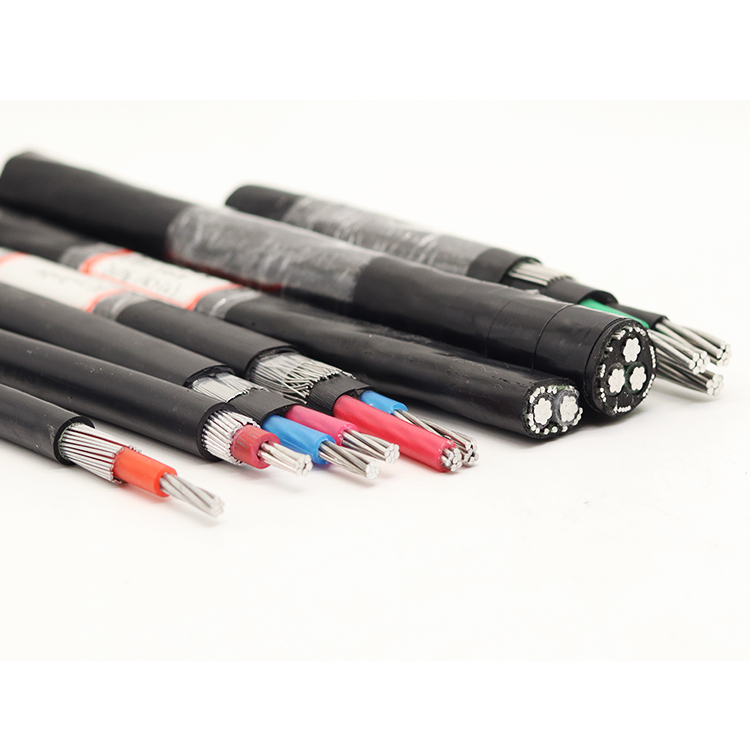
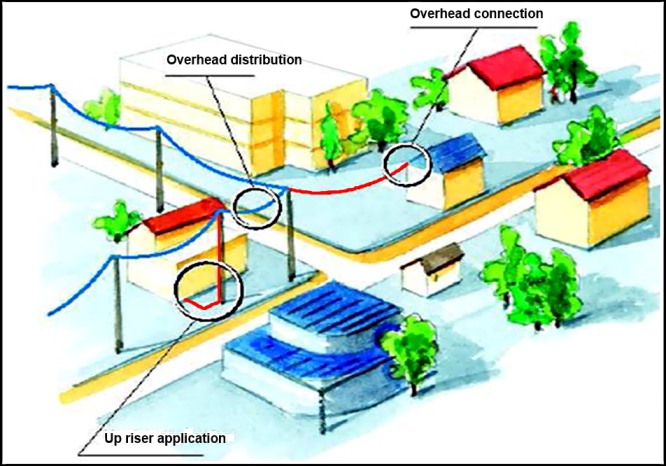
How to choose overhead cables?

How to Choose Overhead Cables: A Complete Technical Guide
The selection of overhead cables directly determines the safety and economy of the power system. Improper cable selection is a leading cause of power failures. This guide helps you choose the right medium, high, and low voltage overhead cables—including PVC and XLPE types—for your project.
1. Core Performance: Mechanical Strength and Weather Resistance
Mechanical Performance
- Tensile Strength: Determines circuit safety. PVC (polyvinyl chloride) cables consistently outperform polyethylene in tensile testing.
- Installation Durability: PVC resists fuzzing and damage during installation, especially when in contact with fittings or tree branches.
- Cost-Effectiveness: PVC remains the first choice for low-voltage grid renovation. XLPE (cross-linked polyethylene) improves mechanical properties but at higher cost.
Climate Resistance
- Multi-Layer Design: Inner XLPE insulation + outer PVC sheath, bonded via co-extrusion for enhanced UV and infrared resistance.
- Alloy Conductors: Extended corrosion resistance and service life for harsh environments.
2. Environmental Adaptation
| Environment | Recommended Cable Type |
|---|---|
| High ice/snow areas | ACSR (steel core aluminum stranded wire) for strong tensile strength |
| Strong wind areas | Stranded structures (e.g., AAAC aluminum alloy) with 60% better wind/vibration resistance vs. single wire |
| Urban grid renovation | Overhead cables for cost-effective upgrades |
3. Economic Optimization
Consider full lifecycle cost: initial purchase, installation, maintenance, and replacement. Balance safety requirements with budget constraints.
4. Technology and Design Tools
Use precise calculations and design tools to avoid human errors. Cable selection should be based on safety, environment, and total cost of ownership.
Conclusion: Overhead cables are entering an era of high strength and long service life. Make informed decisions based on safety, environment, and full-cycle cost. Contact us for complete technical specifications and selection manuals.