Cable Purchasing Guide: Step-by-Step Checklist for Engineers & Buyers (2026)
Guide to Purchasing Cables: Step-by-Step Checklist (2026 Edition)
Looking for the right cable but overwhelmed by specs, standards, and suppliers? You're not alone. With hundreds of cable types and dozens of certifications worldwide, a wrong purchase can cost thousands in rework or safety failures.
This guide gives you a complete, vendor-neutral checklist to buy cables with confidence — whether you're an engineer sourcing for a power plant, a contractor wiring a building, or a procurement manager comparing suppliers.
Step 1: Determine the Right Cable Type
Before you pick a supplier, pick the right cable category. Each type serves a fundamentally different purpose.
| Cable Type | Application | Key Examples | Voltage Range |
|---|---|---|---|
| Power Cable | Electricity transmission & distribution | XLPE insulated, PVC insulated | 0.6/1kV – 35kV+ |
| Communication / Data Cable | Signal transmission, telecom | Concentric cable, coaxial, fiber optic | Low voltage |
| Control Cable | Instrumentation, automation systems | Multi-core shielded/unshielded | 300/500V – 0.6/1kV |
| Specialty Cable | Harsh or unique environments | Fire-resistant, marine, high-temperature, mining | Varies by application |
Pro tip: If your project needs both power transmission and data communication, run separate cable runs — combo cables often compromise on both performance and certification.
Step 2: Define Technical Specifications
Once you know the cable type, lock down these 7 critical parameters:
2.1 Voltage Rating
The most common mistake is under-specifying voltage. Always choose a rating that covers your system's maximum fault voltage, not just nominal.
- Low voltage: 0.6/1kV (most building wiring)
- Medium voltage: 6/10kV, 8.7/15kV (industrial distribution)
- High voltage: 35kV+ (utility transmission)
2.2 Conductor Material
| Material | Pros | Cons | Best For |
|---|---|---|---|
| Copper | Higher conductivity, flexible | More expensive | Short runs, control systems |
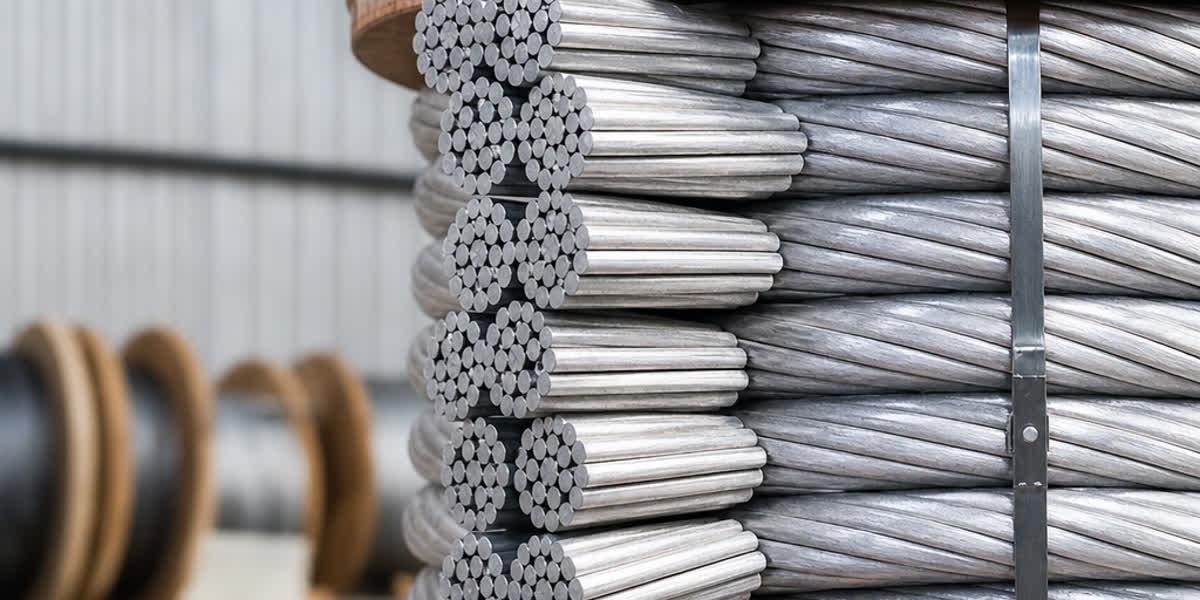
| Aluminum | Lighter, cheaper | Lower conductivity, needs larger cross-section | Long runs, overhead lines |
| Tinned copper | Corrosion-resistant | Slightly higher cost | Marine, outdoor |
2.3 Conductor Size (AWG or mm²)
Never guess the size — calculate based on current load + distance. As a rule of thumb: - Lighting circuits: 1.5 – 2.5 mm² - General power: 4 – 10 mm² - Heavy machinery: 16 mm² and above - Rule: every 10% increase in distance adds ~10% to required cross-section for the same voltage drop
2.4 Insulation Type
| Insulation | Max Temp | Key Feature | Best Use |
|---|---|---|---|
| PVC | 70°C | Universal, economical | General indoor wiring |
| XLPE | 90°C | Heat-resistant, higher ampacity | Power distribution, underground |
| LSZH (Low Smoke Zero Halogen) | 90°C | Low toxic fumes | Public buildings, tunnels, railways |
| EPR / Rubber | 85°C | Flexible, durable | Industrial, portable equipment |
2.5 Number of Cores
| Cores | Typical Use |
|---|---|
| Single-core | Power distribution, panel wiring |
| 2-core | Single-phase circuits |
| 3-core | Three-phase (with/without neutral) |
| **Multi-core (4+) | Control systems, instrumentation |
2.6 Sheath / Jacket Color
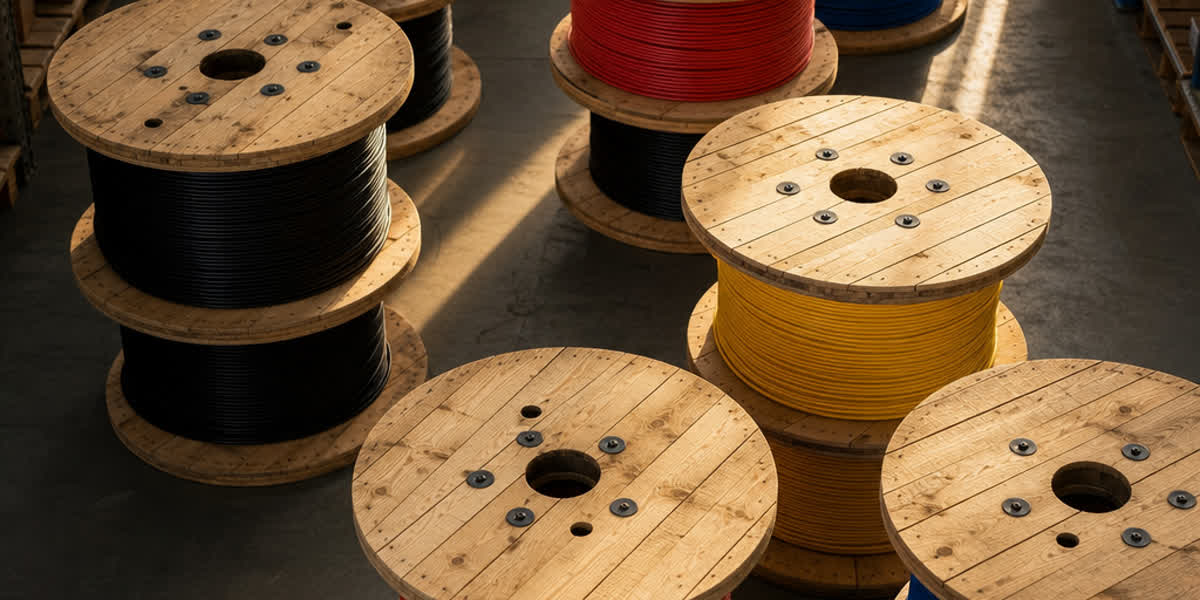
Color coding varies by region, but common conventions: - Black: General power (Europe) - Gray / White: General power (North America) - Red: Fire alarm / emergency circuits - Yellow / Orange: High voltage caution - Green / Green-Yellow: Earth/ground (universal)
2.7 Shielding Requirements
Not all cables need shielding — but if you're running near motors, transformers, or radio equipment, unshielded cable can introduce noise that cripples sensitive electronics.
Step 3: Certification & Compliance (By Target Market)
Certification is the most overlooked step in cable purchasing. An uncertified cable won't pass inspection, may void insurance, and can create safety hazards.
North America (US / Canada)
- Mandatory: UL (Underwriters Laboratories) or CSA (Canadian Standards Association)
- NEC compliance: Cables must meet National Electrical Code (NFPA 70)
- Typical markings: UL 83 (thermoplastic), UL 1277 (tray cable)
- Consequence of non-compliance: Insurance void, project shutdown
Europe (EU / EEA)
- Mandatory: CE marking + CPR (Construction Products Regulation) for building cables
- Harmonized standards: EN 50525 (low voltage), EN 60228 (conductors)
- Reaction to fire classes: Euroclass Aca, B2ca, Cca, Dca, Eca
- Key note: CE is a manufacturer's declaration, not a third-party certificate — always ask for supporting test reports
Australia / New Zealand
- Mandatory: SAA certification
- Standard: AS/NZS 5000 series for electric cables
- RCM marking: Regulatory Compliance Mark required
UK
- Mandatory: BSI Kitemark or UKCA marking (post-Brexit)
- Standard: BS 6004, BS 6724, BS 7846
- Note: CPR still applies — Euroclass ratings are accepted
Germany
- Mandatory: VDE certification (highly recommended even where not legally required)
- VDE marks: VDE 0250, VDE 0281, VDE 0282
- Market reality: Most German buyers will not accept a cable without VDE marking
Middle East & Africa
- Common: IEC standards + local equivalent (SASO for Saudi Arabia, ESMA for UAE)
- Increasingly: Gulf Standardization Organization (GSO) conformity
Bottom line: Always confirm the end-market certification before ordering. A cable certified for Europe may not be accepted in North America, and vice versa.
Step 4: Quantity & Sourcing Strategy
Your order quantity determines your best sourcing channel:
| Order Size | Best Channel | Typical Lead Time | Price Level |
|---|---|---|---|
| < 1,000 m | Local distributor or electrical wholesaler | 1 – 3 days | MSRP – 15% |
| 1,000 – 10,000 m | Regional distributor or factory direct | 1 – 4 weeks | MSRP – 30% |
| 10,000 – 100,000 m | Factory direct (OEM) | 2 – 6 weeks | MSRP – 45% |
| 100,000+ m | Factory direct (contract pricing) | 4 – 12 weeks | Negotiable |
Q&A: Common Cable Purchasing Questions
Q: Should I always buy from the factory to save money? A: Only for large orders. For small quantities (< 1,000 m), distributor pricing + local stock availability usually beats factory direct when shipping is factored in.
Q: How do I verify a cable manufacturer's quality? A: Ask for (1) recent third-party test reports, (2) factory audit certificates (ISO 9001), (3) customer references for similar projects, and (4) a sample for pre-order testing.
Q: What's the average lead time for custom cables? A: 4 – 8 weeks for standard constructions, 10 – 16 weeks for specialized designs with custom tooling.
Q: Can I mix different insulation types in one installation? A: Only if they have compatible temperature ratings and the installation meets local code. When in doubt, use a single insulation type throughout.
Q: What's the minimum order quantity (MOQ) for factory-direct cable? A: Typically 1,000 – 5,000 m per type, depending on the construction complexity. Some factories accept lower MOQs for stock items.
Step 5: Pre-Purchase Checklist (Printable)
Before sending your RFQ, confirm all of the following:
- [ ] Cable type selected (power / control / data / specialty)
- [ ] Voltage rating confirmed (nominal + fault tolerance)
- [ ] Conductor material and size calculated (not guessed)
- [ ] Insulation type chosen (PVC / XLPE / LSZH / EPR)
- [ ] Core count and configuration documented
- [ ] Sheath color specified
- [ ] Shielding requirements assessed
- [ ] Target market certification(s) identified
- [ ] Quantity estimated + lead time acceptable
- [ ] Supplier shortlisted and references checked
Related Resources
- ACSR Conductor: The Definitive Guide — Technical specifications and selection criteria for overhead conductors
- How to Choose the Right Cable: Complete Guide — Deep dive into cable selection methodology
- Top Cable Manufacturers in China 2026 — Independent comparison of leading suppliers
Ready to source? Contact SiTong Cable for a free technical consultation and customized quote for your project.