ACSR Conductor Selection for 11kV-33kV Transmission Lines: Complete Technical Guide, Standards & Engineering Best Practices
ACSR Conductor Selection for 11kV-33kV Transmission Lines: Complete Technical Guide, Standards & Engineering Best Practices
ACSR (Aluminum Conductor Steel Reinforced) is the most widely used overhead conductor for medium-voltage transmission lines worldwide. For engineers and procurement professionals working on 11kV to 33kV distribution and sub-transmission projects — like the 16.1 km, 11 kV line specification recently tendered — selecting the correct ACSR type, stranding, and sag-tension parameters is critical to project economics and long-term reliability. This guide covers ACSR conductor selection for 11kV–33kV lines, including international standards, mechanical and electrical characteristics, installation considerations, and a systematic selection methodology.
What is ACSR?
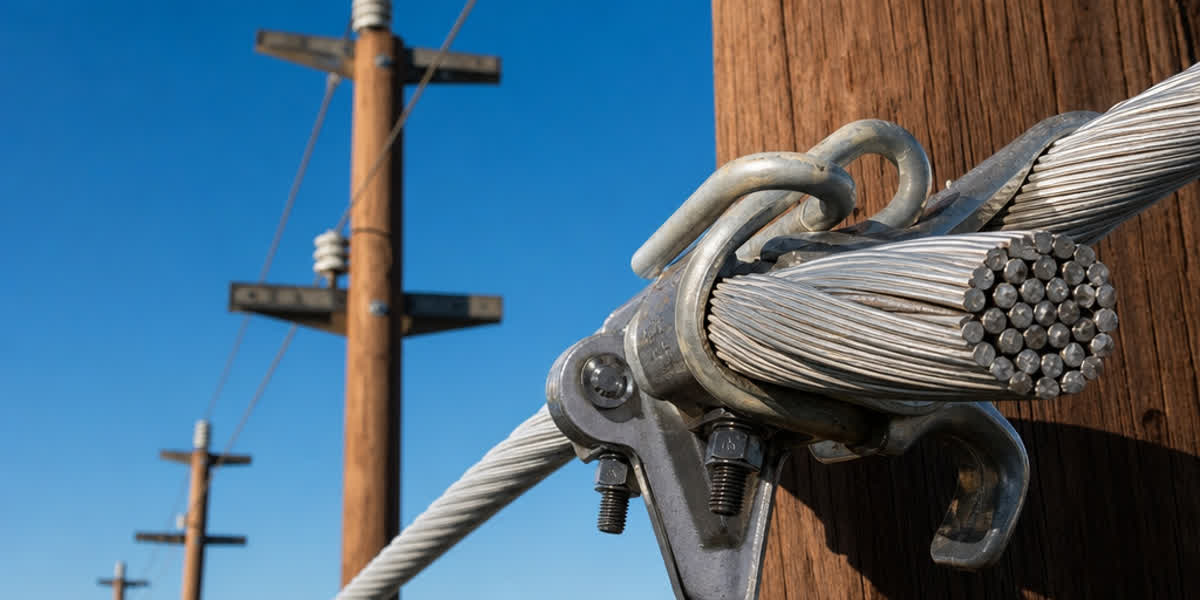
ACSR consists of a central core of galvanized steel wire strands (providing mechanical strength) surrounded by one or more layers of concentric-lay stranded aluminum 1350-H19 wires (providing electrical conductivity). The steel core carries the majority of mechanical load, while the aluminum strands carry the electrical current.
Core Applications in 11kV–33kV Lines
| Application | Typical Voltage | Typical Span Length | Common ACSR Codes |
|---|---|---|---|
| ⚡ Rural Distribution | 11 kV–15 kV | 100 m–250 m | Dog, Rabbit, Squirrel |
| 🏭 Industrial Sub-Transmission | 22 kV–33 kV | 150 m–350 m | Partridge, Hawk, Dove |
| 🌄 Mountainous / River Crossings | 11 kV–33 kV | 200 m–500 m | Linnet, Gull, Drake |
| 🏙️ Urban Feeder Circuits | 11 kV–33 kV | 80 m–200 m | Sparrow, Pigeon, Weasel |
| 🔄 Substation Interconnections | 33 kV | 100 m–300 m | Penguin, Oriole, Condor |
| 🌍 Rural Electrification (Developing Regions) | 11 kV–33 kV | 100 m–300 m | Rabbit, Dog, Mink |
International Standards for ACSR
ACSR conductors are manufactured to multiple international standards. The choice of standard depends on the project jurisdiction and procurement requirements.
| Standard | Title | Scope | Key Parameters |
|---|---|---|---|
| IEC 61089 | Round Wire Concentric Lay Overhead Electrical Stranded Conductors | Worldwide reference | Stranding, diameters, DC resistance, rated strength |
| IEC 61232 | Aluminium-Clad Steel Wires for Electrical Purposes | AWAC / aluminum-clad core | Alternative to galvanized steel core |
| ASTM B232 / B232M | Standard Specification for Concentric-Lay-Stranded Aluminum Conductors, Steel-Reinforced (ACSR) | North America | ACSR code words, stranding tables |
| BS 215 Part 2 | Aluminium Conductors and Aluminium Conductors Steel-Reinforced for Overhead Power Transmission | UK / Commonwealth | Stranding, mechanical properties |
| DIN 48201 / EN 50182 | Conductors for Overhead Lines — Round Wire Concentric Lay Stranded Conductors | Europe (EN) | Eurocode designations |
| AS/NZS 3607 | Conductors — Bare Overhead — Aluminium and Aluminium Alloy | Australia / New Zealand | Local environmental conditions |
| CSA C49.1 | Round Wire Concentric-Lay-Stranded Aluminum Conductors, Steel Reinforced | Canada | Canadian climate loading |
| JIS C 3110 | Aluminum Conductors Steel Reinforced | Japan | Japanese market |
| GOST 839 | Steel-Aluminium Wires for Overhead Power Lines | Russia / CIS | SIP and ACSR variants |
💡 Project Tip: Most international tenders (including African and Asian development bank projects) accept IEC 61089 or BS 215. For projects in North America, use ASTM B232. For EU-funded projects, use EN 50182.
ACSR Code Words & Common Types for 11kV–33kV
ACSR conductors are commonly referred to by their "code word" — a bird or animal name that uniquely defines the stranding and diameter. Below are the code words most relevant for 11kV–33kV lines.
Light-Duty (Rural Distribution, 11kV)
| Code Word | Stranding (Al/St) | Total Area (mm²) | Diameter (mm) | RTS (kN) | DC Resistance (Ω/km @20°C) | Current Rating (A) |
|---|---|---|---|---|---|---|
| Gopher | 6/1 | 19.3 | 5.90 | 6.44 | 1.688 | 130 |
| Sparrow | 6/1 | 30.4 | 7.41 | 10.2 | 1.070 | 165 |
| Pigeon | 6/1 | 37.2 | 8.18 | 12.4 | 0.877 | 185 |
| Rabbit | 6/1 | 50.2 | 9.53 | 16.2 | 0.649 | 215 |
| Squirrel | 6/1 | 66.4 | 10.97 | 21.3 | 0.493 | 250 |
Medium-Duty (Urban Feeders, 22kV–33kV)
| Code Word | Stranding (Al/St) | Total Area (mm²) | Diameter (mm) | RTS (kN) | DC Resistance (Ω/km @20°C) | Current Rating (A) |
|---|---|---|---|---|---|---|
| Dog | 6/1 | 80.0 | 11.94 | 25.7 | 0.409 | 275 |
| Weasel | 6/1 | 97.1 | 13.28 | 31.2 | 0.337 | 308 |
| Mink | 6/1 | 118.5 | 14.32 | 39.0 | 0.275 | 340 |
| Marten | 6/1 | 135.3 | 15.36 | 44.0 | 0.241 | 368 |
| Fox | 18/1 | 152.0 | 15.95 | 43.5 | 0.215 | 400 |
Heavy-Duty (Sub-Transmission, 33kV)
| Code Word | Stranding (Al/St) | Total Area (mm²) | Diameter (mm) | RTS (kN) | DC Resistance (Ω/km @20°C) | Current Rating (A) |
|---|---|---|---|---|---|---|
| Partridge | 18/1 | 202.2 | 18.40 | 57.8 | 0.162 | 470 |
| Hawk | 26/7 | 242.8 | 19.63 | 91.2 | 0.135 | 520 |
| Dove | 26/7 | 298.8 | 21.80 | 112.3 | 0.109 | 580 |
| Linnet | 26/7 | 362.8 | 24.08 | 136.3 | 0.0899 | 645 |
| Drake | 26/7 | 468.2 | 27.36 | 176.0 | 0.0696 | 740 |
📊 Selection Note: For a 16.1 km, 11 kV line (similar to the Rotcive Electric inquiry), Dog (80 mm²) or Weasel (97 mm²) would be typical choices for rural distribution. For 33 kV sub-transmission with higher capacity, Partridge or Hawk is more common.
ACSR Selection Methodology for 11kV–33kV Lines
A systematic approach to conductor selection involves the following steps:
Step 1: Define Electrical Requirements
- System voltage: 11 kV, 22 kV, or 33 kV (phase-to-phase)
- Load current: Peak demand (A) and future growth margin (typically 15–25%)
- Voltage drop limit: Usually ≤5% at full load for distribution, ≤3% for sub-transmission
- Short-circuit rating: Must withstand the maximum fault current without annealing
Formula for current-carrying capacity:
I_req = P / (√3 × V × cos φ)
Where: - P = peak load (kW or MW) - V = line voltage (kV) - cos φ = power factor (typically 0.85–0.95)
Step 2: Select Conductor Size
Using the calculated required current (I_req), select from the code-word tables above. Apply standard derating factors:
| Derating Factor | Typical Value | Condition |
|---|---|---|
| Ambient temperature | 0.90–1.00 | Above 40°C, reduce rating |
| Altitude | 0.98–0.99 per 500m | Above 1,000m elevation |
| Solar radiation | 0.95–1.00 | High solar regions (tropics) |
| Wind speed | 0.85–1.15 | Low wind → lower rating |
| Load factor | 0.95–1.00 | Continuous vs. intermittent |
Step 3: Check Voltage Drop
V_drop = √3 × I × L × (R × cos φ + X × sin φ)
Where: - I = load current (A) - L = line length (km) - R = AC resistance at operating temperature (Ω/km) - X = inductive reactance (Ω/km) — typically 0.30–0.40 Ω/km for ACSR
Quick Rule: For 11 kV lines, Dog (80 mm²) ACSR carries approximately 6–8 MW over 10 km with <5% voltage drop.
Step 4: Verify Mechanical Strength
ACSR's steel core provides the tensile strength. For 11kV–33kV lines, key mechanical checks include:
| Parameter | Formula / Value | Notes |
|---|---|---|
| Maximum working tension | ≤20% RTS (normal) / ≤60% RTS (extreme) | IEC 60826 / ASCE 74 |
| Sag at maximum temperature | Depends on span & tension | Must maintain ground clearance |
| Ice loading | Per local code (e.g., 5 mm–25 mm radial ice) | Critical in cold climates |
| Wind loading | Per local code (e.g., 500 Pa–1,200 Pa) | Critical in coastal / typhoon zones |
| Vibration | Aeolian vibration dampers recommended for spans >200m | Stockbridge dampers common |
⚠️ Critical: For 16.1 km lines (like the Rotcive project), mid-span splices should be minimized. Use factory-length reels where possible (typically 3–5 km per reel depending on conductor size).
Step 5: Evaluate Economic Options
For the same electrical capacity, consider:
- All-Aluminum Conductor (AAC): Lower strength, lower cost — suitable for short spans (<100m)
- All-Aluminum Alloy Conductor (AAAC): Better strength-to-weight than AAC, corrosion-resistant — good for coastal areas
- ACSR Conductor: Best strength-to-weight for medium-long spans, lowest cost per km·A
- ACSR/AW (Aluminum-Clad Steel): Where galvanized steel core corrosion is a concern
Cost comparison per kilometer (typical, 11kV class):
| Conductor Type | Relative Cost | Strength | Application |
|---|---|---|---|
| AAC 100mm² | 1.0x (baseline) | Low | Short urban spans |
| AAAC 100mm² | 1.15x | Medium | Coastal / pollution zones |
| ACSR Dog (80mm²) | 1.05x | High | Best overall for 11kV rural |
| ACSR Weasel (97mm²) | 1.20x | Very High | Longer spans / higher load |
Installation Practices for 11kV–33kV ACSR Lines
Stringing and Sagging
Proper sagging is critical to ensure safe ground clearance and avoid excessive tension:
- Pulling: Use a pulling line (rope or steel cable) with a swivel to prevent twist. Maximum pulling tension: 20% RTS.
- Sagging: Determine sag using the ruling span method per IEC 60826. Use dynamometers for tension measurement and sights/sag boards for visual verification.
- Clipping: After sagging to the specified tension at ambient temperature, clip conductors into suspension clamps.
Joints and Dead-Ends
| Component | Application | Standards |
|---|---|---|
| Full-tension splice | Mid-span joints (≤2 per span recommended) | IEC 61284, ANSI C119.4 |
| Compression dead-end | Terminations at angle, dead-end, or terminal towers | IEC 61284, ANSI C119.4 |
| Parallel groove clamp | Taps and temporary connections | IEC 61284 |
| Bolted connector | Low-tension taps only | ANSI C119.4 (Class A for full tension) |
Hardware Accessories
Selecting compatible overhead line hardware & fittings is essential to ensure mechanical integrity and avoid conductor fatigue failure:
| Accessory | Purpose | When Required |
|---|---|---|
| Vibration dampers (Stockbridge type) | Suppress aeolian vibration | Spans >200m, tension >20% RTS |
| Spacers | Maintain bundle spacing (twin/bundle conductors) | 2-conductor bundles for 33kV |
| Armor rods | Protect conductor at suspension points | All tension and suspension points |
| Corona rings | Suppress corona discharge | Altitude >1,000m at 33kV |
| Bird guards | Prevent bird-related outages | Near wetlands / migration routes |
Case Study: 16.1 km, 11 kV Rural Distribution Line
Project Parameters (based on the Rotcive Electric inquiry profile): - Length: 16.1 km - Voltage: 11 kV - Terrain: Mixed rural (flat + rolling hills) - Load: Approximately 5 MW peak - Standard: IEC 61089
Recommended Selection:
| Parameter | Option A (Optimized) | Option B (High-Capacity) |
|---|---|---|
| Conductor | ACSR Dog (6/1, 80 mm²) | ACSR Weasel (6/1, 97 mm²) |
| Current rating | 275 A (5.2 MW at 11kV) | 308 A (5.9 MW at 11kV) |
| Voltage drop @ 5MW | ~4.2% (within limit) | ~3.1% (lower loss) |
| RTS | 25.7 kN | 31.2 kN |
| Estimated cost/km | $4,200–$5,800 | $5,500–$7,200 |
| Number of reels (4km/reel) | 5 reels | 5 reels |
| Dampers required | Yes (spans >200m) | Yes |
✅ Recommendation: ACSR Dog (80 mm²) is the most cost-effective choice for this profile. If future load growth beyond 6 MW is expected, upgrade to Weasel (97 mm²).
Environmental & Durability Considerations
| Factor | Recommendation | Rationale |
|---|---|---|
| Coastal / saline environment | ACSR with heavy galvanizing (Class C per IEC 61232) or ACSR/AW | Galvanized core corrosion prevention |
| Industrial pollution | AAAC alternative or ACSR with silicon grease | Prevent corrosion from chemical deposits |
| High ice load regions | Increase conductor size by one step (e.g., Dog → Weasel) | Additional mechanical margin |
| High seismic zones | Use flexible suspension assemblies | Allow conductor movement without damage |
| Forest fire prone areas | Maintain ≥10m ground clearance | Prevent arc initiation from vegetation |
Frequently Asked Questions
Q1: What is the difference between ACSR and AAAC for 11kV lines? ACSR has a galvanized steel core for higher tensile strength, making it ideal for longer spans (150m–400m). AAAC uses aluminum alloy for all strands, offering better corrosion resistance but lower strength — better for coastal areas or shorter spans.
Q2: How do I convert ACSR code words between ASTM and IEC? ASTM code words map to specific IEC stranding configurations. For example, "Dog" (6/1) maps to IEC 61089 80 mm² 6/1 Al/St. Sitong Cable can provide cross-reference tables for any project.
Q3: What is the maximum span length for ACSR Dog on an 11kV line? ACSR Dog can span up to 250m under normal conditions (20% RTS, 40°C ambient). For spans exceeding 250m, step up to Weasel or Marten.
Q4: Can ACSR be used for underground sections? No — ACSR is designed for overhead use only. For underground transitions, use a transition joint to a copper or aluminum underground power cable (XLPE insulated).
Q5: What is the typical lead time for ACSR conductors? Standard sizes (Dog, Rabbit, Weasel, Partridge) are typically available in 3–6 weeks from Sitong Cable. Custom stranding configurations may require 6–10 weeks.
Q6: How should ACSR be stored before installation? Store on reels on hard, dry ground. Cover with waterproof tarpaulin. Keep reels elevated to prevent water pooling at the bottom. Rotate reels monthly if stored for more than 3 months.
Q7: What is the recommended minimum bending radius for ACSR during installation? Minimum bending radius = 10–15× the conductor diameter. For Dog (11.94 mm diameter), the minimum bend radius is approximately 120 mm–180 mm.
Q8: How does temperature affect ACSR sag? ACSR sag increases approximately 5–8% per 10°C temperature rise. The steel core reduces thermal expansion by ~40% compared to all-aluminum conductors.
Conclusion
Selecting the right ACSR conductor for 11kV–33kV transmission lines requires balancing electrical performance, mechanical strength, and project economics. For typical rural distribution (11kV, 100m–250m spans), ACSR Dog (80 mm²) or Rabbit (50 mm²) offer the best cost-performance. For sub-transmission (33kV), Partridge (202 mm²) and Hawk (242 mm²) are industry standards.
At Sitong Cable, we manufacture ACSR conductors to IEC, ASTM, BS, and DIN standards. Our engineering team provides full sag-tension calculations, voltage drop analysis, and project-specific recommendations for every inquiry.
👉 Browse our ACSR conductor range or contact our engineering team for project-specific selection assistance.
This guide was prepared by the Sitong Cable engineering team. All technical data references IEC 61089, ASTM B232, BS 215, and IEEE 738 standards.