Selección de Conductores ACSR para Líneas de Transmisión de 11kV-33kV: Guía Técnica Completa, Normas y Mejores Prácticas de Ingeniería
Selección de Conductores ACSR para Líneas de Transmisión de 11kV-33kV: Guía Técnica Completa, Normas y Mejores Prácticas de Ingeniería
El ACSR (Conductor de Aluminio con Alma de Acero) es el conductor aéreo más utilizado en líneas de transmisión de media tensión en todo el mundo. Para ingenieros y profesionales de compras que trabajan en proyectos de distribución y subtransmisión de 11kV a 33kV — como la especificación de una línea de 16,1 km a 11 kV recientemente licitada — seleccionar el tipo correcto de ACSR, el cableado y los parámetros de flecha-tensión es crítico para la economía del proyecto y la confiabilidad a largo plazo. Esta guía cubre la selección de conductores ACSR para líneas de 11kV–33kV, incluyendo normas internacionales, características mecánicas y eléctricas, consideraciones de instalación y una metodología de selección sistemática.
¿Qué es el ACSR?
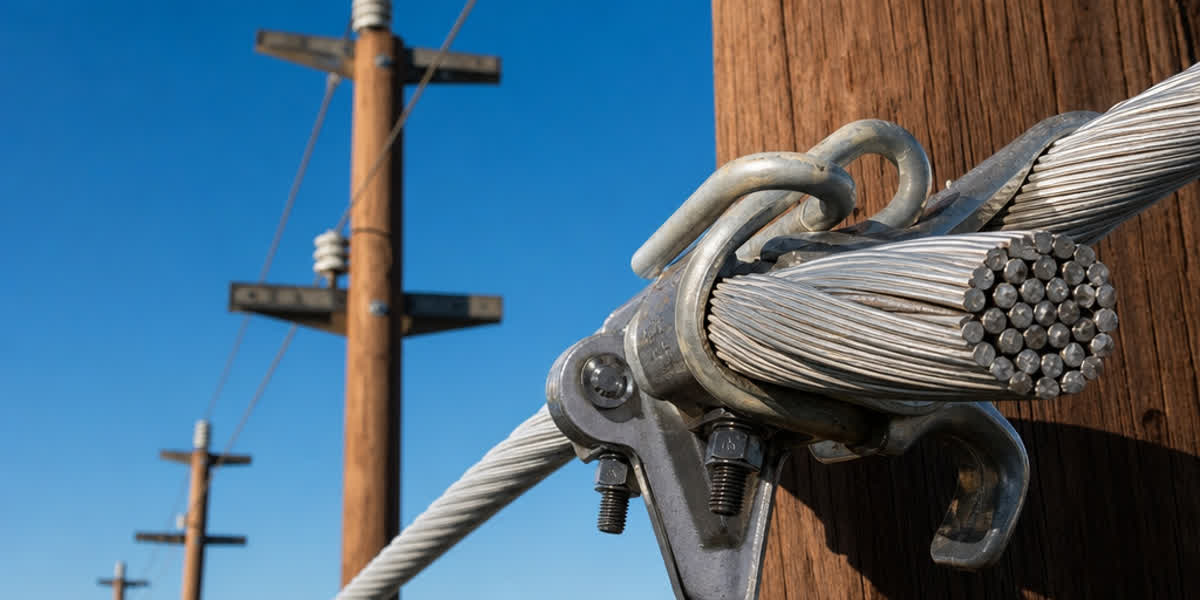
El ACSR consiste en un núcleo central de alambres de acero galvanizado (que proporciona resistencia mecánica) rodeado por una o más capas de alambres de aluminio 1350-H19 cableados concéntricamente (que proporcionan conductividad eléctrica). El núcleo de acero soporta la mayor parte de la carga mecánica, mientras que los alambres de aluminio transportan la corriente eléctrica.
Aplicaciones Principales en Líneas de 11kV–33kV
| Aplicación | Tensión Típica | Vano Típico | Códigos ACSR Comunes |
|---|---|---|---|
| ⚡ Distribución Rural | 11 kV–15 kV | 100 m–250 m | Dog, Rabbit, Squirrel |
| 🏭 Subtransmisión Industrial | 22 kV–33 kV | 150 m–350 m | Partridge, Hawk, Dove |
| 🌄 Cruce de Montañas / Ríos | 11 kV–33 kV | 200 m–500 m | Linnet, Gull, Drake |
| 🏙️ Circuitos Alimentadores Urbanos | 11 kV–33 kV | 80 m–200 m | Sparrow, Pigeon, Weasel |
| 🔄 Interconexiones de Subestaciones | 33 kV | 100 m–300 m | Penguin, Oriole, Condor |
| 🌍 Electrificación Rural (Regiones en Desarrollo) | 11 kV–33 kV | 100 m–300 m | Rabbit, Dog, Mink |
Normas Internacionales para ACSR
Los conductores ACSR se fabrican según múltiples normas internacionales. La elección de la norma depende de la jurisdicción del proyecto y los requisitos de adquisición.
| Norma | Título | Alcance | Parámetros Clave |
|---|---|---|---|
| IEC 61089 | Conductores trenzados concéntricos de alambre redondo para líneas eléctricas aéreas | Referencia mundial | Cableado, diámetros, resistencia CC, resistencia nominal |
| IEC 61232 | Alambres de acero revestidos de aluminio para fines eléctricos | Núcleo de AWAC/aluminio | Alternativa al núcleo de acero galvanizado |
| ASTM B232 / B232M | Especificación estándar para conductores de aluminio trenzados concéntricamente con refuerzo de acero (ACSR) | América del Norte | Códigos ACSR, tablas de cableado |
| BS 215 Parte 2 | Conductores de aluminio y conductores de aluminio con refuerzo de acero para transmisión de energía aérea | Reino Unido / Commonwealth | Cableado, propiedades mecánicas |
| DIN 48201 / EN 50182 | Conductores para líneas aéreas — Conductores trenzados concéntricos de alambre redondo | Europa (EN) | Designaciones Eurocódigo |
| AS/NZS 3607 | Conductores — Aéreos desnudos — Aluminio y aleación de aluminio | Australia / Nueva Zelanda | Condiciones ambientales locales |
| CSA C49.1 | Conductores de aluminio trenzados concéntricamente de alambre redondo con refuerzo de acero | Canadá | Cargas climáticas canadienses |
| JIS C 3110 | Conductores de aluminio con refuerzo de acero | Japón | Mercado japonés |
| GOST 839 | Alambres de acero-aluminio para líneas eléctricas aéreas | Rusia / CEI | Variantes SIP y ACSR |
💡 Consejo para Proyectos: La mayoría de las licitaciones internacionales (incluyendo proyectos de bancos de desarrollo africanos y asiáticos) aceptan IEC 61089 o BS 215. Para proyectos en América del Norte, use ASTM B232. Para proyectos financiados por la UE, use EN 50182.
Códigos ACSR y Tipos Comunes para 11kV–33kV
Los conductores ACSR se conocen comúnmente por su "código" — el nombre de un ave o animal que define de manera única el cableado y el diámetro. A continuación se presentan los códigos más relevantes para líneas de 11kV–33kV.
Ligero (Distribución Rural, 11kV)
| Código | Cableado (Al/Ac) | Área Total (mm²) | Diámetro (mm) | RTS (kN) | Resistencia CC (Ω/km @20°C) | Capacidad de Corriente (A) |
|---|---|---|---|---|---|---|
| Gopher | 6/1 | 19,3 | 5,90 | 6,44 | 1,688 | 130 |
| Sparrow | 6/1 | 30,4 | 7,41 | 10,2 | 1,070 | 165 |
| Pigeon | 6/1 | 37,2 | 8,18 | 12,4 | 0,877 | 185 |
| Rabbit | 6/1 | 50,2 | 9,53 | 16,2 | 0,649 | 215 |
| Squirrel | 6/1 | 66,4 | 10,97 | 21,3 | 0,493 | 250 |
Mediano (Alimentadores Urbanos, 22kV–33kV)
| Código | Cableado (Al/Ac) | Área Total (mm²) | Diámetro (mm) | RTS (kN) | Resistencia CC (Ω/km @20°C) | Capacidad de Corriente (A) |
|---|---|---|---|---|---|---|
| Dog | 6/1 | 80,0 | 11,94 | 25,7 | 0,409 | 275 |
| Weasel | 6/1 | 97,1 | 13,28 | 31,2 | 0,337 | 308 |
| Mink | 6/1 | 118,5 | 14,32 | 39,0 | 0,275 | 340 |
| Marten | 6/1 | 135,3 | 15,36 | 44,0 | 0,241 | 368 |
| Fox | 18/1 | 152,0 | 15,95 | 43,5 | 0,215 | 400 |
Pesado (Subtransmisión, 33kV)
| Código | Cableado (Al/Ac) | Área Total (mm²) | Diámetro (mm) | RTS (kN) | Resistencia CC (Ω/km @20°C) | Capacidad de Corriente (A) |
|---|---|---|---|---|---|---|
| Partridge | 18/1 | 202,2 | 18,40 | 57,8 | 0,162 | 470 |
| Hawk | 26/7 | 242,8 | 19,63 | 91,2 | 0,135 | 520 |
| Dove | 26/7 | 298,8 | 21,80 | 112,3 | 0,109 | 580 |
| Linnet | 26/7 | 362,8 | 24,08 | 136,3 | 0,0899 | 645 |
| Drake | 26/7 | 468,2 | 27,36 | 176,0 | 0,0696 | 740 |
📊 Nota de Selección: Para una línea de 16,1 km a 11 kV (similar a la consulta de Rotcive Electric), Dog (80 mm²) o Weasel (97 mm²) serían opciones típicas para distribución rural. Para subtransmisión a 33 kV con mayor capacidad, Partridge o Hawk son más comunes.
Metodología de Selección de ACSR para Líneas de 11kV–33kV
Un enfoque sistemático para la selección del conductor implica los siguientes pasos:
Paso 1: Definir Requisitos Eléctricos
- Tensión del sistema: 11 kV, 22 kV o 33 kV (fase a fase)
- Corriente de carga: Demanda máxima (A) y margen de crecimiento futuro (normalmente 15–25%)
- Límite de caída de tensión: Generalmente ≤5% a plena carga para distribución, ≤3% para subtransmisión
- Capacidad de cortocircuito: Debe soportar la máxima corriente de falla sin recocido
Fórmula para la capacidad de transporte de corriente:
I_req = P / (√3 × V × cos φ)
Donde: - P = carga máxima (kW o MW) - V = tensión de línea (kV) - cos φ = factor de potencia (típicamente 0,85–0,95)
Paso 2: Seleccionar el Tamaño del Conductor
Usando la corriente requerida calculada (I_req), seleccione de las tablas de códigos anteriores. Aplique factores de reducción estándar:
| Factor de Reducción | Valor Típico | Condición |
|---|---|---|
| Temperatura ambiente | 0,90–1,00 | Por encima de 40°C, reduzca la capacidad |
| Altitud | 0,98–0,99 por cada 500m | Por encima de 1.000m de elevación |
| Radiación solar | 0,95–1,00 | Regiones de alta radiación solar (trópicos) |
| Velocidad del viento | 0,85–1,15 | Viento bajo → menor capacidad |
| Factor de carga | 0,95–1,00 | Continuo vs. intermitente |
Paso 3: Verificar la Caída de Tensión
V_caída = √3 × I × L × (R × cos φ + X × sen φ)
Donde: - I = corriente de carga (A) - L = longitud de la línea (km) - R = resistencia CA a temperatura de operación (Ω/km) - X = reactancia inductiva (Ω/km) — típicamente 0,30–0,40 Ω/km para ACSR
Regla Rápida: Para líneas de 11 kV, el ACSR Dog (80 mm²) transporta aproximadamente 6–8 MW en 10 km con una caída de tensión <5%.
Paso 4: Verificar la Resistencia Mecánica
El núcleo de acero del ACSR proporciona la resistencia a la tracción. Para líneas de 11kV–33kV, las verificaciones mecánicas clave incluyen:
| Parámetro | Fórmula / Valor | Notas |
|---|---|---|
| Tensión máxima de trabajo | ≤20% RTS (normal) / ≤60% RTS (extremo) | IEC 60826 / ASCE 74 |
| Flecha a temperatura máxima | Depende del vano y la tensión | Debe mantener la distancia al suelo |
| Carga de hielo | Según código local (ej. 5 mm–25 mm de hielo radial) | Crítico en climas fríos |
| Carga de viento | Según código local (ej. 500 Pa–1.200 Pa) | Crítico en zonas costeras / tifones |
| Vibración | Amortiguadores de vibración eólica recomendados para vanos >200m | Comunes los amortiguadores Stockbridge |
⚠️ Crítico: Para líneas de 16,1 km (como el proyecto Rotcive), los empalmes en medio del vano deben minimizarse. Use carretes de longitud de fábrica cuando sea posible (típicamente 3–5 km por carrete según el tamaño del conductor).
Paso 5: Evaluar Opciones Económicas
Para la misma capacidad eléctrica, considere:
- Conductor de Aluminio (AAC): Menor resistencia, menor costo — adecuado para vanos cortos (<100m)
- Conductor de Aleación de Aluminio (AAAC): Mejor relación resistencia-peso que AAC, resistente a la corrosión — bueno para áreas costeras
- Conductor ACSR: Mejor relación resistencia-peso para vanos medio-largos, menor costo por km·A
- ACSR/AW (Alma de Acero Revestido de Aluminio): Cuando hay preocupación por corrosión del núcleo de acero galvanizado
Comparación de costos por kilómetro (típico, clase 11kV):
| Tipo de Conductor | Costo Relativo | Resistencia | Aplicación |
|---|---|---|---|
| AAC 100mm² | 1,0x (base) | Baja | Vanos urbanos cortos |
| AAAC 100mm² | 1,15x | Media | Zonas costeras / contaminación |
| ACSR Dog (80mm²) | 1,05x | Alta | Mejor opción general para 11kV rural |
| ACSR Weasel (97mm²) | 1,20x | Muy Alta | Vanos más largos / mayor carga |
Prácticas de Instalación para Líneas ACSR de 11kV–33kV
Tendido y Regulado
El control adecuado de la flecha es crítico para garantizar la distancia segura al suelo y evitar una tensión excesiva:
- Tracción: Use una línea de tiro (cuerda o cable de acero) con un girador para evitar torsión. Tensión máxima de tracción: 20% RTS.
- Regulado: Determine la flecha usando el método del vano regulador según IEC 60826. Use dinamómetros para medir la tensión y miras/reglas de flecha para verificación visual.
- Fijación: Después de regular la flecha a la tensión especificada a temperatura ambiente, fije los conductores en las grapas de suspensión.
Empalmes y Terminales
| Componente | Aplicación | Normas |
|---|---|---|
| Empalme de tensión completa | Empalmes en medio del vano (≤2 por vano recomendado) | IEC 61284, ANSI C119.4 |
| Terminal de compresión | Terminaciones en torres de ángulo, anclaje o terminales | IEC 61284, ANSI C119.4 |
| Grapa de derivación paralela | Derivaciones y conexiones temporales | IEC 61284 |
| Conector atornillado | Solo derivaciones de baja tensión | ANSI C119.4 (Clase A para tensión completa) |
Accesorios de Ferretería
Seleccionar herrajes y accesorios para líneas aéreas compatibles es fundamental para garantizar la integridad mecánica y evitar fallas por fatiga del conductor:
| Accesorio | Propósito | Cuándo se Requiere |
|---|---|---|
| Amortiguadores de vibración (tipo Stockbridge) | Suprimir vibración eólica | Vanos >200m, tensión >20% RTS |
| Separadores | Mantener separación de haces (conductores dobles/en haz) | Haces de 2 conductores para 33kV |
| Varillas de armadura | Proteger el conductor en puntos de suspensión | Todos los puntos de tensión y suspensión |
| Anillos corona | Suprimir descarga corona | Altitud >1.000m a 33kV |
| Protectores de aves | Prevenir fallas relacionadas con aves | Cerca de humedales / rutas migratorias |
Caso de Estudio: Línea de Distribución Rural de 16,1 km, 11 kV
Parámetros del Proyecto (basados en el perfil de consulta de Rotcive Electric): - Longitud: 16,1 km - Tensión: 11 kV - Terreno: Rural mixto (llano + colinas onduladas) - Carga: Aproximadamente 5 MW pico - Norma: IEC 61089
Selección Recomendada:
| Parámetro | Opción A (Optimizada) | Opción B (Alta Capacidad) |
|---|---|---|
| Conductor | ACSR Dog (6/1, 80 mm²) | ACSR Weasel (6/1, 97 mm²) |
| Capacidad de corriente | 275 A (5,2 MW a 11kV) | 308 A (5,9 MW a 11kV) |
| Caída de tensión @ 5MW | ~4,2% (dentro del límite) | ~3,1% (menor pérdida) |
| RTS | 25,7 kN | 31,2 kN |
| Costo estimado/km | $4.200–$5.800 | $5.500–$7.200 |
| Número de carretes (4km/carrete) | 5 carretes | 5 carretes |
| Amortiguadores requeridos | Sí (vanos >200m) | Sí |
✅ Recomendación: ACSR Dog (80 mm²) es la opción más rentable para este perfil. Si se espera un crecimiento de carga futuro superior a 6 MW, actualice a Weasel (97 mm²).
Consideraciones Ambientales y de Durabilidad
| Factor | Recomendación | Fundamento |
|---|---|---|
| Ambiente costero/salino | ACSR con galvanizado pesado (Clase C según IEC 61232) o ACSR/AW | Prevención de corrosión del núcleo galvanizado |
| Contaminación industrial | Alternativa AAAC o ACSR con grasa de silicona | Prevenir corrosión por depósitos químicos |
| Regiones de alta carga de hielo | Aumentar el tamaño del conductor en un paso (ej. Dog → Weasel) | Margen mecánico adicional |
| Zonas sísmicas altas | Usar conjuntos de suspensión flexibles | Permitir movimiento del conductor sin daño |
| Áreas propensas a incendios forestales | Mantener distancia al suelo ≥10m | Prevenir inicio de arco por vegetación |
Preguntas Frecuentes
P1: ¿Cuál es la diferencia entre ACSR y AAAC para líneas de 11kV? El ACSR tiene un núcleo de acero galvanizado para mayor resistencia a la tracción, ideal para vanos más largos (150m–400m). El AAAC usa aleación de aluminio para todos los alambres, ofreciendo mejor resistencia a la corrosión pero menor resistencia — mejor para áreas costeras o vanos cortos.
P2: ¿Cómo convierto los códigos ACSR entre ASTM e IEC? Los códigos ASTM se asignan a configuraciones de cableado IEC específicas. Por ejemplo, "Dog" (6/1) se asigna a IEC 61089 80 mm² 6/1 Al/Ac. Sitong Cable puede proporcionar tablas de referencia cruzada para cualquier proyecto.
P3: ¿Cuál es la longitud máxima de vano para ACSR Dog en una línea de 11kV? El ACSR Dog puede alcanzar hasta 250m en condiciones normales (20% RTS, 40°C ambiente). Para vanos que excedan 250m, suba a Weasel o Marten.
P4: ¿Se puede usar ACSR para secciones subterráneas? No — el ACSR está diseñado solo para uso aéreo. Para transiciones subterráneas, use una junta de transición a un cable subterráneo de energía de cobre o aluminio (aislamiento XLPE).
P5: ¿Cuál es el plazo de entrega típico para conductores ACSR? Los tamaños estándar (Dog, Rabbit, Weasel, Partridge) están típicamente disponibles en 3–6 semanas desde Sitong Cable. Las configuraciones de cableado personalizadas pueden requerir 6–10 semanas.
P6: ¿Cómo se debe almacenar el ACSR antes de la instalación? Almacene en carretes sobre terreno duro y seco. Cubra con lona impermeable. Mantenga los carretes elevados para evitar acumulación de agua en la base. Rote los carretes mensualmente si se almacenan por más de 3 meses.
P7: ¿Cuál es el radio de curvatura mínimo recomendado para ACSR durante la instalación? Radio de curvatura mínimo = 10–15× el diámetro del conductor. Para Dog (11,94 mm de diámetro), el radio de curvatura mínimo es aproximadamente 120 mm–180 mm.
P8: ¿Cómo afecta la temperatura a la flecha del ACSR? La flecha del ACSR aumenta aproximadamente 5–8% por cada 10°C de aumento de temperatura. El núcleo de acero reduce la expansión térmica en ~40% en comparación con conductores totalmente de aluminio.
Conclusión
Seleccionar el conductor ACSR adecuado para líneas de transmisión de 11kV–33kV requiere equilibrar el rendimiento eléctrico, la resistencia mecánica y la economía del proyecto. Para distribución rural típica (11kV, vanos de 100m–250m), ACSR Dog (80 mm²) o Rabbit (50 mm²) ofrecen la mejor relación costo-rendimiento. Para subtransmisión (33kV), Partridge (202 mm²) y Hawk (242 mm²) son estándares de la industria.
En Sitong Cable, fabricamos conductores ACSR según normas IEC, ASTM, BS y DIN. Nuestro equipo de ingeniería proporciona cálculos completos de flecha-tensión, análisis de caída de tensión y recomendaciones específicas para cada proyecto.
👉 Explore nuestra gama de conductores ACSR o contacte a nuestro equipo de ingeniería para asistencia en la selección específica de su proyecto.
Esta guía fue preparada por el equipo de ingeniería de Sitong Cable. Todos los datos técnicos hacen referencia a las normas IEC 61089, ASTM B232, BS 215 e IEEE 738.