Conductor ACAR: Guía Técnica Completa — Estándares, Especificaciones y Selección
Conductor ACAR: Guía Técnica Completa — Estándares, Especificaciones y Selección
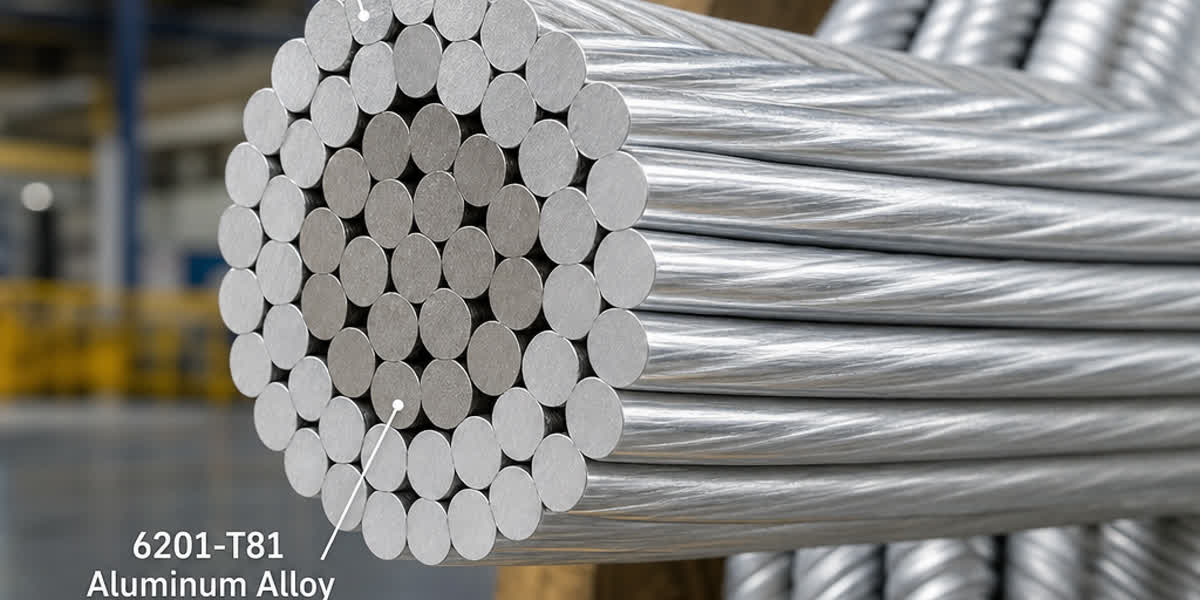
ACAR (Aluminum Conductor Alloy Reinforced — Conductor de Aluminio con Refuerzo de Aleación) es un conductor aéreo de alto rendimiento que combina cables de aluminio 1350-H19 dispuestos en capas concéntricas con una o más capas de cables de aleación de aluminio 6201-T81, logrando una relación resistencia-peso superior y una conductividad más alta que los conductores ACSR convencionales de diámetro equivalente. Desarrollado como una alternativa optimizada para líneas de transmisión de medio a largo vano donde tanto la eficiencia eléctrica como la resistencia mecánica son críticas, ACAR se ha convertido en la opción preferida para proyectos de transmisión de 69 kV a 345 kV, cruces de ríos y entornos costeros o industriales donde la corrosión del acero galvanizado es problemática.
Esta guía proporciona una referencia técnica completa para conductores ACAR, cubriendo especificaciones estándar, propiedades mecánicas y eléctricas, variantes de construcción, métodos de cálculo de ampacidad, mejores prácticas de instalación y comparación con tipos de conductores aéreos alternativos.
1. Introducción
Los conductores ACAR ocupan un nicho específico en la ingeniería de líneas de transmisión aéreas: ofrecen mayor conductividad que el ACSR (porque los propios cables de refuerzo conducen corriente), mientras conservan una resistencia mecánica comparable al ACSR (típicamente 85–95% del ACSR equivalente). La diferencia clave radica en el material de refuerzo — en lugar de acero galvanizado, ACAR utiliza aleación de aluminio de alta resistencia 6201-T81, una aleación Al-Mg-Si que proporciona aproximadamente el doble de resistencia a la tracción que el aluminio grado EC (1350) mientras mantiene aproximadamente un 52.5% de conductividad IACS.
El desarrollo de los conductores ACAR en las décadas de 1960 y 1970 fue impulsado por la necesidad de un conductor que pudiera: - Transportar más corriente que el ACSR de diámetro equivalente sin requerir torres más pesadas - Resistir la corrosión en entornos marinos e industriales donde el acero galvanizado se degrada - Proporcionar menores pérdidas eléctricas para largas distancias de transmisión - Mantener características de flecha adecuadas para vanos medios y largos
Hoy en día, ACAR está estandarizado bajo ASTM B524 (EE. UU.), IEC 61089 (internacional), BS EN 50183 (europeo) y AS/NZS 3607 (Australia/Nueva Zelanda), con adopción generalizada en América del Norte, Medio Oriente, Sudeste Asiático y Australia.
2. Construcción del Conductor ACAR
2.1 Configuración de Capas
Los conductores ACAR se cablean concéntricamente, con el núcleo central y una o más capas intermedias compuestas por cables de aleación 6201-T81, y la capa exterior (o capas) compuesta por cables de aluminio 1350-H19. Las configuraciones comunes incluyen:
| Configuración | Núcleo (Aleación) | Capa(s) Interior(es) | Capa(s) Exterior(es) | Rango típico AWG/kcmil |
|---|---|---|---|---|
| 6/1 | 1× 6201-T81 | — | 6× 1350-H19 | 4 AWG – 4/0 AWG |
| 15/4 | 7× 6201-T81 | — | 15× 1350-H19 | 266.8 – 795 kcmil |
| 22/7 | 7× 6201-T81 | 15× 6201-T81 | 22× 1350-H19 | 795 – 1500 kcmil |
| 37/8 | 7× 6201-T81 | 15× 6201-T81 | 37× 1350-H19 | 1500 – 2500 kcmil |
2.2 Propiedades de los Materiales
| Propiedad | 1350-H19 (Grado EC) | 6201-T81 (Aleación) |
|---|---|---|
| Composición elemental | ≥99.50% Al | Al + 0.6–0.9% Mg + 0.5–0.9% Si |
| Resistencia a la tracción mínima | 186 MPa (27 ksi) | 317 MPa (46 ksi) |
| Conductividad (% IACS) | 61.2% | 52.5% |
| Densidad | 2.705 g/cm³ | 2.703 g/cm³ |
| Coeficiente de expansión lineal | 23.0 × 10⁻⁶ /°C | 23.0 × 10⁻⁶ /°C |
| Módulo de elasticidad | 69 GPa | 69 GPa |
💡 Información clave: El módulo de elasticidad y el coeficiente de expansión térmica del aluminio 1350 y la aleación 6201 son casi idénticos, lo que significa que los conductores ACAR experimentan un estrés térmico diferencial mínimo — una ventaja significativa sobre el ACSR donde el desajuste acero/aluminio causa fuerzas de compresión internas.
3. Referencia de Estándares Internacionales
| Estándar | Alcance | Requisitos Clave |
|---|---|---|
| ASTM B524 | Especificación para conductores de aluminio cableados concéntricamente, reforzados con aleación de aluminio (ACAR) | Cables 1350-H19 según ASTM B230/B609, cables 6201-T81 según ASTM B398/B399; tolerancias de cableado, tracción y resistividad |
| IEC 61089 | Conductores desnudos aéreos de cableado concéntrico de alambre redondo | Estándar genérico que cubre AAC, AAAC, ACSR, ACAR; Anexo A proporciona tablas de construcción específicas para ACAR |
| BS EN 50183 | Conductores para líneas aéreas — Cables de aleación aluminio-magnesio-silicio | Estándar europeo para el componente de aleación 6201-T81 |
| AS/NZS 3607 | Conductores cableados de aleación de aluminio para líneas eléctricas aéreas | Adopción australiana/neozelandesa; incluye tablas de carga características |
| CSA C49.1 | Conductores cableados de aleación de aluminio | Estándar canadiense; similar a ASTM B524 con dimensionamiento métrico |
4. Comparación ACAR vs Conductores Alternativos
4.1 Tabla Comparativa Integral
| Propiedad | ACAR (22/7) | ACSR (26/7) | AAAC (todo 6201) | AAC (todo 1350) |
|---|---|---|---|---|
| Construcción | Al + aleación de Al | Al + núcleo de acero | Todo aleación | Todo aluminio |
| Conductividad (% IACS) | ~56% (media ponderada) | ~51–55% (acero no conductor) | 52.5% | 61.2% |
| Resistencia DC (Ω/km @ 20°C) | 0.0458 | 0.0512 | 0.0497 | 0.0419 |
| RTS (kN) | 185 | 215 | 198 | 125 |
| Peso (kg/km) | 1,420 | 1,340 | 1,390 | 970 |
| Relación resistencia-peso | 130 N·m/kg | 160 N·m/kg | 142 N·m/kg | 129 N·m/kg |
| Resistencia a la corrosión | Excelente | Moderada (núcleo de acero) | Excelente | Excelente |
| Vano típico (m) | 250–400 | 300–500 | 250–400 | 150–300 |
| Costo relativo por km | 1.0× (base) | 0.85× | 0.95× | 0.75× |
Valores mostrados para un conductor representativo de 795 kcmil (aproximadamente 403 mm² de área total).
4.2 Matriz de Decisión: Cuándo Elegir ACAR
| Escenario | Conductor Recomendado | Justificación |
|---|---|---|
| Vano corto (< 200 m), hielo ligero | AAC | Menor costo, mayor conductividad |
| Transmisión estándar (200–400 m) | ACAR | Mejor equilibrio resistencia-conductividad |
| Vano largo (> 400 m), hielo/viento fuerte | ACSR | Mayor resistencia (núcleo de acero) |
| Zona de corrosión costera/industrial | ACAR o AAAC | Sin acero para corroer |
| Reconductoring con torres existentes | ACAR | Mayor capacidad sin reforzar torres |
| Vano muy largo (> 600 m), cruce de río | ACSR (núcleo EHS) o ACSS | Construcciones especiales de alta resistencia |
| Transmisión de larga distancia baja pérdida | ACAR | Menor resistencia que ACSR del mismo diámetro |
5. Propiedades Mecánicas y Eléctricas
5.1 Resistencia a la Tracción Nominal (RTS)
| Tamaño (kcmil) | Configuración | Área Total (mm²) | Cables de Aleación | RTS (kN) | Resistencia DC a 20°C (Ω/km) |
|---|---|---|---|---|---|
| 266.8 | 15/4 | 135.2 | 4 | 45.2 | 0.2131 |
| 336.4 | 15/4 | 170.5 | 4 | 57.1 | 0.1691 |
| 397.5 | 15/4 | 201.4 | 4 | 67.4 | 0.1431 |
| 477 | 15/4 | 241.7 | 4 | 81.0 | 0.1213 |
| 556.5 | 15/4 | 281.9 | 4 | 94.4 | 0.1039 |
| 636 | 22/7 | 322.3 | 7 | 107.8 | 0.0905 |
| 795 | 22/7 | 402.9 | 7 | 134.8 | 0.0724 |
| 954 | 22/7 | 483.4 | 7 | 161.7 | 0.0604 |
| 1033.5 | 37/8 | 523.7 | 8 | 175.3 | 0.0557 |
| 1272 | 37/8 | 644.5 | 8 | 215.8 | 0.0453 |
5.2 Ampacidad
Valores típicos de ampacidad (solar = 1000 W/m², emisividad = 0.5, absortividad = 0.5, temp ambiente = 40°C):
| Tamaño del Conductor | 75°C (kA) | 100°C (kA) | 125°C (kA) |
|---|---|---|---|
| 266.8 kcmil (15/4) | 0.43 | 0.54 | 0.62 |
| 397.5 kcmil (15/4) | 0.55 | 0.70 | 0.81 |
| 636 kcmil (22/7) | 0.74 | 0.94 | 1.10 |
| 795 kcmil (22/7) | 0.85 | 1.08 | 1.27 |
| 1033.5 kcmil (37/8) | 1.00 | 1.29 | 1.52 |
| 1272 kcmil (37/8) | 1.14 | 1.47 | 1.73 |
⚠️ Nota: Los valores de ampacidad son indicativos. Siempre realice cálculos específicos del sitio según IEEE 738 o IEC 61597.
5.3 Características de Flecha (vano de 300 m)
| Conductor (795 kcmil) | Flecha Inicial 50°C (m) | Flecha Final 50°C (m) | Flecha Inicial 100°C (m) | Flecha Final 100°C (m) |
|---|---|---|---|---|
| AAC (todo 1350) | 6.8 | 7.9 | 9.4 | 10.5 |
| ACAR 22/7 | 6.1 | 6.9 | 8.3 | 9.1 |
| AAAC (todo 6201) | 5.8 | 6.5 | 7.9 | 8.6 |
| ACSR 26/7 | 5.4 | 5.9 | 7.2 | 7.7 |
6. Accesorios e Instalación
6.1 Herrajes Recomendados
| Componente | Recomendación | Notas |
|---|---|---|
| Grapas de suspensión | Aleación de aluminio (fundición 356-T6 o similar) | Grapas de acero galvanizado → corrosión galvánica |
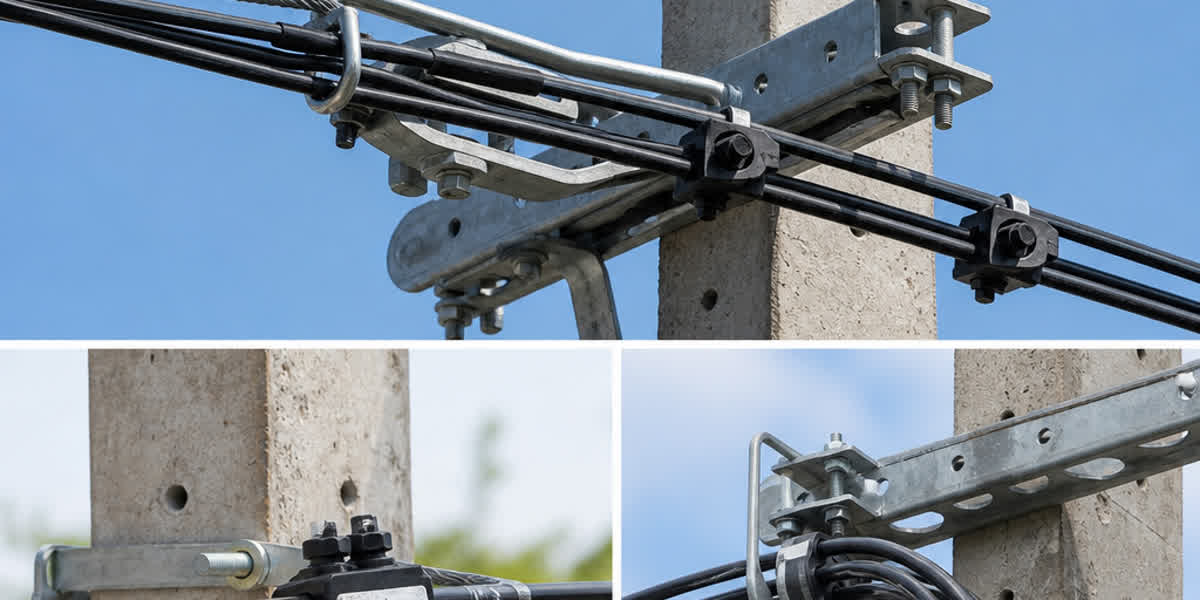
| Grapas de tensión (anclajes) | Anclajes de aleación de aluminio de tensión completa (tipo helicoidal o tipo compresión) | Deben estar clasificados para el 100% del RTS |
| Amortiguadores de vibración | Amortiguadores helicoidales (tipo Stockbridge) | Necesarios para vanos > 200 m |
| Separadores | Aleación de aluminio (para configuraciones de haz) | — |
| Varillas de armadura | Varillas de acero revestido de aluminio o aleación | Previenen el desgaste por fricción |
| Conectores | Todo aluminio o bimetálicos (Al-Cu) | Evitar contacto directo cobre-aluminio |
6.2 Protección contra la Corrosión
| Entorno | Protección Recomendada | Estándar |
|---|---|---|
| Costero (≤ 5 km del mar) | ACAR preferido sobre ACSR; herrajes de aluminio | IEC 60865, IEEE 1243 |
| Industrial (químico/ácido) | ACAR o AAAC; anclajes sellados | — |
| Alta humedad (> 80% HR anual) | Compuesto inhibidor de óxido en todas las conexiones | ASTM B887 |
| Agrícola (amoníaco/fertilizante) | ACAR o AAAC; evitar acero completamente | — |
7. Caso Práctico: Reconductoring de una Línea Costera de 132 kV con ACAR
Antecedentes
Una línea de transmisión de 132 kV en la provincia de Fujian, China, que corre paralela a la costa durante aproximadamente 35 km, fue construida originalmente en 1998 utilizando conductores ACSR 477 kcmil (26/7). Después de 25 años de servicio, las inspecciones periódicas revelaron corrosión significativa de los núcleos de acero en secciones dentro de los 2 km de la costa.
Requisitos
| Parámetro | Valor |
|---|---|
| Conductor original | ACSR 477 kcmil (26/7) |
| Conductor de reemplazo | ACAR 477 kcmil (15/4) |
| Vano típico | 250–350 m |
| Temperatura ambiente | −5°C a 40°C |
| Temperatura máxima del conductor | 100°C |
| Carga de hielo | 5 mm radial |
| Carga de viento | 35 m/s (ráfaga de 3 seg) |
| Vida útil de diseño | 30 años |
| Restricción de carga de torre | Sin refuerzo de torre permitido |
Resultado
El reconductoring se completó en 2023 con una ventana de apagón de 6 semanas. Los nuevos conductores ACAR 477 kcmil (15/4) se instalaron utilizando las torres y herrajes existentes — no se requirió refuerzo de torres ni trabajo de cimentación. Las imágenes térmicas posteriores a la puesta en servicio confirmaron una distribución uniforme de corriente en todos los cables. La vida útil proyectada de 30 años sin riesgo de corrosión del acero proporciona ahorros significativos en costos de mantenimiento.
8. Preguntas Frecuentes (FAQ)
P1: ¿Cuál es la diferencia entre ACAR y AAC?
AAC (Conductor de Todo Aluminio) consiste enteramente en cables de aluminio 1350-H19. ACAR reemplaza algunos de esos cables con cables de refuerzo de aleación de aluminio 6201-T81. Resultado: ACAR tiene aproximadamente un 50% más de resistencia a la tracción que el AAC equivalente, adecuado para vanos más largos y condiciones de carga más altas.
P2: ¿Es ACAR más fuerte o más débil que ACSR?
El ACSR típicamente tiene un RTS 15–30% más alto que el ACAR de diámetro equivalente. Sin embargo, la relación resistencia-peso de ACAR es competitiva porque ACAR es más ligero. Para muchas aplicaciones (vanos de 250–400 m), ACAR proporciona resistencia adecuada con menores pérdidas eléctricas que ACSR.
P3: ¿Cuál es más resistente a la corrosión, ACAR o ACSR?
ACAR es significativamente más resistente a la corrosión en entornos costeros, industriales y agrícolas. El núcleo de acero galvanizado del ACSR es vulnerable a la corrosión cuando el recubrimiento de zinc se agota. ACAR no contiene acero — tanto las aleaciones 1350 como 6201 son inherentemente resistentes a la corrosión.
P4: ¿Puede ACAR instalarse en torres existentes diseñadas para ACSR?
A menudo sí. ACAR de la misma clasificación kcmil típicamente tiene un peso similar o ligeramente inferior al ACSR equivalente. Sin embargo, la menor resistencia a la tracción puede requerir ajustes en la tensión. Siempre realice un análisis de carga de la torre antes del reconductoring.
P5: ¿En qué se diferencia ACAR de AAAC?
AAAC (Conductor de Todo Aleación de Aluminio) utiliza aleación 6201-T81 para TODOS los cables — sin cables 1350-H19. ACAR utiliza una mezcla de 1350 y 6201. AAAC ofrece la mayor resistencia de las opciones de todo aluminio pero tiene la conductividad más baja (52.5% IACS). ACAR logra un mejor equilibrio conductividad-resistencia al usar aluminio puro en las capas exteriores.
P6: ¿ACAR requiere herrajes especiales en comparación con ACSR?
Sí. Debido a que ACAR no contiene acero, todos los herrajes que contactan el conductor deben ser de aluminio o aleación de aluminio para prevenir la corrosión galvánica.
P7: ¿Cuál es la temperatura máxima de operación de ACAR?
Temperaturas máximas de operación continua típicas: - 75°C (límite tradicional para conductores sensibles al recocido) - 100°C (clasificación de alta temperatura común con herrajes normales) - 125°C (limitado a herrajes especializados de alta temperatura) - 150°C (con accesorios clasificados para alta temperatura; requiere evaluación de fluencia y recocido)
P8: ¿Qué estándares internacionales rigen la fabricación de ACAR?
Los conductores ACAR se rigen principalmente por ASTM B524 (EE. UU.), IEC 61089 (internacional), BS EN 50183 (europeo), AS/NZS 3607 (Australia/Nueva Zelanda) y CSA C49.1 (Canadá).
9. Conclusión
Los conductores ACAR ocupan una posición estratégica en el panorama de los conductores aéreos — cerrando la brecha entre el AAC de alta conductividad y el ACSR de alta resistencia. Para el ingeniero que diseña o reemplaza una línea de transmisión donde la resistencia a la corrosión, la resistencia moderada y las bajas pérdidas eléctricas son importantes, ACAR a menudo proporciona la solución óptima.
Puntos clave: - ACAR utiliza cables de refuerzo de aleación de aluminio 6201-T81 en lugar de acero, logrando aproximadamente un 56% de conductividad IACS y un 85–95% de la resistencia del ACSR - Regido por ASTM B524, IEC 61089 y otros estándares internacionales - Ideal para entornos de corrosión costeros, industriales y agrícolas donde los núcleos de acero del ACSR se degradarían - Permite el reconductoring con limitación de carga de torre con mayor ampacidad - Proporciona una pérdida I²R un 5–12% menor en comparación con ACSR de diámetro equivalente - Requiere herrajes de aluminio para prevenir la corrosión galvánica
Explore los productos de conductores ACAR: - Categoría de Conductores de Transmisión Aérea - Contacte al Equipo de Ingeniería para Especificaciones ACAR
📞 Teléfono: +86-371-69176007
📧 Correo electrónico: sales@sitongcable.com
Esta guía técnica fue preparada por el equipo de ingeniería de SiTong Cable. Para soporte de selección ACAR específico de proyectos, incluyendo cálculos de flecha-tensión y evaluación de pérdidas, contacte a nuestro departamento de ventas técnicas.