Instalación y Mantenimiento de AAAC: Guía de Campo Completa para Líneas de Transmisión Aéreas
Instalación y Mantenimiento de AAAC: Guía de Campo Completa para Líneas de Transmisión Aéreas
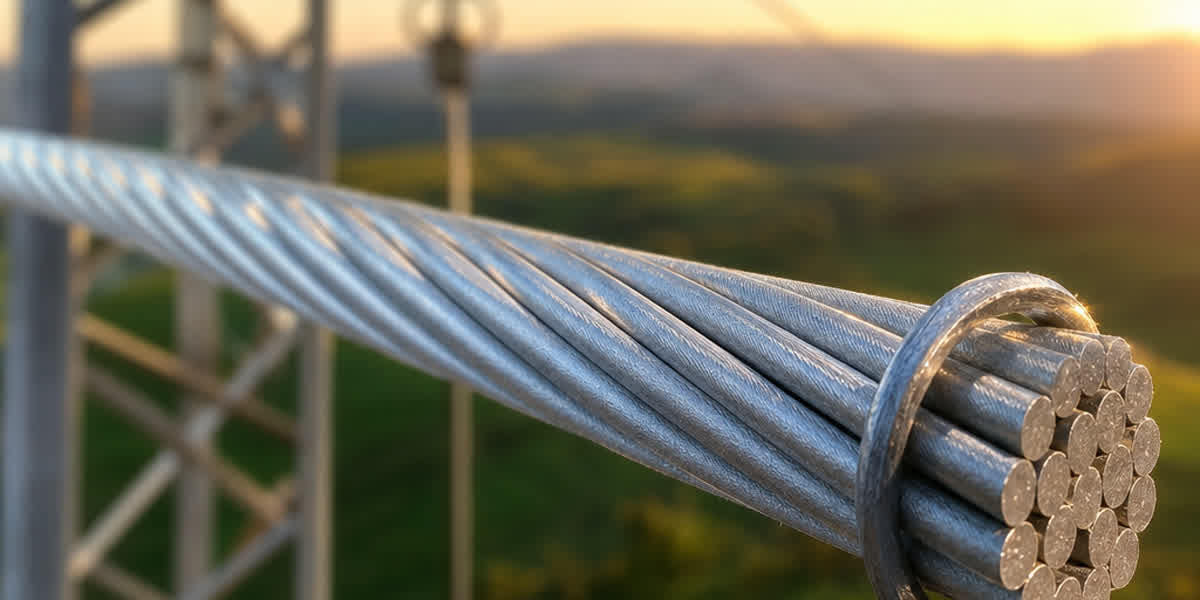
El Conductor de Aleación de Aluminio (AAAC) se utiliza ampliamente en líneas de transmisión y distribución aéreas por su excelente relación resistencia-peso, superior resistencia a la corrosión y bajas pérdidas eléctricas. Una instalación y mantenimiento adecuados son cruciales para alcanzar la vida útil de más de 40 años para la que están diseñados los sistemas AAAC. Esta guía de campo proporciona procedimientos de instalación paso a paso, cálculos de ingeniería, protocolos de inspección y resolución de problemas para ingenieros de campo, linieros y gerentes de proyectos que trabajan con conductores AAAC.
💡 Diferencia clave con AAC: El AAAC está fabricado con aleación de aluminio-magnesio-silicio tratada térmicamente (6201-T81), lo que le proporciona aproximadamente el doble de resistencia a la tracción que el AAC manteniendo una conductividad comparable (52,5%–53,5% IACS). Esto cambia fundamentalmente los parámetros de instalación — mayores tensiones de tiro, diferentes especificaciones de compresión y un comportamiento distincto de flecha-tensión.
Preparación Previa a la Instalación
Recepción y Almacenamiento
| Procedimiento | Requisitos | Notas |
|---|---|---|
| Inspección visual | Verificar daños en bobinas, pestañas dobladas, rotura de embalaje | Fotografiar daños antes de descargar |
| Inspección del conductor | Desenrollar 3–5 vueltas, verificar torceduras, efecto jaula, abrasión | Rechazar bobina si el daño supera el 3% |
| Posición de almacenamiento | Bobinas verticales sobre superficie dura y seca | Nunca almacenar de lado — ovaliza las espiras |
| Duración del almacenamiento | < 6 meses: exterior cubierto con lona respirable | > 6 meses: interior, 10–30°C, < 70% HR |
| Rotación | Primero en entrar, primero en salir (FIFO) | Registrar fecha de recepción en etiqueta |
Lista de Herramientas y Equipos
| Categoría | Equipo | Aplicación |
|---|---|---|
| Tiro | Tiracables de rueda (8–12 t), tensionador, enrollador de piloto | Tendido con tensión principal |
| Empalme | Compresor hidráulico (≥ 100 t), matrices de empalme a tensión total, matrices de manguito de reparación | AAAC requiere 15–20% más presión de compresión que AAC — verificar calibración |
| Línea viva | Herramienta de compresión en tensión, pértigas aislantes | Reparación en tensión solo para conductores ≤ 66 kV |
| Medición | Flexímetro, dinamómetro (5 t), telémetro láser, celda de carga | Verificación flecha-tensión |
| Puesta a tierra | Equipos de tierra móviles (3 juegos), barra colectora, equipos personales | Protección contra tensión inducida |
| Accesorios | Varillas preformadas, amortiguadores de vibración (tipo Stockbridge), espaciadores | Según diseño dinámico |
⚠️ Específico AAAC: Las matrices de compresión para AAAC deben verificarse contra la mayor dureza de la aleación (BHN 55–65 vs. BHN 15–20 del AAC). El uso de matrices clasificadas para AAC causará compresión incompleta. Verifique siempre la tabla de asignación de matrices del fabricante.
Plan de Instalación
- Determinar longitudes de sección según plano de ubicación de estructuras (vano típico: 300–500 m)
- Identificar ubicaciones del tiracables y tensionador — al menos 10 m de la última estructura
- Planificar protección de cruces (camiones cesta, redes, estructuras de protección para cruces de carretera/ferrocarril)
- Establecer comunicación por radio entre operadores de tiracables y tensionador
- Confirmar límites climáticos: viento < 25 km/h, sin precipitaciones, temperatura ambiente entre –10°C y +40°C
Cálculos de Ingeniería
Parámetros de Diseño
| Parámetro | Símbolo | Rango Típico | Estándar |
|---|---|---|---|
| Resistencia a la tracción nominal | RTS | 15–200 kN | IEC 61089 / ASTM B399 |
| Tensión máxima de instalación | — | 20% RTS (normal), 25% RTS (corto plazo) | IEEE 524 |
| Flecha inicial (10% RTS, 15°C) | — | 0,3–1,5 m para vano de 300 m | IEC 61089 |
| Fluencia a 10 años (10% RTS) | — | 0,01–0,03% deformación | CIGRE TB 324 |
| Coeficiente de expansión térmica | α | 23,0 × 10⁻⁶ /°C | ASTM B399 |
| Módulo elástico | E | 62 GPa | ASTM B399 |
Cálculo de Flecha-Tensión
Se utiliza el método del vano regulador (aproximación catenaria) para AAAC:
S = (w × L²) / (8 × H)
Donde:
- S = flecha en el centro del vano (m)
- w = peso del conductor por unidad de longitud (kg/m)
- L = longitud del vano (m)
- H = tensión horizontal (N)
Consideración específica AAAC: Al ser AAAC una aleación homogénea (sin alma de acero), la tensión se distribuye uniformemente en todos los alambres. A diferencia del ACSR, no existe reparto de carga entre alma de acero y alambres de aluminio. Esto simplifica el cálculo flecha-tensión a un modelo de material único.
Compensación por fluencia: El AAAC presenta ligeramente más fluencia que el ACSR pero menos que el AAC. Utilice las curvas de fluencia de CIGRE TB 324 para la aleación específica. Margen típico: 0,02% de deformación adicional en 10 años al 15% RTS.
Efectos Térmicos
| Condición | Incremento de Flecha (vano 300 m, 240 mm² AAAC) |
|---|---|
| 15°C → 40°C (verano) | +0,35 m |
| 15°C → 75°C (máx. continuo) | +1,1 m |
| 15°C → 100°C (emergencia) | +1,5 m |
| Carga de hielo (12 mm radial) | +0,08 m (adicional por peso) |
Verificar distancia al suelo bajo la combinación más desfavorable: temperatura máxima + carga de hielo.
Procedimiento de Instalación
Paso 1: Configuración y Línea Piloto
- Colocar tensionador en extremo lejano, tiracables en extremo cercano
- Instalar equipos de tierra móviles en las primeras tres estructuras en ambos extremos
- Tensar línea piloto (nailon / fibra de vidrio — resistencia a rotura 8–12 kN)
- Instalar giratorio para evitar transmisión de torsión
Paso 2: Tendido con Tensión
| Fase | Acción | Requisitos |
|---|---|---|
| Tiro inicial | Baja tensión (2–3 kN) para despegar del suelo | Velocidad ≤ 5 km/h |
| Sección media | Aumentar tensión a 15–20% RTS | Velocidad ≤ 8 km/h |
| Secciones finales | Tensión de instalación completa (20% RTS máx.) | Verificar dinamómetro cada 10 vanos |
| Ajuste de flecha | Flecha final dentro de ±2% del objetivo de diseño | Dejar reposar 30 min antes de medir |
⚠️ Advertencia AAAC: Nunca superar el 25% RTS durante el tendido. El AAAC tiene aproximadamente la mitad de resistencia a rotura que el ACSR de tamaño equivalente — la sobretensión causa alargamiento permanente de alambres (estricción) visible como "efecto jaula" en los puntos de anclaje.
Paso 3: Grapado y Anclaje
- Transferir conductor de los roldanas a las grapas de suspensión
- Instalar varillas preformadas en puntos de suspensión (requerido para vanos > 200 m)
- Anclar con anclajes de compresión a tensión total
Especificación de anclaje por compresión (AAAC):
| Tamaño Conductor | Tamaño de Matriz | Carrera de Compresión | Presión | Número de Crimpados |
|---|---|---|---|---|
| 50–95 mm² | Ajustado al diámetro exterior | 2 carreras | 65–75 MPa | 2 por lado |
| 120–240 mm² | Ajustado al diámetro exterior | 2 carreras | 70–85 MPa | 3 por lado |
| 300–400 mm² | Ajustado al diámetro exterior | 3 carreras | 75–90 MPa | 4 por lado |
| > 400 mm² | Ajustado al diámetro exterior | 3 carreras | 80–95 MPa | 4 por lado |
💡 Consejo de campo: La dureza de la aleación AAAC significa que la matriz debe ser 0,2–0,5 mm más pequeña que las matrices AAC para el mismo diámetro exterior nominal. Verifique la asignación de matrices contra la tabla del fabricante — no sustituya matrices AAC.
Paso 4: Empalme
Procedimiento de empalme a tensión total: 1. Pelar extremos del conductor a la longitud especificada por el fabricante 2. Insertar ambos extremos en el manguito de empalme (direcciones opuestas) 3. Marcar zonas de compresión 4. Comprimir zona central primero, luego zonas exteriores alternando lados 5. Verificar resistencia al deslizamiento ≥ 95% RTS (muestra de aceptación: 1 por cada 50 empalmes)
Procedimiento de manguito de reparación (sin tensión): 1. Retirar alambres dañados (máx. 3 alambres adyacentes, < 20% del total) 2. Instalar manguito de reparación sobre el área dañada 3. Comprimir del centro hacia afuera
Paso 5: Instalación de Accesorios
| Accesorio | Par de Instalación / Método | Propósito |
|---|---|---|
| Amortiguadores Stockbridge | 40–50 N·m par de apriete del tornillo | Control de vibración eólica |
| Espaciadores (haz) | 35–45 N·m por grapa | Amortiguación de oscilación |
| Anillos anticorona | Especificación del fabricante | ≤ 132 kV: opcional; ≥ 220 kV: obligatorio |
| Cuernos de arqueo | Entrehierro fijo, paralelo a cadena de aisladores | Trayectoria de descarga de rayos |
Inspección y Pruebas Posteriores a la Instalación
| Elemento de Inspección | Criterio de Aceptación | Método |
|---|---|---|
| Precisión de flecha | Dentro de ±2% del objetivo de diseño | Teodolito o telémetro láser |
| Distancia al suelo del conductor | ≥ mínimo según código aplicable (NESC, IEC) | Medición directa |
| Resistencia del empalme | ≤ 1,2 × resistencia equivalente del conductor | Microóhmetro (CC) |
| Elevación de temperatura del empalme | ≤ 5°C sobre conductor adyacente a carga nominal | Termografía |
| Descarga corona | Sin corona visible al 110% tensión nominal (seco) | Cámara UV (CISPR 18-2) |
| Marcas de compresión | Visibles, centradas, dentro de tolerancia | Visual |
| Continuidad de puesta a tierra | < 5 Ω a tierra por estructura | Megóhmetro de tierra |
Programa de Mantenimiento Rutinario
| Frecuencia | Actividad | Notas |
|---|---|---|
| Mensual (primer año) | Patrullaje visual — enfoque en empalmes y anclajes | Líneas nuevas presentan asentamiento inicial |
| Semestral | Termografía de todos los empalmes y anclajes | Comparar con línea base de prueba post-instalación |
| Anual | Medición de flecha en 3 vanos representativos | Verificar contra curvas de diseño |
| Anual | Inspección de amortiguadores de vibración | Reemplazar amortiguadores sueltos, agrietados o desplazados |
| Cada 2 años | Patrullaje completo (helicóptero o dron) | Verificación de corrosión en zonas costeras/industriales |
| Cada 5 años | Prueba de tracción de empalmes (1 por cada 100) | Verificar ≥ 95% RTS |
| Cada 10 años | Ensayo de muestra de conductor (1 por cada 50 km) | Verificar retención de resistencia a tracción, profundidad de corrosión |
Resolución de Problemas Comunes
| Problema | Causa Probable | Solución |
|---|---|---|
| Flecha excesiva (+5%) | Sobretensión durante tendido o fluencia superior a predicción | Re-tensar si la distancia al suelo está comprometida; monitorear anualmente |
| Temperatura de empalme > 5°C sobre base | Compresión incompleta o corrosión | Reemplazar empalme — la recompresión no es fiable para aleación AAAC |
| Efecto jaula cerca de anclaje | Sobretensión durante tendido o vibración por viento | Cortar hasta sección no afectada, re-terminar |
| Rotura de alambres (1–2) | Fatiga por galope o vibración | Instalar amortiguadores adicionales; reparar con manguito |
| Picaduras por corrosión (costero) | Ataque de niebla salina en superficie de aleación | Aplicar grasa anticorrosión en empalmes, instalar anillos anticorona |
| Bajo voltaje de inicio de corona | Bordes afilados en herrajes o alambres dañados | Limar bordes; reemplazar alambres dañados |
| Desplazamiento de amortiguador | Par de apriete incorrecto (demasiado bajo) | Re-apretar a 40–50 N·m según especificación del fabricante |
Consideraciones de Seguridad
| Peligro | Precaución |
|---|---|
| Tensión inducida en línea sin tensión | Instalar equipos de tierra móviles en tiracables, tensionador y cada 3 estructuras |
| Caída desde altura | Arnés de cuerpo completo con doble eslinga; 100% anclado por debajo de 2 m |
| Tensión del cable de tiro | Mantenerse fuera de la zona de tensión (1,5× longitud de vano del tiracables); usar cuerda guía |
| Puntos de pellizco de herramienta hidráulica | No colocar manos cerca de matrices durante ciclo de compresión; usar alivio automático de presión |
| Trabajo en tensión | Distancia mínima de aproximación según IEC 61472: 0,9 m para 66 kV, 1,5 m para 220 kV |
| Clima | Detener trabajo si hay rayos a menos de 10 km; suspender trabajo en tensión por encima de 40°C ambiente |
Preguntas Frecuentes (FAQ)
-
¿Cuál es la tensión máxima de instalación para AAAC? La tensión de tendido máxima recomendada es 20% RTS para condiciones normales y 25% para situaciones de corta duración (≤ 30 minutos) como cruce de obstáculos. Superar estos límites puede causar alargamiento permanente de alambres (estricción) o efecto jaula.
-
¿Se pueden usar las mismas matrices de compresión para AAAC y AAC? No. El AAAC (aleación 6201-T81, BHN 55–65) requiere matrices 0,2–0,5 mm más pequeñas que el AAC (aleación 1350, BHN 15–20) para el mismo diámetro nominal del conductor. Usar matrices AAC en AAAC producirá compresión incompleta y fallo del empalme bajo carga.
-
¿En qué se diferencia el cálculo flecha-tensión del AAAC respecto al ACSR? El AAAC es un material homogéneo (sin alma de acero), por lo que su cálculo flecha-tensión utiliza un único módulo elástico (62 GPa) y coeficiente de expansión térmica (23 × 10⁻⁶ /°C). El ACSR requiere un modelo compuesto porque el alma de acero soporta una parte significativa de la carga. El AAAC presenta mayor flecha a altas temperaturas que el ACSR de tamaño equivalente.
-
¿Cuál es la vida útil esperada de una instalación AAAC? Con instalación adecuada y mantenimiento rutinario, el AAAC alcanza típicamente 40–50 años de vida útil. Ambientes corrosivos (costeros, industriales) pueden reducirla a 25–35 años sin medidas de protección.
-
¿Cada cuánto deben inspeccionarse los empalmes? Los empalmes deben inspeccionarse termográficamente cada 6 meses durante los primeros 2 años (cuando se desarrollan la mayoría de las fallas), luego anualmente. Una elevación de temperatura superior a 10°C sobre la línea base indica fallo inminente y requiere reemplazo inmediato.
-
¿Se puede instalar AAAC en entornos costeros? Sí. La aleación de aluminio-magnesio-silicio del AAAC ofrece resistencia a la corrosión superior comparada con el ACSR (sin corrosión galvánica entre acero y aluminio). Sin embargo, todos los empalmes y anclajes deben tratarse con grasa anticorrosión, y se recomienda limpieza rutinaria con agua desionizada cada 3–5 años.
-
¿Qué longitudes de vano son típicas para AAAC? El AAAC es adecuado para vanos desde 100 m (distribución) hasta 500 m (transmisión). Para vanos más largos, ACAR o ACSR pueden ser más económicos debido a su mayor resistencia. El vano máximo práctico para AAAC al 20% RTS es aproximadamente 450–500 m según el tamaño del conductor.
-
¿Es posible trabajar en tensión en conductores AAAC? Sí, hasta 66 kV con herramientas en tensión. Para tensiones superiores, se requieren métodos a potencial (traje conductor) con distancias mínimas de aproximación según IEC 61472. La superficie homogénea del AAAC (sin exposición de alma de acero) reduce la corona comparada con ACSR de tamaño equivalente.
Referencias y Estándares
| Estándar | Descripción |
|---|---|
| ASTM B399/B399M | Especificación estándar para conductores de aleación de aluminio 6201-T81 trenzados concéntricamente |
| IEC 61089 | Conductores eléctricos aéreos trenzados concéntricos de alambre redondo |
| IEEE 524 | Guía para la instalación de conductores de líneas de transmisión aéreas |
| IEEE 563 | Guía sobre mantenimiento e inspección de conductores |
| IEEE 738 | Cálculo de corriente-temperatura de conductores aéreos desnudos |
| IEC 60826 | Criterios de diseño de líneas de transmisión aéreas |
| IEC 61284 | Líneas aéreas — Requisitos y ensayos para herrajes |
| IEC 61238-1 | Conectores de compresión y mecánicos para cables de potencia |
| CIGRE TB 324 | Métodos de cálculo de flecha-tensión para líneas aéreas |
| ASTM B398 | Especificación estándar para alambre de aleación de aluminio 6201-T81 para fines eléctricos |
| CISPR 18-2 | Características de interferencia radioeléctrica de líneas eléctricas aéreas |
| IEC 61472 | Trabajo en tensión — Distancias mínimas de aproximación |
Acerca de / Contacto
Esta guía fue preparada por el equipo de ingeniería de SiTong Cable basándose en experiencia de campo y estándares internacionales. SiTong Cable fabrica una gama completa de conductores AAAC según normas ASTM B399, IEC 61089 y BS 3242, sirviendo a empresas de servicios públicos, energías renovables y contratistas EPC en todo el mundo.
👉 Explore nuestra gama de productos AAAC 👉 Guía Técnica Completa de AAAC — especificaciones, metodología de selección, aplicaciones 👉 Contacte a nuestro equipo de ingeniería para soporte técnico o recomendaciones específicas de proyecto
📬 Consultas de ventas: sales@sitongcable.com | 📞 Teléfono: +86-371-69176007