ABC (Aerial Bundled Cable) vs Bare Overhead Conductors — Complete Selection Guide (2026)

2026-07-04 | SiTong Cable | technical
ABC (Aerial Bundled Cable) vs Bare Overhead Conductors — Complete Selection Guide (2026)

ABC (Aerial Bundled Cable) vs Bare Overhead Conductors — Complete Selection Guide (2026)

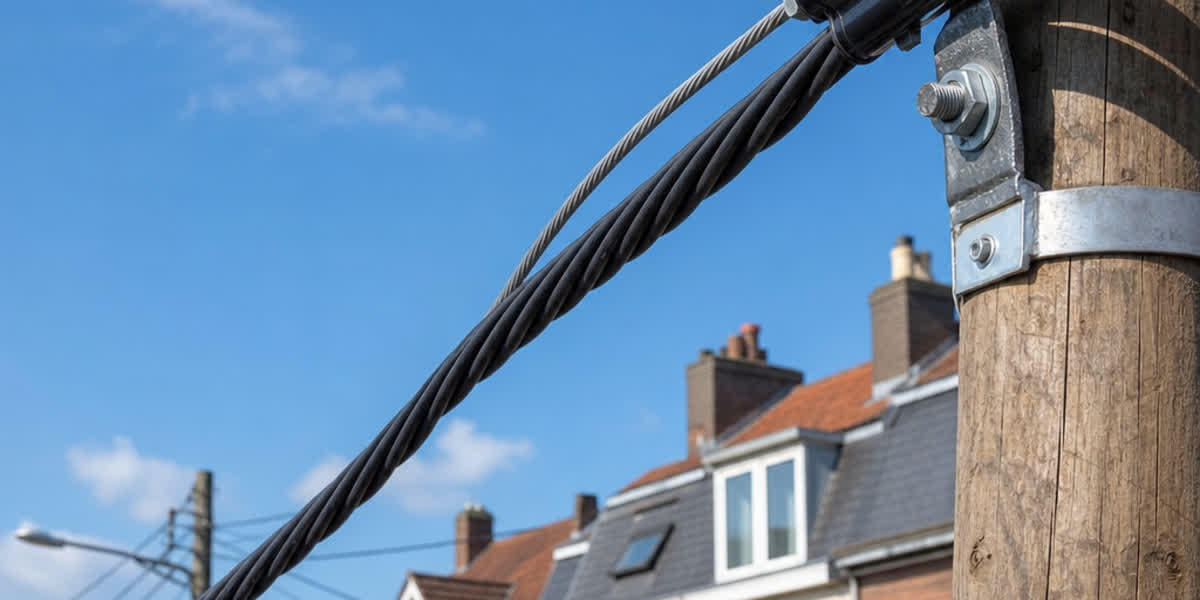
Aerial Bundled Cable (ABC) and traditional bare overhead conductors represent two fundamentally different approaches to overhead power distribution. ABC consists of insulated phase conductors twisted around an integrated messenger/support cable, while bare conductors rely on air gaps and insulator strings for phase-to-phase insulation. As the global power industry moves toward higher safety standards, lower line losses, and greater environmental adaptability, ABC cable is experiencing rapid adoption in urban distribution networks, forested areas, coastal corrosive environments, and densely populated regions. This guide provides a comprehensive comparison across technical specifications, installation costs, operational maintenance, safety performance, and international standards (IEC 60502-2, BS 7870, NFC 33-209, IEEE, ICEA S-66-524) to help power engineers and project decision-makers select the optimal solution.

💡 Key Insight: At distribution voltage levels (0.6/1 kV to 33 kV), the total lifetime cost (including installation and maintenance) of ABC cable systems is typically 15%–25% lower than bare overhead conductor systems, driven by narrower right-of-way requirements, simpler pole structures, and lower maintenance frequency.


1. ABC Cable vs Bare Conductors: Quick Comparison Overview

Comparison Dimension ABC Aerial Bundled Cable Bare Overhead Conductors
Conductor Structure Insulated phase conductors twisted around messenger steel wire (self-supporting), or 4-core/3-core bundled Bare phase conductors suspended on insulator strings, phase separation by air gap
Insulation XLPE (90°C) or HDPE (75°C); nominal thickness 2.0–4.5 mm (depending on voltage class) None — relies on air gap (typical phase spacing: distribution 0.3–1.2 m, transmission > 3 m)
Voltage Levels Low-voltage 0.6/1 kV, medium-voltage 6.6–33 kV Full range: LV to EHV (up to 1200 kV)
Support Method Self-supporting bundled messenger or independent messenger cable Insulator string suspension on crossarms
Tower/Pole Load Lower (single compact assembly, low wind loading) Higher (multiple separated conductors, long crossarms, high wind loading)
Short-Circuit Capacity Conductor section + messenger section combined Conductor section only
Typical Cross-Section 16–240 mm² (phase) + 16–95 mm² (neutral/messenger) 16–630 mm²
Span Lengths Distribution: 40–120 m (overhead), 30–80 m (forested) Distribution to long-haul transmission: 50–500 m
Failure Risk Insulation maintained after breakage, extremely low electrocution risk Broken conductor contacts ground directly → high electrocution and fire risk

2. Detailed Technical Specifications Comparison

2.1 Conductor Materials

Item ABC Cable Bare Conductors
Common Conductors Electrical-grade aluminum (1350-H19), hard-drawn copper, or aluminum alloy Aluminum 1350-H19, aluminum alloy 6201-T81 (AAAC), steel-reinforced aluminum (ACSR)
Messenger/Neutral Galvanized steel (per BS 183 / ASTM A475) or aluminum alloy (AACSR type) N/A
Conductivity (Al) 61% IACS (IEC 60189) 61% IACS (Al 1350), 52.5–53.5% IACS (AAAC 6201)
Mechanical Properties Tensile strength governed by messenger: 1200–1600 MPa (steel grade) Conductor self-supports all mechanical loads (ACSR steel core 1400–1800 MPa)

2.2 Insulation & Shielding

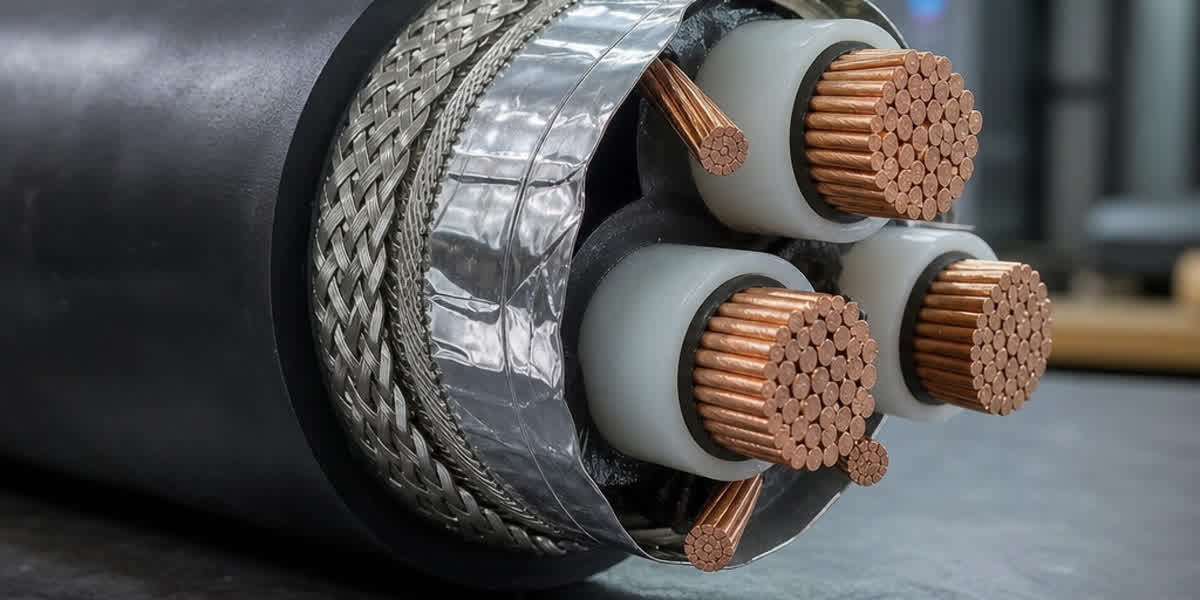
ABC Insulation per IEC 60502-2 / BS 7870:

Voltage Rating Conductor Size XLPE Insulation Thickness Insulation Standard
0.6/1 kV 16–240 mm² 1.0–1.4 mm IEC 60502-1
6.6/11 kV 25–240 mm² 3.4 mm IEC 60502-2
12/20 kV 25–240 mm² 4.5 mm IEC 60502-2
18/30 kV 25–240 mm² 5.5 mm IEC 60502-2

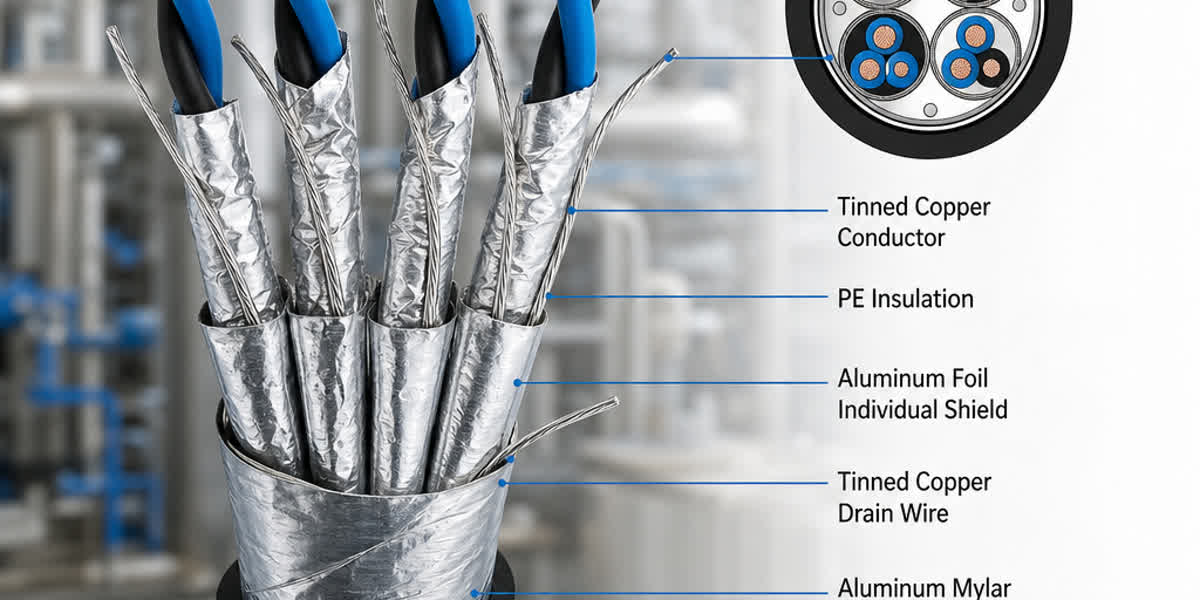
⚠️ Critical ABC Safety Feature: XLPE insulation is tested per IEC 60502-2 with AC withstand voltage (3.5 U₀, 5 minutes) and partial discharge testing (≤ 5 pC), ensuring extremely low manufacturing defects. All ABC cables rated 11 kV and above should include semiconductive screens and metallic shielding.

2.3 Electrical Parameters Comparison

Parameter ABC Cable (240 mm², 11 kV) Bare Conductor (240 mm² AAC, 11 kV)
DC Resistance (20°C) 0.125 Ω/km (phase) 0.119 Ω/km (equivalent)
AC Resistance (90°C) 0.160 Ω/km 0.128 Ω/km (75°C max)
Phase-to-Phase Capacitance 0.25–0.45 μF/km (bundled) 0.005–0.012 μF/km (separated air gap)
Charging Current (11 kV) 0.5–1.0 A/km (high C → voltage rise at line end for long runs) 0.01–0.02 A/km (negligible)
Inductance 0.25–0.35 mH/km 1.0–1.3 mH/km (larger phase spacing)
Line Reactance 0.08–0.11 Ω/km 0.31–0.41 Ω/km

💡 Engineering Implication: ABC's low inductance reduces voltage drop by ~60–75%, but high capacitance requires consideration of charging current and Ferranti effect on long runs (> 5 km). Bare conductors conversely — reactance dominates voltage drop, capacitance is negligible.

2.4 Ampacity Comparison

Conditions: Ambient 40°C, solar radiation 1000 W/m², wind speed 0.6 m/s

Cross-Section ABC XLPE (90°C) Bare Conductor (75°C, anodized aluminum)
50 mm² 175 A 205 A
95 mm² 270 A 320 A
120 mm² 315 A 370 A
150 mm² 355 A 420 A
185 mm² 400 A 475 A
240 mm² 470 A 560 A

⚠️ Note: ABC ampacity is 15–20% lower than equivalent bare conductors because insulation impedes heat dissipation. In capacity upgrade projects, one to two size classes larger ABC may be needed for equivalent ampacity.


3. Application Scenarios Comparison

3.1 ABC Cable Advantage Scenarios

Scenario Reason Typical Case
Dense Urban Areas Narrow right-of-way (0.3–0.6 m vs bare 1.5–3 m); close building proximity European urban distribution (France, UK, Germany widely adopted)
Forest/Woodland No spark risk (no bare conductor arcing to cause fire); branches can briefly contact without tripping Australian bushfire high-risk zones (NSW Rural Fire Service mandate)
Coastal/Industrial Corrosion XLPE insulation provides additional corrosion protection for conductors Middle East, SE Asian coastal cities
Capacity Upgrades Low reactance (0.08–0.11 Ω/km) provides better voltage drop performance Aging urban distribution upgrades (replace bare, retain poles)
Environmental Requirements Narrow corridor → 50–70% less tree trimming European biodiversity-sensitive areas
Dense Low-Rise Residential Safety after breakage (insulation maintained, no live contact with ground) Developing country peri-urban distribution

3.2 Bare Conductor Advantage Scenarios

Scenario Reason Typical Case
Long-Distance Transmission (> 10 km) No charging current compensation needed; higher economic transfer capacity Backbone transmission 69 kV–765 kV
Long Spans (> 200 m) Lighter weight, easier sag control River crossing, valley crossing
Extra-High Voltage (> 35 kV) ABC economics degrade rapidly with voltage increase Transmission backbone
Extreme Ice Loading Bare conductors can be de-iced with short-circuit current; ABC insulation limits de-icing Northern China, Canada, Russia
Frequent Line Re-routing Bare conductor jumper and T-connection is faster and simpler Temporary construction power, mining
Extreme Heat (> 50°C) Bare conductors dissipate heat better, less ampacity derating Middle East desert zones

3.3 Decision Matrix

                              ABC Cable   Bare
                              ───────     ─────
Urban Distribution            ★★★★★      ★★★
Forest/Woodland               ★★★★★      ★★
Coastal/Corrosive              ★★★★       ★★★
Long Distance (> 10 km)        ★★        ★★★★★
Long Span (> 200 m)            ★★        ★★★★★
Short Distribution (< 5 km)   ★★★★★      ★★★★
Capacity Upgrade (keep poles) ★★★★★      ★★
Extreme Ice Loading             ★★        ★★★★
Frequent Re-routing            ★★★       ★★★★
Environment/ROW Restricted    ★★★★★      ★★★

4. Economic Comparison

4.1 Initial Investment

Cost Item ABC (11 kV, 240 mm²) Bare Conductor (240 mm² AAC, 11 kV)
Material Cost (per km) $8,000–12,000 (insulated phases + messenger + fittings) $4,000–6,000 (conductor only, no insulators)
Insulators & Hardware $2,000–3,000 (compact terminals, suspension clamps, dead-ends) $4,000–8,000 (insulator strings + hardware, per phase)
Poles/Towers $3,000–5,000 (light single-pole, short/no crossarms) $5,000–10,000 (medium poles, long crossarms)
Installation Labor $3,000–4,500 $5,000–7,000
Right-of-Way Clearing $1,000–2,000 (narrow ROW) $3,000–5,000 (wide ROW, more tree trimming)
Initial Total $17,000–26,500/km $21,000–36,000/km

ABC initial investment is 18%–27% lower than bare conductors — savings primarily from pole simplification and ROW clearing.

4.2 Lifecycle Cost (20 years)

Cost Item ABC Cable Bare Conductors
Initial Investment $22,000/km $29,000/km
Annual O&M $200–400/km $500–1,000/km
20-Year O&M Total $4,000–8,000/km $10,000–20,000/km
Fault Repairs (20 yr est.) $1,000–3,000/km (low failure rate) $3,000–6,000/km (higher failure rate)
20-Year Total Cost $27,000–33,000/km $42,000–55,000/km
vs Bare Conductors 35–40% savings

5. Installation Comparison

5.1 ABC Cable Installation

  1. Stringing: Use bundled payout system that simultaneously runs all phases, maintaining twist structure
  2. Tension: Lower (5–8 kN typical), stringing speed 2–3 km/h
  3. Pole Modification: Usually no crossarm needed — messenger anchored directly to pole top or bracket
  4. Mid-Span Splicing: Insulated piercing connectors or pre-molded cold-shrink joints per phase
  5. Termination: Dedicated ABC termination box for insulation transition + moisture seal
  6. Specialized Tools: ABC-specific stringing blocks (roller spacing matched to bundle diameter)

5.2 Bare Conductor Installation

  1. Stringing: Each phase separately, independent tension control
  2. Tension Requirements: Higher (10–25% RTS), complex sag-tension calculations
  3. Pole Assembly: Crossarms, insulator strings, hardware — each phase separately suspended
  4. Splicing: Full-tension compression splice sleeves (compression tool + matched dies)
  5. Clearance: Strict minimum clearance to ground per NESC/IEC
  6. Accessories: Vibration dampers, spacer dampers, corona rings

6. Maintenance & Operation Comparison

Maintenance Item ABC Cable Bare Conductors
Routine Patrol 1×/year (visual: insulation surface, messenger condition) 2×/year (insulators, hardware, sag)
Tree Trimming 2–3 m corridor (prevent large branch pressure only) 5–8 m corridor (full-width clearance)
Insulation Testing Every 3–5 years insulation resistance test (1000 V DC megger); PD test optional N/A
Sag Adjustment Rarely needed — messenger creep much lower than conductor creep Every 5–10 years check and possibly adjust
Corrosion Inspection Insulation protects conductor; focus on messenger and terminals Full inspection of conductor, insulators, hardware
Fault Location More difficult — insulation hides visual fault points; needs cable fault locator Visual fault spotting — broken strands, arc marks
Fault Repair Strip insulation, cold-shrink joint; longer repair (2–4 hrs per location) Direct compression splice or replace span; faster (0.5–1 hr)
Cleaning Not required Every 3–5 years insulator washing in industrial/coastal areas

7. Safety Performance Comparison (Critical Differences)

Safety Dimension ABC Cable Bare Conductors
Conductor Breakage ✅ Insulation maintained after break, minimal induced current, no immediate electrocution/fire ❌ Broken conductor contacts ground, trees, vehicles — high electrocution and fire risk
Bird/Animal ✅ Insulation prevents phase-to-phase faults (birds, branches, small animals) ❌ Birds, branches, animals instantly create phase-to-phase short circuits
Lightning ⚠️ Insulation does not block lightning — but reduces induced overvoltage amplitude ⚠️ Shield wire/arrester protection
Contact Safety ✅ Public can touch insulated surface (safe at ≥ 3 m installation height) ❌ Any contact is lethal
Fire Risk ✅ Minimal — no bare conductor arcing to ignite dry grass/leaves ❌ Significant — broken conductor arcing is a primary bushfire cause
Vandalism/Theft ✅ Insulation blocks illegal tapping ❌ Bare conductors easily illegally T-tapped

🔥 Case Study: After Australia's 2009 "Black Saturday" bushfires, the state of Victoria mandated replacement of bare overhead conductors with ABC or underground cable in high-risk forest areas. The UK Energy Networks Association (ENA) similarly recommends ABC prioritization in peri-urban forest zones.


8. International Standards & Specifications

Standard Scope
IEC 60502-2 Power cables with extruded insulation for rated voltages 6–30 kV (ABC insulation & shielding)
BS 7870 LV and MV ABC cables — British standard, widely referenced globally
NFC 33-209 French standard — aerial bundled insulated cables
AS/NZS 3560 Australia/New Zealand — self-supporting insulated cables for overhead distribution
ICEA S-66-524 Overhead insulated cables — US ICEA standard
IEEE 524 Guide to installation of overhead transmission line conductors (bare)
IEC 61089 Round wire concentric lay overhead electrical stranded conductors
ASTM B232 / B399 ACSR and AAAC bare conductor standards
IEC 60038 IEC standard voltages (ABC voltage rating system)
EN 50397 Covered conductors for overhead lines rated 1–36 kV and accessories

9. Frequently Asked Questions (FAQ)

1. What is the maximum voltage rating for ABC cable? Commercial ABC products are typically available up to 33 kV (per IEC 60502-2). Above 33 kV, insulation costs, charging current, and economics become unfavorable. For voltages above 35 kV, bare conductors remain the standard choice.

2. How does ABC cable perform under lightning conditions? ABC's insulation does not block direct lightning strikes — a direct hit will still puncture the insulation. However, ABC's compact geometry (small phase spacing) produces lower induced overvoltage amplitudes than bare conductors. Surge arresters are recommended in areas with > 40 thunderstorm days/year.

3. What is the expected service life of ABC cable? Under normal conditions, XLPE-insulated ABC cable has a design life of 30–40 years. Key factors affecting life: operating temperature (each 8°C above rated halves life), UV radiation (requires UV-resistant sheath grade), installation quality, and environmental corrosivity.

4. Can ABC cable be T-tapped or branched? Yes. ABC uses dedicated T-connection boxes (insulated piercing connectors or pre-molded cold-shrink branch joints), allowing branching with minimal or no power interruption. Each T-tap takes approximately 30–45 minutes to install.

5. Can existing bare conductor poles be reused for ABC conversion? Generally yes. ABC's lighter weight and smaller wind profile mean most 10–15 m distribution poles can be reused without replacement. However, pole foundation capacity, crossarm strength, and clearance to ground/buildings must be verified against ABC's sag characteristics (ABC typically sags slightly more than equivalent bare conductor).

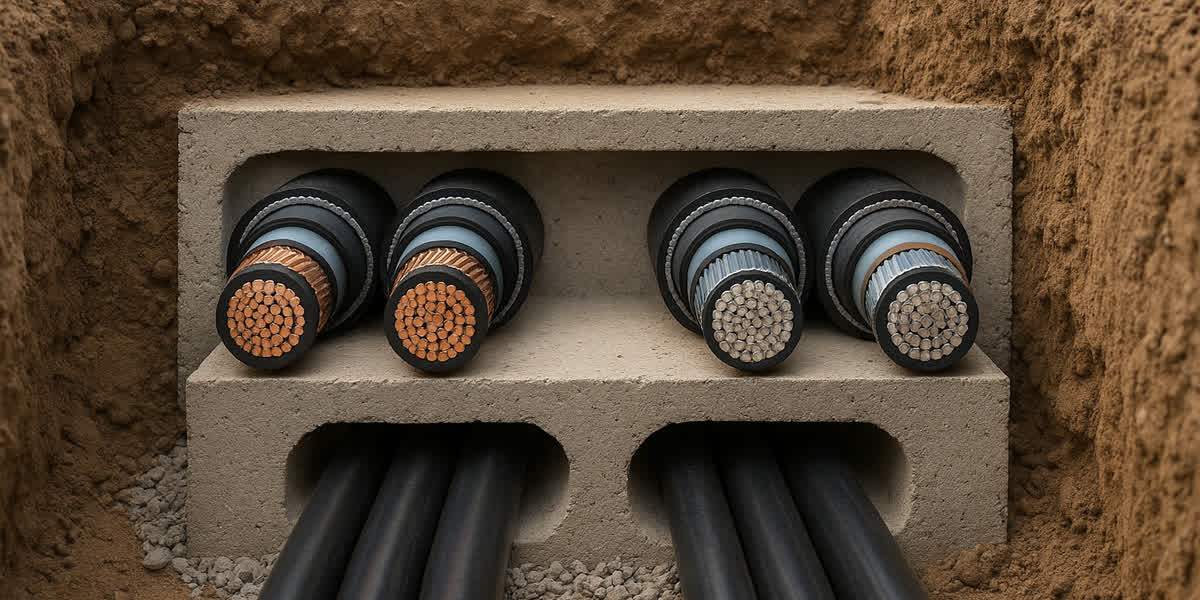
6. How does ABC cable compare economically with underground cable? ABC installation cost is approximately 30–40% of direct-buried underground cable, with 50–70% shorter construction time. However, underground cable offers immunity to weather (storms, ice) and lower maintenance requirements. Recommended: underground for premium urban landscape zones, ABC for suburban/forest areas.

7. What is the minimum bending radius for ABC cable? Per BS 7870 and IEC 60502-2, minimum bending radius during installation is 15×D (D = cable overall diameter), and 12×D after final positioning. For example, a 40 mm diameter 11 kV ABC requires 600 mm bending radius during installation.

8. Can ABC cable operate under ice loading conditions? Yes, but with caveats: - ABC's insulation limits de-icing current (bare conductors can use short-circuit current for de-icing) - Use reinforced messenger (high-strength galvanized steel) for ice loading - Ice shedding from insulated surface can cause additional mechanical stress — design anti-shedding jumpers


10. Conclusions & Selection Recommendations

Choose ABC Aerial Bundled Cable When:

  • Urban distribution — restricted ROW, dense population, high safety requirements
  • Forest/woodland — fire risk minimization priority
  • Coastal corrosive environments — insulation protects conductors, extends life
  • Capacity upgrade projects — reuse existing poles, no additional ROW required
  • Voltage ≤ 33 kV — optimal balance of economics and technical feasibility

Choose Bare Overhead Conductors When:

  • Transmission backbone (> 33 kV) — proven economics and technical practice
  • Long-distance lines (> 10 km) — avoid charging current compensation
  • Long spans (> 200 m) — weight and sag control advantages
  • Extreme ice loading — more flexible de-icing capability
  • Frequent line re-routing — faster splicing and T-connections

References

Standard/Document Subject
IEC 60502-2:2021 Power cables with extruded insulation for 6–30 kV
BS 7870:2011 LV and MV aerial bundled cable standard
AS/NZS 3560:2014 Self-supporting insulated cables for overhead distribution
NFC 33-209:2000 French aerial bundled insulated cable standard
ICEA S-66-524:2016 Overhead insulated cable standard
IEEE 524:2016 Guide to installation of overhead transmission line conductors
IEC 61089:1991+A1 Round wire concentric lay overhead electrical stranded conductors
CIGRE TB 722 Insulation and protection of overhead distribution lines
ENA TS 41-24 UK — aerial bundled cable system specification
NSW RFS "Network Safety Policy" Bushfire zone distribution network regulations

About / Contact

This comparison guide was prepared by the SiTong Cable technical team based on international standards, industry white papers, and years of field engineering experience. SiTong Cable manufactures a full range of ABC aerial bundled cables (0.6/1 kV to 33 kV) to IEC 60502-2, BS 7870, and NFC 33-209 standards, exported to 50+ countries worldwide.

👉 Browse ABC Aerial Bundled Cable Products 👉 Contact our Engineering Team for custom ABC project solutions

📬 Sales inquiries: sales@sitongcable.com | 📞 Phone: +86-371-69176007