Cómo verificar un fabricante de cables chino antes de realizar un pedido: guía para compradores
Cómo verificar un fabricante de cables chino antes de realizar un pedido: guía para compradores
Cómo verificar un fabricante de cables chino antes de pedir: licencia comercial, auditoría de fábrica, validación de certificados, muestras y pagos seguros.
Comprar cables desde China puede reducir los costos de adquisición entre un 30% y un 50%, pero solo cuando el proveedor es real. Un fabricante falso o poco calificado puede costarle meses de retraso, un contenedor de conductores defectuosos o un pago anticipado que nunca se convierte en un envío. La buena noticia: la verificación es un proceso aprendible, paso a paso. Esta guía le ofrece una lista de verificación práctica para confirmar que un fabricante chino de cables es legítimo, capaz y seguro, antes de enviar un solo dólar.
Puntos Clave
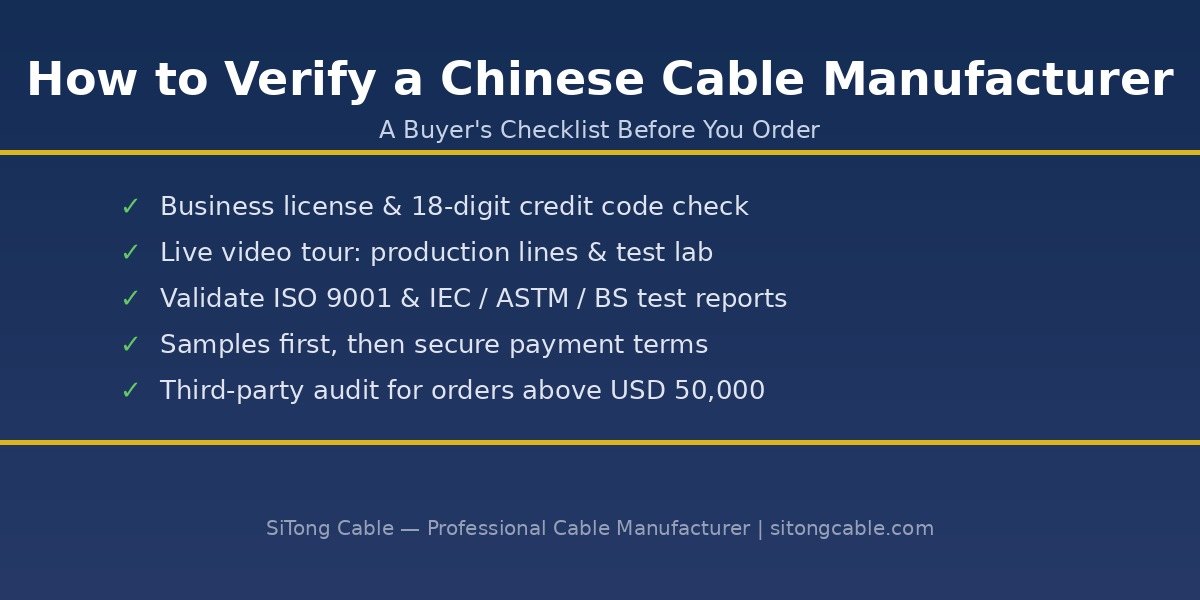
- Un fabricante chino real puede mostrar una licencia comercial cuyo alcance dice producción, una dirección de fábrica coincidente y un Código de Crédito Social Unificado de 18 dígitos verificable en línea.
- Fabricante ≠ empresa comercializadora. Los traders añaden un margen del 5-15% y no controlan la calidad; exija pruebas de líneas de producción reales.
- Los certificados solo valen lo que vale su fuente: valide el ISO 9001 y los informes de ensayo de tipo con el organismo emisor, y exija informes de laboratorios acreditados CNAS/ILAC.
- Nunca pague el 100% por adelantado. Los términos estándar son 30% de depósito con el saldo contra documentos de envío, o una carta de crédito a la vista.
- Una videollamada en vivo, una auditoría de terceros y un pedido de muestra son las tres pólizas de seguro más baratas en la compra internacional.
1. Por qué la verificación del proveedor es el paso de mayor riesgo
La tasa de fallos no es teórica. Los datos de Trade Assurance de Alibaba muestran que alrededor del 62% de las reclamaciones de compradores se originan por discrepancias de calidad, no por daños de transporte. El informe de delitos de propiedad intelectual 2023 de Europol documentó 86 millones de artículos falsificados incautados en las fronteras de la UE, muchos de ellos rastreados hasta proveedores no verificados. El cable es un objetivo especialmente atractivo para empresas fantasma porque parece simple: unas fotos de tambores, un certificado copiado, un precio bajo.
La economía es asimétrica. Un proveedor legítimo invierte en líneas de trefilado, máquinas de cableado y laboratorios de ensayo; un estafador invierte en un sitio web. La verificación obliga al estafador a gastar dinero que no recuperará, que es exactamente por qué los fabricantes reales la aceptan y los falsos ponen excusas.
2. Paso 1: Comprobar el registro comercial
Toda empresa china registrada tiene un Código de Crédito Social Unificado (统一社会信用代码) de 18 dígitos. Solicite la licencia comercial (营业执照) del proveedor y verifique:
| Verificación | Qué Buscar | Señal de Alerta |
|---|---|---|
| Código de Crédito Social Unificado | 18 dígitos, consistente en licencia, web y documentos | Códigos faltantes o inconsistentes |
| Alcance de la licencia | Incluye producción/fabricación de cables (生产/制造) | Solo dice ventas/comercio (销售/贸易) |
| Capital registrado | Fábricas reales suelen tener RMB 500.000+ | Capital registrado de RMB 10.000-50.000 |
| Dirección | La dirección de la fábrica coincide con licencia y web | Direcciones diferentes en cada documento |
| Fecha de constitución | Suficiente antigüedad para tener historial exportador | Registrada el mes pasado |
El registro oficial es el Sistema Nacional de Publicidad de Información Crediticia Empresarial (NECIPS, gsxt.gov.cn). Puede buscarlo por nombre de empresa o código de crédito; muchos agentes de compras también realizan esta verificación por usted. Un exportador legítimo le enviará el escaneo de la licencia sin dudar. La duda, una foto borrosa o "la licencia está con nuestro contador" son avisos tempranos.
3. Paso 2: Demostrar que la fábrica es real — fabricante vs. comercializadora
Las empresas comercializadoras no son ilegales, pero cambian el trato: añaden margen, no controlan la calidad y desaparecen más fácilmente cuando algo sale mal. Para conductores de líneas aéreas en particular, usted quiere una fábrica con sus propias líneas de producción.
3.1 Cómo se ve una planta de conductores real
Solicite una videollamada en vivo — no un video grabado, una llamada en la que usted dirija la cámara. Una planta genuina de conductores ACSR o conductores AAC debería poder mostrarle:
- Líneas de trefilado para alambre de aluminio y acero
- Máquinas de cableado (el equipo central para conductores concéntricos)
- Laboratorio de ensayos con máquina de tracción, puente de resistencia DC y equipo de alta tensión
- Patio de productos terminados con tambores listos para embalaje de exportación
Una fábrica que dice producir 5.000 toneladas al mes pero muestra un taller vacío es una empresa fantasma. Un trader normalmente le mostrará "la fábrica de su socio", que usted no puede auditar.
3.2 Fabricante vs. comercializadora: señales rápidas
| Señal | Fabricante | Comercializadora |
|---|---|---|
| Alcance de la licencia | Producción + ventas | Solo ventas |
| Videollamada | Muestra su propia planta | Muestra oficina o fábrica del socio |
| Laboratorio de ensayos | Equipos propios | "Podemos organizar los ensayos" |
| Documentos de exportación | Declaraciones aduaneras propias | Usa nombres de otras empresas |
| Precio | Competitivo, desglosado | Con margen, desglose vago |
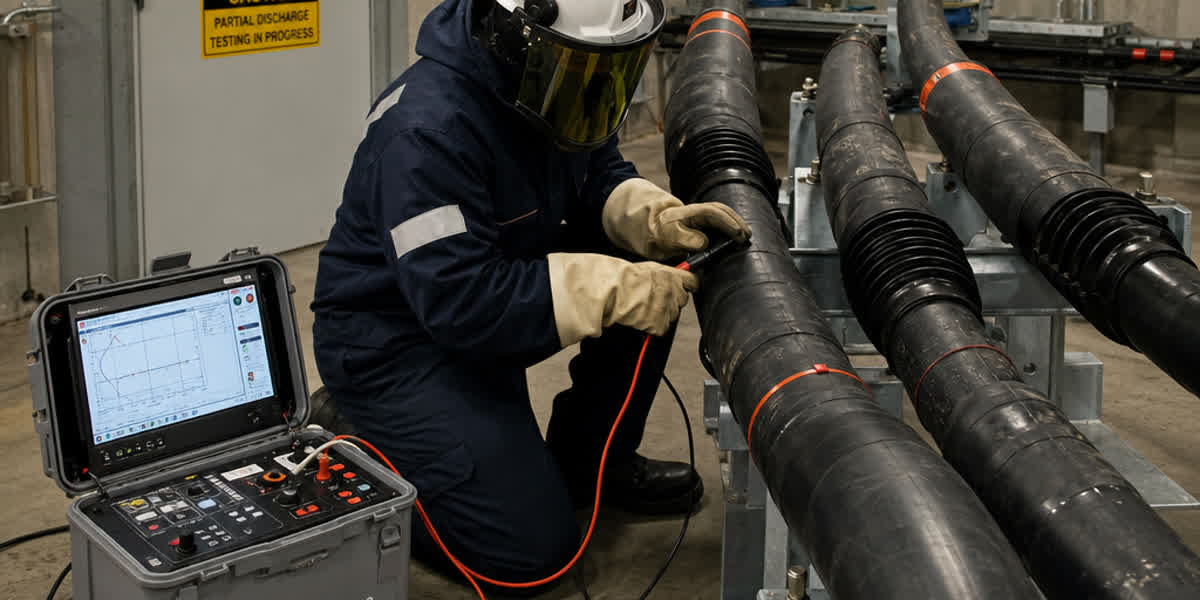
Para pedidos superiores a USD 50.000, presupueste una auditoría de fábrica de terceros de SGS, Bureau Veritas, TÜV o un agente local de confianza (USD 300-800 típico). El informe cubre líneas de producción, inventario, equipos de ensayo y facturas de servicios que confirman que la planta opera realmente.
4. Paso 3: Validar certificados e informes de ensayo
Los cables son productos críticos para la seguridad, así que los certificados son el núcleo de la verificación. Pero también son el documento más fácil de falsificar. Valide, no solo mire:
| Documento | Cómo Verificarlo | Qué Prueba |
|---|---|---|
| Certificado ISO 9001 | Compruebe el número con el organismo certificador (SGS, TÜV, BV, Intertek, etc.) | Sistema de gestión de calidad en funcionamiento |
| Informe de ensayo de tipo (IEC 61089, ASTM B232, BS 215) | El número debe ser trazable a un laboratorio acreditado CNAS/ILAC; verifique con el laboratorio | El producto cumple la norma especificada |
| Informe IEC 61395 / IEEE 1138 (para OPGW) | Misma verificación de trazabilidad | Rendimiento óptico/mecánico del OPGW |
| Certificado de ensayo de fábrica | Compare los datos de material con la especificación del contrato | El grado del material coincide |
| Registros de exportación | Declaraciones aduaneras o B/L pasados | Historial exportador real |
Las normas importan por producto: conductores AAC según ASTM B231 / IEC 61089, conductores ACSR según ASTM B232 / IEC 61089 / BS 215, y OPGW según IEC 61395 / IEEE 1138. Un informe de ensayo de tipo genuino lista la construcción exacta, la sección transversal y la cláusula de la norma ensayada. Los informes vagos sin detalles de construcción son una señal de alerta.
5. Paso 4: Pedir muestras y hacer sus propias comprobaciones
Antes de cualquier pedido de producción, compre una muestra corta (30-50 m) fabricada según su especificación exacta. Cuando llegue:
- Mida el diámetro del conductor y el paso de cableado con un calibrador.
- Mida la resistencia DC con un microóhmetro y compárela con el valor máximo de la norma.
- Compare la muestra contra el informe de ensayo de tipo — la construcción debe coincidir.
- Compruebe el marcado del tambor, la impresión y la calidad del embalaje.
Pedir dos muestras al mismo proveedor detecta la variación entre lotes antes de la producción en masa. Conserve la muestra aprobada hasta que llegue el pedido completo: es su referencia para la inspección final y su evidencia más sólida en una reclamación.
6. Paso 5: Controlar el riesgo de pago
Los términos de pago son donde los importadores realmente sufren. La estructura debe coincidir con su confianza en el proveedor:
| Término | Estructura | Nivel de Riesgo | Cuándo Usarlo |
|---|---|---|---|
| T/T 30/70 | 30% depósito, 70% antes del envío | Alto para el comprador | Solo con socios de confianza |
| T/T 30/70 contra B/L | 30% depósito, 70% contra copia escaneada del B/L | Medio | Proveedores establecidos |
| Carta de crédito a la vista | El banco paga contra documentos de envío | Bajo | Primeros pedidos, valores altos |
| Escrow / Trade Assurance | La plataforma retiene el pago hasta confirmar entrega | Medio | Transacciones tipo Alibaba |
Desconfíe de cualquier proveedor que exija más del 50% por adelantado "para materiales". Las fábricas legítimas financian la producción ellas mismas y aceptan términos comerciales estándar. Un proveedor que rechaza una carta de crédito en el primer pedido le está diciendo algo.
7. Lista completa de señales de alerta
- El alcance de la licencia dice comercio, no producción
- Rechaza una videollamada en vivo de la planta
- No puede nombrar ni mostrar sus propios equipos de ensayo
- Sin personal técnico que hable inglés
- Cotiza solo contra especificaciones vagas, sin desglose
- Insiste en el 100% de pago por adelantado
- Los números de certificado no pueden verificarse con el organismo emisor
- La dirección de la fábrica no coincide con la licencia
- Precio muy por debajo del mercado para el grado de material especificado
- Sin registros de exportación a su región
Una señal de alerta es una advertencia; dos o tres son motivo para retirarse.
8. Lo que mostramos a nuestros compradores: verificación en SiTong Cable
Como fabricante, tratamos la verificación como parte normal del proceso de ventas. SiTong Cable fabrica conductores y cables para líneas aéreas en Zhengzhou, Henan, desde 2010 y exporta a más de 60 países. Cuando los compradores piden verificarnos, proporcionamos:
- Licencia comercial con Código de Crédito Social Unificado de 18 dígitos
- Certificado ISO 9001 e informes de ensayo de tipo según normas IEC, ASTM y BS de laboratorios acreditados
- Videollamadas en vivo de nuestras líneas de cableado, trefilado y laboratorio de ensayos
- Inspección de terceros (SGS, BV o su propio agente) bienvenida en cada pedido
- Muestras fabricadas según su especificación exacta antes de la producción
Fabricamos conductores ACSR, conductores AAC, OPGW y más — y publicamos los documentos que lo demuestran. Si un proveedor duda cuando usted pide cualquiera de las comprobaciones de esta guía, esa duda es su respuesta.
FAQ
P1: ¿Cómo compruebo si una empresa china es real?
Solicite la licencia comercial con el Código de Crédito Social Unificado de 18 dígitos y luego busque en el Sistema Nacional de Publicidad de Información Crediticia Empresarial (NECIPS, gsxt.gov.cn) por nombre o código. Verifique que el alcance incluya producción, que el capital registrado sea realista (RMB 500.000+ para fábricas) y que la dirección coincida con el sitio web. Una empresa legítima proporcionará el escaneo de la licencia de inmediato.
P2: ¿Es seguro comprar cables desde China?
Sí, para la gran mayoría de los pedidos — las fábricas chinas suministran una gran parte de los conductores aéreos del mundo — pero la seguridad depende de la verificación. Compruebe el registro comercial, confirme la fábrica con una videollamada o auditoría de terceros, valide los certificados con los organismos emisores, pida muestras y use términos de pago seguros como 30% de depósito con saldo contra B/L o carta de crédito. Nunca envíe el 100% por adelantado.
P3: ¿Cómo sé si un proveedor es fabricante o comercializadora?
Revise el alcance de la licencia: el de un fabricante incluye producción (生产/制造); el de una comercializadora dice solo ventas. Pida una videollamada en vivo de la planta y el laboratorio, solicite sus propias declaraciones aduaneras o registros de exportación, y compruebe si el precio está desglosado. Los traders añaden un 5-15% de margen y no controlan la calidad.
P4: ¿Qué certificaciones debe tener un fabricante chino de cables?
Como mínimo, certificación ISO 9001 e informes de ensayo de tipo según la norma que usted especifique — IEC 61089, ASTM B232 o BS 215 para conductores aéreos, IEC 61395 / IEEE 1138 para OPGW — emitidos por laboratorios acreditados CNAS/ILAC. Verifique los números con los organismos emisores; los informes genuinos listan la construcción exacta ensayada.
P5: ¿Son genuinos los informes de ensayo de cables chinos?
Los informes de ensayo de tipo genuinos provienen de laboratorios acreditados CNAS/ILAC y llevan un número trazable al laboratorio. Cruce el número y los detalles de construcción (código del conductor, sección, cláusulas de la norma). Los informes vagos sin detalles de construcción, o de laboratorios que no puede encontrar, son señales de alerta.
P6: ¿Qué es una auditoría de fábrica y la necesito?
Una auditoría de fábrica es una inspección independiente de la planta — líneas de producción, equipos de ensayo, inventario y estado operativo — normalmente de SGS, Bureau Veritas, TÜV o un agente local, con un costo de unos USD 300-800. Para pedidos superiores a USD 50.000, es un seguro barato: el informe confirma que la fábrica existe y tiene la capacidad que afirma.
P7: ¿Cómo evito las estafas de proveedores de cables?
Siga la lista completa: verifique la licencia y el código de crédito, exija una videollamada en vivo, valide los certificados con los organismos emisores, pida muestras y use términos de pago seguros. Evite proveedores que rechacen videollamadas, coticen solo contra especificaciones vagas o exijan el 100% por adelantado. Una señal de alerta es una advertencia; dos o tres, motivo para retirarse.
Conclusión
Verificar un fabricante chino de cables no es complicado — es una lista de verificación. Confirme el registro comercial, demuestre que la fábrica es real, valide los certificados, pruebe las muestras y controle los términos de pago. Cada paso es práctica estándar para un fabricante legítimo, y cada paso es lo que separa a un proveedor real de un sitio web convincente.
Para el recorrido completo, desde la preselección hasta la entrega, lea nuestra guía complementaria: Cómo importar cables desde China: guía completa para compradores.
👉 Contacte a nuestro equipo — estaremos encantados de mostrarle nuestros documentos de verificación de fábrica. 👉 Explore nuestra gama de conductores ACSR
📬 Consultas de ventas: sales@sitongcable.com | 📞 Teléfono: +86-371-69176007