ACAR Conductor (Aluminum Conductor Alloy Reinforced): Complete Technical Guide and Selection for Power Transmission
ACAR (Aluminum Conductor Alloy Reinforced) is a high-performance stranded conductor designed for overhead power transmission and distribution lines. Combining the high conductivity of aluminum (1350-H19 wires) with the superior strength of aluminum alloy (6201-T81 wires), ACAR offers an exceptional balance of electrical efficiency, mechanical strength, and corrosion resistance. This comprehensive guide covers everything engineers, procurement specialists, and utility project managers need to know about ACAR conductors for transmission and distribution projects.
What is an ACAR Conductor?
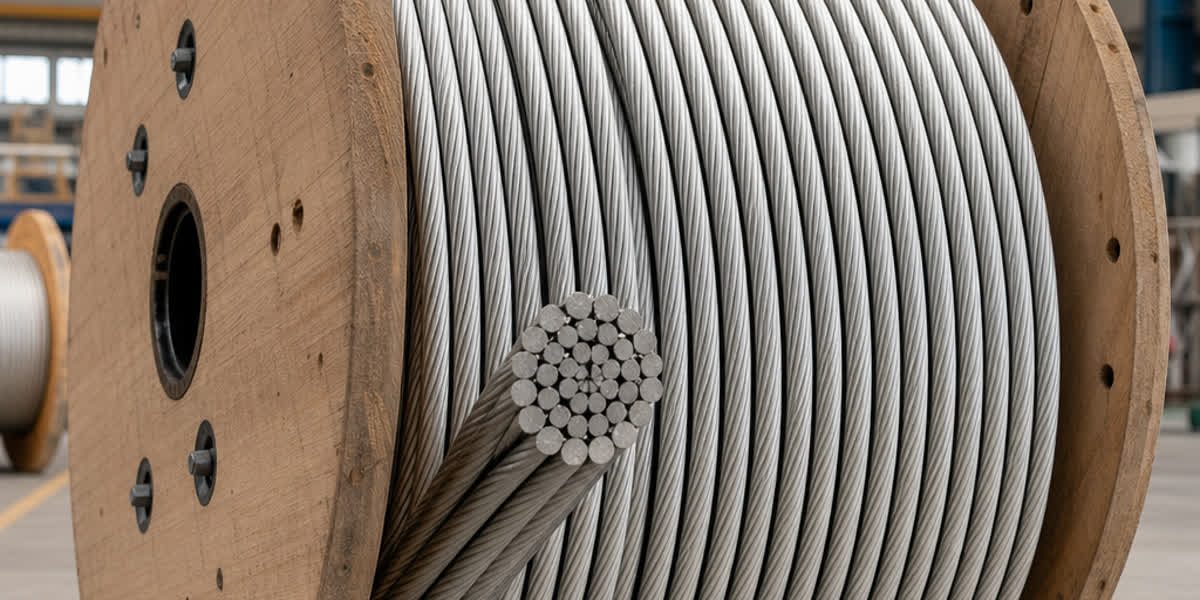
ACAR (Aluminum Conductor Alloy Reinforced) is a concentric-lay-stranded conductor made from a combination of two types of aluminum wires:
- 1350-H19 aluminum wires — Provide high electrical conductivity (61.2% IACS)
- 6201-T81 aluminum alloy wires — Provide mechanical reinforcement with higher tensile strength
Unlike ACSR, where steel is used for reinforcement, ACAR uses aluminum alloy wires as the core and/or interlayer strands. This all-aluminum construction eliminates galvanic corrosion concerns between steel and aluminum, making ACAR particularly well-suited for coastal and highly corrosive environments.
The ACAR conductor was developed as an intermediate option between the higher-strength ACSR (Aluminum Conductor Steel Reinforced) and the higher-conductivity AAC (All Aluminum Conductor), offering a unique combination of properties suitable for a wide range of overhead line applications.
ACAR Conductor Construction
Stranding Configurations
ACAR conductors are manufactured using the concentrically stranded construction method, where individual wires are helically applied in layers around a central core wire. The standard stranding configurations follow ASTM B524 and IEC 61089 specifications.
| Stranding Type | Aluminum Wires (1350-H19) | Alloy Wires (6201-T81) | Total Wires | Typical Applications |
|---|---|---|---|---|
| 6/1 | 6 | 1 | 7 | Distribution lines |
| 12/7 | 12 | 7 | 19 | Distribution and sub-transmission |
| 18/1 | 18 | 1 | 19 | Light distribution |
| 24/7 | 24 | 7 | 31 | Transmission lines |
| 30/7 | 30 | 7 | 37 | Transmission lines |
| 30/19 | 30 | 19 | 49 | Long-span transmission |
| 36/1 | 36 | 1 | 37 | Sub-transmission |
| 42/7 | 42 | 7 | 49 | High-capacity transmission |
| 54/7 | 54 | 7 | 61 | High-capacity transmission |
| 54/19 | 54 | 19 | 73 | Extra-long span |
| 84/19 | 84 | 19 | 103 | Extra-high voltage (EHV) |
The ratio of alloy wires to total wires determines the overall tensile strength and conductivity of the conductor.
Wire Material Properties
| Property | 1350-H19 Aluminum | 6201-T81 Aluminum Alloy |
|---|---|---|
| Conductivity (% IACS) | 61.2% | 52.5% |
| Minimum Tensile Strength (MPa) | 186 | 317 |
| Density (g/cm³) | 2.70 | 2.70 |
| Coefficient of Linear Expansion (/°C) | 23.0 × 10⁻⁶ | 23.0 × 10⁻⁶ |
| Modulus of Elasticity (GPa) | 69 | 69 |
| Corrosion Resistance | Excellent | Excellent |
ACAR vs. Other Conductor Types
ACAR vs. ACSR
| Parameter | ACAR | ACSR |
|---|---|---|
| Core Material | 6201-T81 Aluminum Alloy | Galvanized Steel |
| Conductivity | Higher (≈55-60% IACS) | Lower (≈53-58% IACS) |
| Strength-to-Weight Ratio | Good | Excellent |
| Corrosion Resistance | Excellent (no galvanic corrosion) | Moderate (steel core requires galvanizing) |
| Weight | Lighter (all-aluminum) | Heavier (steel core) |
| Sag at High Temperature | Moderate | Excellent (lower thermal expansion) |
| Cost per km | Higher than AAC, similar to ACSR | Moderate |
| Magnetic Losses | None (non-magnetic) | Present (steel is magnetic) |
ACAR vs. AAC
| Parameter | ACAR | AAC |
|---|---|---|
| Core Material | 6201-T81 Alloy | None |
| Conductivity | Moderate (55-60% IACS) | Highest (61% IACS) |
| Tensile Strength | High | Low to Moderate |
| Span Capability | Medium to Long | Short to Medium |
| Corrosion Resistance | Excellent | Excellent |
| Cost | Higher | Lower |
ACAR vs. AAAC
| Parameter | ACAR | AAAC |
|---|---|---|
| Composition | 1350-H19 + 6201-T81 | All 6201-T81 |
| Conductivity | Higher (mixed wires) | Lower (52.5% IACS) |
| Tensile Strength | Moderate-High | High |
| Corrosion Resistance | Excellent | Excellent |
| Ductility | Better than AAAC | Lower |
| Cost | Moderate | Higher |
Technical Specifications (Standard Sizes)
The following table shows key parameters for common ACAR conductor sizes per ASTM B524:
| Code Word | Area (kcmil) | Stranding | Diameter (mm) | Rated Strength (kN) | DC Resistance @ 20°C (Ω/km) | Approx. Weight (kg/km) |
|---|---|---|---|---|---|---|
| Thrasher | 556.5 | 12/7 | 22.25 | 47.17 | 0.0665 | 779 |
| Kiwi | 715.5 | 12/7 | 25.25 | 60.67 | 0.0519 | 1002 |
| Bluejay | 795.0 | 24/7 | 26.60 | 62.73 | 0.0464 | 1068 |
| Falcon | 1033.5 | 24/7 | 30.35 | 81.22 | 0.0356 | 1390 |
| Pheasant | 1320.0 | 24/7 | 34.30 | 103.98 | 0.0280 | 1778 |
| Lapwing | 1590.0 | 30/7 | 37.60 | 119.98 | 0.0232 | 2100 |
| Parrot | 1908.0 | 36/1 | 41.20 | 143.98 | 0.0194 | 2540 |
Code words follow industry-standard bird naming conventions per ASTM.
Key Advantages of ACAR Conductors
1. Excellent Corrosion Resistance
The all-aluminum construction of ACAR eliminates the bimetallic (galvanic) corrosion that can occur between aluminum and steel in ACSR conductors. This makes ACAR ideal for:
- Coastal and offshore installations — Salt spray resistance
- Industrial environments — Chemical and pollution resistance
- High-humidity regions — Tropical and subtropical climates
- Marine and offshore wind farm connections
2. Enhanced Strength without Magnetic Losses
The 6201-T81 alloy core provides mechanical reinforcement without the magnetic hysteresis and eddy current losses associated with steel core conductors. This results in:
- Lower overall electrical losses in the conductor
- Reduced heating from magnetic effects
- Better efficiency in high-current transmission applications
3. Lightweight Construction
Being fully aluminum-based, ACAR is approximately 15-20% lighter than equivalent-strength ACSR conductors. This translates to:
- Lower transportation costs
- Easier handling and installation
- Reduced tower/ pole structural loading
- Lower foundation requirements
4. Superior High-Temperature Performance
ACAR conductors with appropriate alloy ratios can operate at continuous temperatures up to 100°C (and up to 150°C in emergency conditions), compared to 75-90°C for standard ACSR. This provides:
- Increased ampacity without reconductoring
- Greater emergency overload capacity
- Better sag performance at elevated temperatures
5. Equal Coefficient of Thermal Expansion
Since both the conductor and reinforcement layers are aluminum-based, ACAR has a uniform coefficient of thermal expansion. This eliminates differential expansion issues between core and outer layers, reducing stress concentration and improving long-term reliability.
Applications and Use Cases
Overhead Power Transmission Lines
ACAR is widely used in medium to long-span transmission lines (69 kV to 345 kV) where a balance of strength and conductivity is required. Typical applications include:
- Rural transmission — Longer spans with moderate loading
- Interconnection lines — Connecting substations across moderate distances
- River and valley crossings — Where corrosion resistance and strength are both critical
Coastal Power Distribution
In coastal regions, the corrosion resistance of ACAR makes it the preferred choice over ACSR. The absence of steel eliminates rust-related failures common in salt-laden environments.
Offshore Wind Farm Connections
The combination of corrosion resistance, light weight, and high strength makes ACAR suitable for offshore wind farm inter-array and export cable connections.
Industrial Power Supply
Chemical plants, refineries, and other industrial facilities with corrosive atmospheres benefit from ACAR's superior corrosion properties.
River and Lake Crossings
Long-span applications over water bodies benefit from ACAR's higher strength-to-weight ratio and corrosion resistance.
Industry Standards and Compliance
ACAR conductors are manufactured in accordance with the following international standards:
| Standard | Title | Scope |
|---|---|---|
| ASTM B524 | Standard Specification for Concentric-Lay-Stranded Aluminum Conductors, Aluminum-Alloy Reinforced (ACAR) | Primary US standard for ACAR |
| IEC 61089 | Round Wire Concentric Lay Overhead Electrical Stranded Conductors | International standard for stranded conductors |
| BS EN 50182 | Conductors for Overhead Lines — Round Wire Concentric Lay Stranded Conductors | European standard |
| ASTM B230 | Standard Specification for Aluminum 1350-H19 Wire for Electrical Purposes | Wire material spec |
| ASTM B398 | Standard Specification for Aluminum-Alloy 6201-T81 Wire for Electrical Purposes | Alloy wire material spec |
| IEEE 524 | Guide to the Installation of Overhead Transmission Line Conductors | Installation guidelines |
ACAR Conductor Selection Guide
Step 1: Determine Electrical Requirements
- Current capacity (ampacity) — Base on project load requirements
- Voltage drop limits — Typically 3-5% for distribution, 1-3% for transmission
- Short-circuit rating — Ensure conductor withstands fault currents
Step 2: Assess Mechanical Requirements
- Span length — Shorter spans (50-150m) can use 6/1 stranding; longer spans (150-500m) need 12/7 or higher
- Ice and wind loading — Use NESC, IEC 60826, or local loading criteria
- Sag-tension limits — Consider conductor tension at maximum and minimum temperatures
Step 3: Select ACAR vs. Alternatives
- For coastal/corrosive environments → Prefer ACAR over ACSR
- For maximum conductivity → Prefer AAC or ACAR over AAAC
- For maximum strength → Prefer ACSR or AAAC
- For magnetic loss importance → Prefer ACAR over ACSR
Step 4: Verify Accessory Compatibility
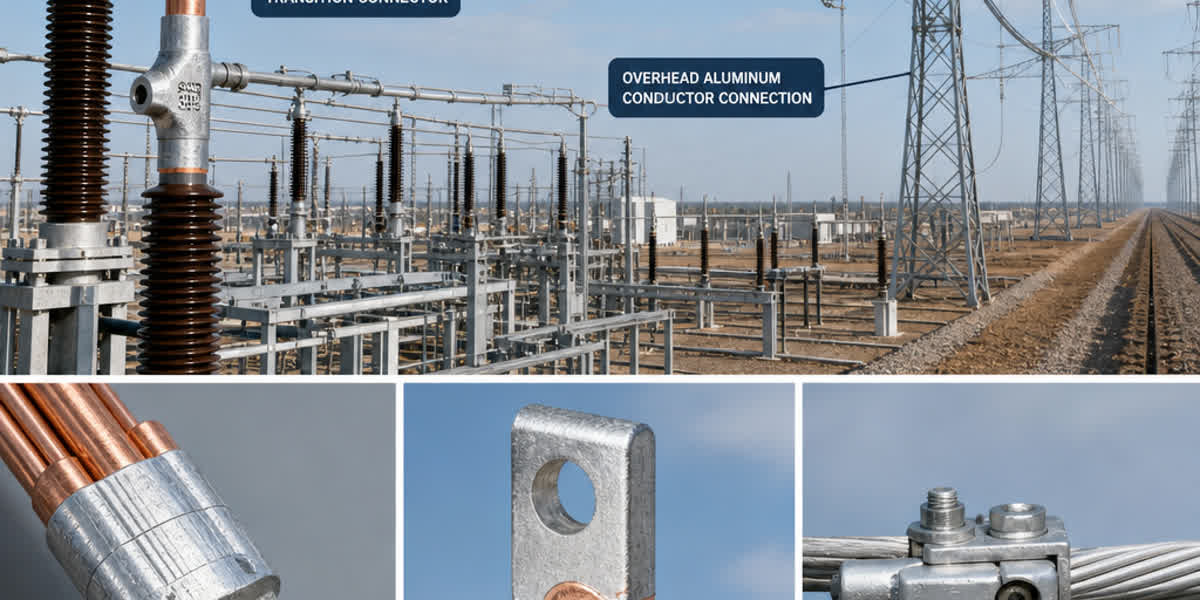
- Confirm that connectors, dead-ends, and splices are rated for ACAR (all-aluminum connections)
- Use aluminum-compatible hardware — avoid copper-to-aluminum junctions without proper bimetallic connectors
Installation Guidelines
Handling and Stringing
- Minimum bending radius: 10-15 times conductor diameter
- Pulling tension: Do not exceed 20% of rated breaking strength
- Pulling grips: Use compatible all-aluminum pulling grips
- Sheave diameter: Minimum 25 times conductor diameter for 200 mm sheave
Joints and Terminations
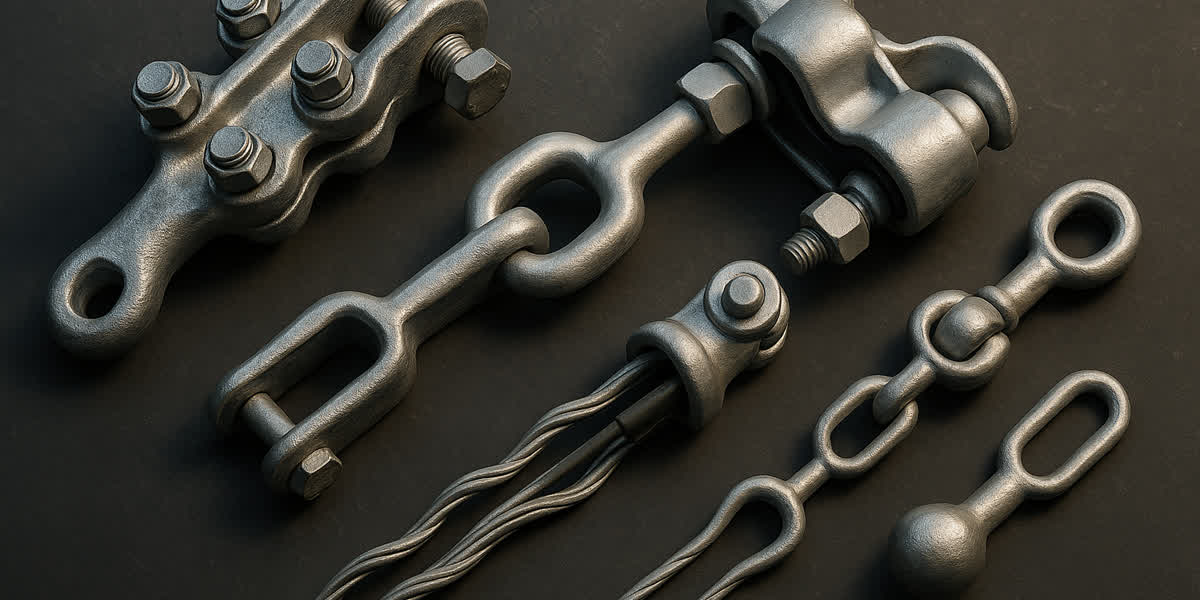
- Compression connectors: Use aluminum compression connectors with proper die set
- Bolted connectors: Rated for all-aluminum conductors, with corrosion inhibitor
- Dead-end clamps: Aluminum armor rods or preformed dead ends
- Helical fittings: Use aluminum alloy helical rods
Sag-Tension
- Initial sag: Apply 50-60% of rated tensile strength for initial installation
- Final sag: Expected after 1-3 years of creep stabilization
- Creep allowance: Typically 0.03-0.05% of span length for initial design
Frequently Asked Questions (FAQ)
Q1: What is the difference between ACAR and ACSR?
ACAR uses aluminum alloy (6201-T81) wires for reinforcement instead of galvanized steel wires used in ACSR. ACAR has higher conductivity, better corrosion resistance, and is lighter than ACSR, but ACSR offers higher overall tensile strength and better high-temperature sag performance.
Q2: Is ACAR more expensive than ACSR?
ACAR is generally comparable in price to ACSR for equivalent sizes. The all-aluminum construction eliminates the need for galvanized steel core, but the 6201-T81 alloy wires are more expensive than steel. Overall installed cost is often similar, especially when considering reduced corrosion maintenance.
Q3: Can ACAR be used for EHV (Extra High Voltage) transmission?
Yes, ACAR is suitable for EHV lines up to 345 kV or higher. The 84/19 stranding configuration is commonly used for EHV applications. The smooth surface and non-magnetic properties make it particularly attractive for lines above 230 kV.
Q4: Does ACAR require special connectors?
ACAR requires connectors designed for all-aluminum conductors. Standard aluminum compression connectors are generally compatible. The key is to avoid introducing dissimilar metals (especially copper) without proper bimetallic transition connectors.
Q5: What is the maximum operating temperature for ACAR?
Standard ACAR conductors have a continuous operating temperature of 100°C, with emergency ratings up to 150°C for limited durations. This is higher than standard ACSR (75-90°C) but lower than some high-temperature conductors like ACCC or GTACSR.
Q6: How does ACAR perform in coastal environments?
Exceptionally well. The all-aluminum construction of ACAR eliminates galvanic corrosion entirely, making it an excellent choice for coastal, offshore, and marine applications where salt spray is present.
Q7: What standard sizes are available for ACAR?
ACAR conductors are available from approximately 40 mm² (6/1) up to 2000 mm² (84/19) or larger, following ASTM B524 and IEC 61089 standard sizes. Code word designations (Thrasher, Kiwi, Bluejay, etc.) follow the bird name convention per ASTM standards.
Internal Links
For ACAR conductor products and pricing from SiTong Cable, please visit our ACAR Conductor product category.
For related conductor types, see: - AAC Conductor products - AAAC Conductor products - ACSR Conductor products - Galvanized Steel Wire products
For additional reading: - ACSR vs AAAC vs ACSS: Definitive Comparison Guide - AAC Conductor Technical Specification Guide - The Critical Role of ASTM Standards in Power Cables
Conclusion
ACAR (Aluminum Conductor Alloy Reinforced) represents a smart middle ground in the world of overhead conductors. Its unique combination of high conductivity from 1350-H19 aluminum wires and enhanced strength from 6201-T81 alloy wires makes it ideal for applications requiring both electrical efficiency and mechanical reliability — particularly in coastal, industrial, and environmentally challenging settings.
For engineers and procurement professionals evaluating conductor options for transmission and distribution projects, ACAR offers an excellent balance of performance characteristics that often outperforms both AAC and ACSR in specific applications. When corrosion resistance, low magnetic losses, and lightweight construction are project priorities, ACAR is frequently the optimal conductor choice.
For more information about ACAR conductor specifications, pricing, and lead times, contact SiTong Cable — your trusted manufacturer of high-quality bare overhead conductors.