Copper-to-Aluminum Transition Engineering: Preventing Galvanic Corrosion in Overhead and Underground Power Systems
Copper-to-Aluminum Transition Engineering: Preventing Galvanic Corrosion in Overhead and Underground Power Systems
Electrochemical degradation at the interface between copper and aluminum conductors represents one of the most persistent failure modes across high-voltage substations, distribution networks, and industrial electrical installations. In humid, marine, or chemically aggressive environments, direct mechanical coupling of dissimilar metals establishes a galvanic cell that accelerates anodic aluminum dissolution. Understanding the thermodynamics of galvanic couples, electrochemical potentials, creep kinetics, and differential thermal expansion is paramount for ensuring long-term mechanical and electrical integrity across modern utility infrastructures.
Engineers, contractors, and utility asset managers face stringent reliability requirements under international standards such as IEC 61238-1-3, ANSI C119.4, and ASTM B193. At SiTong Cable (Zhengzhou Sitong Cable Co., Ltd.), our engineering and technical advisory teams work alongside grid operators globally to design, manufacture, and validate high-integrity conductor systems and companion connection solutions that effectively isolate the galvanic interface, suppress intermetallic compound growth, and prevent catastrophic thermal runaway.
1. Fundamentals of Galvanic Corrosion at the Cu-Al Interface
Galvanic corrosion occurs when two metals possessing distinct standard electrode potentials come into direct electrical contact in the presence of an electrolyte—such as atmospheric moisture containing dissolved chlorides, sulfur oxides, or industrial pollutants.
According to the galvanic series in seawater and typical atmospheric electrolytes: - Copper ($Cu/Cu^{2+}$) operates as the more noble cathode, with a standard electrode potential of approximately +0.34 V. - Aluminum ($Al/Al^{3+}$) functions as the active anode, with a standard electrode potential of approximately -1.66 V.
This thermodynamic driving force creates a potential difference ($\Delta V$) exceeding 2.0 V. When an electrolyte bridges the metallic boundary, spontaneous electrochemical oxidation dissolves the aluminum matrix:
$$\text{Anodic Reaction: } 2Al \rightarrow 2Al^{3+} + 6e^-$$ $$\text{Cathodic Reaction: } O_2 + 2H_2O + 4e^- \rightarrow 4OH^-$$
The resulting aluminum hydroxides ($Al(OH)_3$) and hydrated oxides precipitate as white powdery crusts. Unlike the thin, coherent native alumina ($Al_2O_3$) passivation layer that normally protects aluminum from uniform corrosion, the galvanic reaction continuously undermines the metal boundary under moist conditions. This causes progressive pitting, intergranular attack, cross-sectional thinning, and severe contact resistance degradation.
| Parameter | Electrical Grade Copper (ETP C11000) | Electrical Grade Aluminum (EC 1350 / 6201) | Engineering Implication |
|---|---|---|---|
| Standard Potential ($E^0$) | $+0.34\text{ V}$ | $-1.66\text{ V}$ | Driving potential $\Delta V \approx 2.0\text{ V}$ initiates rapid anodic consumption of $Al$ |
| Coefficient of Thermal Expansion | $16.5 \times 10^{-6}\text{ /K}$ | $23.1 \times 10^{-6}\text{ /K}$ | Differential expansion ($\approx 40\%$) causes joint thermal ratcheting and bolt loosening |
| Yield Strength (annealed) | $\approx 70\text{ MPa}$ | $\approx 40\text{ MPa}$ | Aluminum exhibits higher susceptibility to mechanical creep under constant bolt pre-load |
| Thermal Conductivity | $\approx 390\text{ W/(m}\cdot\text{K)}$ | $\approx 230\text{ W/(m}\cdot\text{K)}$ | Thermal gradient distribution across non-homogeneous contact zones |
| Native Oxide Film | Cuprous oxide ($Cu_2O$), semi-conductive | Alumina ($Al_2O_3$), dielectric insulator ($>10^{14}\ \Omega\cdot\text{cm}$) | Native alumina must be mechanically abraded and inhibited prior to joint assembly |
2. Compounding Failure Mechanisms: Creep, Oxidation, and Thermal Ratcheting
Galvanic coupling does not act in isolation. In field operations, chemical corrosion couples with mechanical and thermal phenomena to accelerate electrical joint failure:
- Differential Thermal Expansion and Stress Relaxation: Aluminum expands approximately 40% more than copper per degree of temperature increase. Under peak electrical loads or fluctuating ambient conditions, constrained aluminum in a bolting assembly experiences compressive yield stresses. Upon cooling during low-demand cycles, the aluminum shrinks away from the contact plane, diminishing clamping pressure.
- Mechanical Creep under Sustained Torque: Aluminum alloys exhibit continuous time-dependent plastic deformation (creep) under steady mechanical loads well below their yield threshold. When bolted directly to rigid copper busbars or lugs without Belleville disc spring washers, clamping torque degrades exponentially over operating cycles.
- Intermetallic Compound Formation ($Cu_xAl_y$): At elevated operating temperatures ($>100^\circ\text{C}$), copper and aluminum atoms diffuse across their joint boundary, forming hard, brittle intermetallic phases including $CuAl_2$ ($\theta$-phase), $CuAl$ ($\eta$-phase), and $Cu_9Al_4$ ($\gamma$-phase). These stoichiometric phases possess electrical resistivities up to 20 times higher than pure aluminum, accelerating local heating.
- Thermal Runaway Cycle: Reduced contact area and oxide accumulation drive up contact resistance ($R_c$). Higher resistance causes elevated Joule heating ($I^2R$). The resulting temperature rise accelerates galvanic oxidation, thermal ratcheting, and intermetallic formation, culminating in catastrophic arc faults or conductor dropouts.
Whether transitioning from bare overhead conductors such as our ACSR conductor range or all-aluminum-alloy AAAC conductor to copper-faced substation transformer bushings, robust engineering measures must decouple the galvanic mechanism.
3. Engineering Solutions: Solid-Phase Welding and Interface Isolation
To prevent galvanic attack, modern electrical infrastructure incorporates solid-phase metallurgical bonding and moisture-tight dielectric barriers.
+-----------------------------------------------------------------------------------------+
|                  SOLID-STATE BIMETALLIC JOINT ARCHITECTURE                              |
|                                                                                         |
|      +--------------------------+                +--------------------------+           |
|      |  Aluminum Barrel (EC)    |== Friction ==|   Copper Palm / Stud     |           |
|      |  (Accepts Al Conductor)  |==  Welded  ==|  (Bolts to Cu Busbar)   |           |
|      +--------------------------+   Interface   +--------------------------+           |
|                   |                                          |                          |
|                   v                                          v                          |
|      Factory Pre-Filled With                    Tin Plated to Inhibit                   |
|      Zinc Oxide Inhibitor Grease                Atmospheric Copper Oxide                |
+-----------------------------------------------------------------------------------------+
A. Friction-Welded Bimetallic Lugs and Ferrules
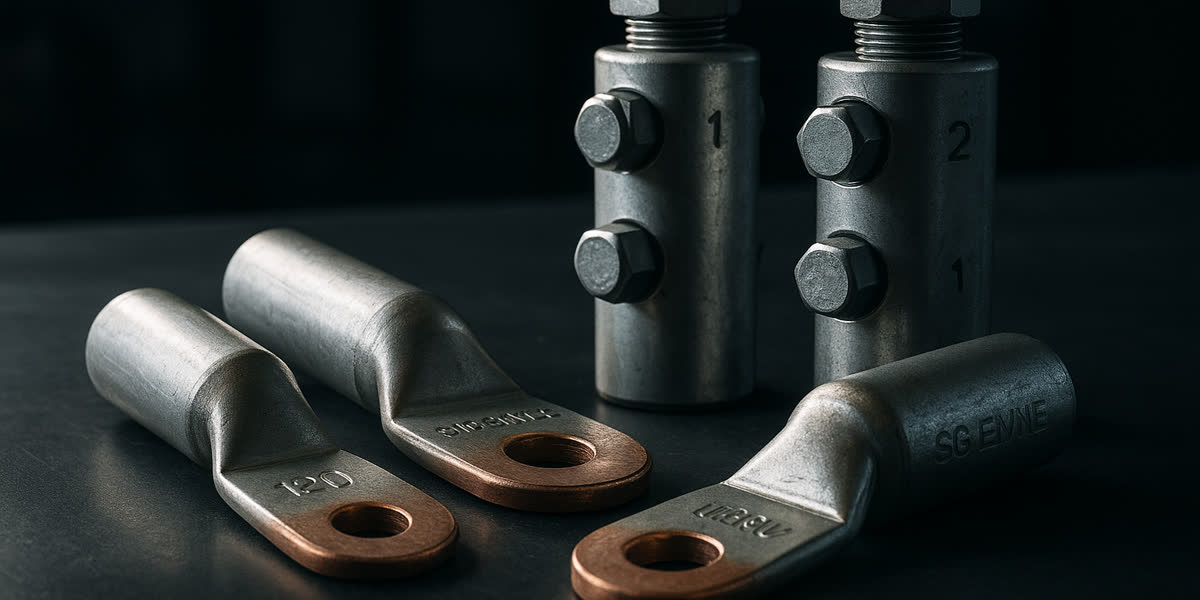
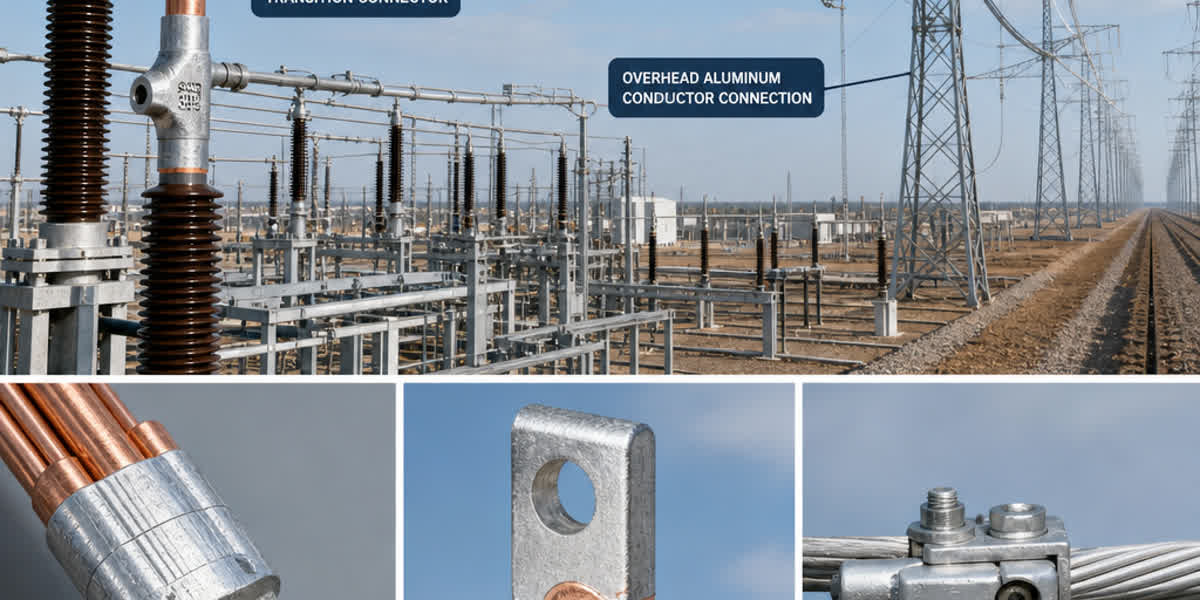
Rotary friction welding generates atomic-level fusion between aluminum and copper cylinders under axial forge pressure without reaching melting temperatures. This solid-phase process limits brittle intermetallic layer thickness to less than $2\ \mu\text{m}$, creating a hermetically sealed metallurgical bond impervious to electrolyte penetration. High-integrity bimetallic cable lugs ensure that overhead aluminum line terminations interface with copper switchgear without exposed bimetallic boundaries.
B. Explosion-Welded Transition Plates and Washers
For high-current planar busbar connections, explosive cladding bonds high-purity aluminum and electrolytic tough-pitch copper plates across extensive surface areas. The resulting sinusoidal interlocking interface withstands high mechanical shear forces and cycling temperatures.
C. Copper-Clad Aluminum (CCA) Washers and Shims
Cu-Al bimetallic plates (often 80/20 or 50/50 volume ratios) provide planar transitions where the aluminum face contacts the aluminum busbar and the copper face contacts the copper terminal. In overhead line distribution networks connecting AAC conductor to copper tap lines, these washers prevent cross-contamination.
D. Penetrating Contact Compounds (Anti-Oxidant Paste)
Synthetic ester or polyalphaolefin (PAO) grease loaded with zinc or silicon carbide grit plays two essential roles: - Sharp grit particles mechanically rupture the tough $Al_2O_3$ dielectric film during crimping or bolting. - The high-viscosity hydrophobic grease matrix fills microscopic voids, excluding oxygen, atmospheric moisture, and coastal salt spray from the micro-contact points.
4. Overhead Line and Underground Cable Field Applications
The specific environmental exposure and structural configuration dictate the optimal transition design across transmission, distribution, and underground installations.
+---------------------------------------------------------------------------------------+
|                 OVERHEAD BIMETALLIC TAP INSTALLATION GEOMETRY                         |
|                                                                                       |
|   (UPPER RUN)    Aluminum Conductor / ACSR / AAAC (Anode)                             |
|                  ========================================                             |
|                                     |                                                 |
|                                     |  PG Clamp / Bimetallic Connector                |
|                                     |  (Al-lined groove top, Cu-lined groove bottom)  |
|                                     v                                                 |
|   (LOWER RUN)    Copper Dropper / Ground Lead (Cathode)                               |
|                  ----------------------------------------                             |
|                                                                                       |
|   * Rule: Aluminum MUST be placed HIGHER than copper to prevent copper ion leaching   |
+---------------------------------------------------------------------------------------+
Overhead Distribution: Rule of Conductor Elevation
In outdoor overhead distribution lines using parallel groove (PG) clamps or bimetallic line taps: - Always position the aluminum conductor physically ABOVE the copper conductor. - Reasoning: Rainwater runoff washing over copper conductors leaches microscopic copper ions ($Cu^{2+}$). If this runoff drips onto an aluminum conductor installed below, the copper ions undergo spontaneous displacement plating onto the aluminum surface: $$Cu^{2+} + 2Al \rightarrow Cu^0 + 2Al^{3+}$$ This embeds microscopic galvanic cathodes directly into the aluminum strands, triggering pitting corrosion across the outer layer of the conductor.
This physical principle is mandatory when securing line drops on aerial bundled cable (ABC) systems, tree wire covered conductors, and bare transmission conductors like ACAR conductor.
Substation and Underground Cable Transitions
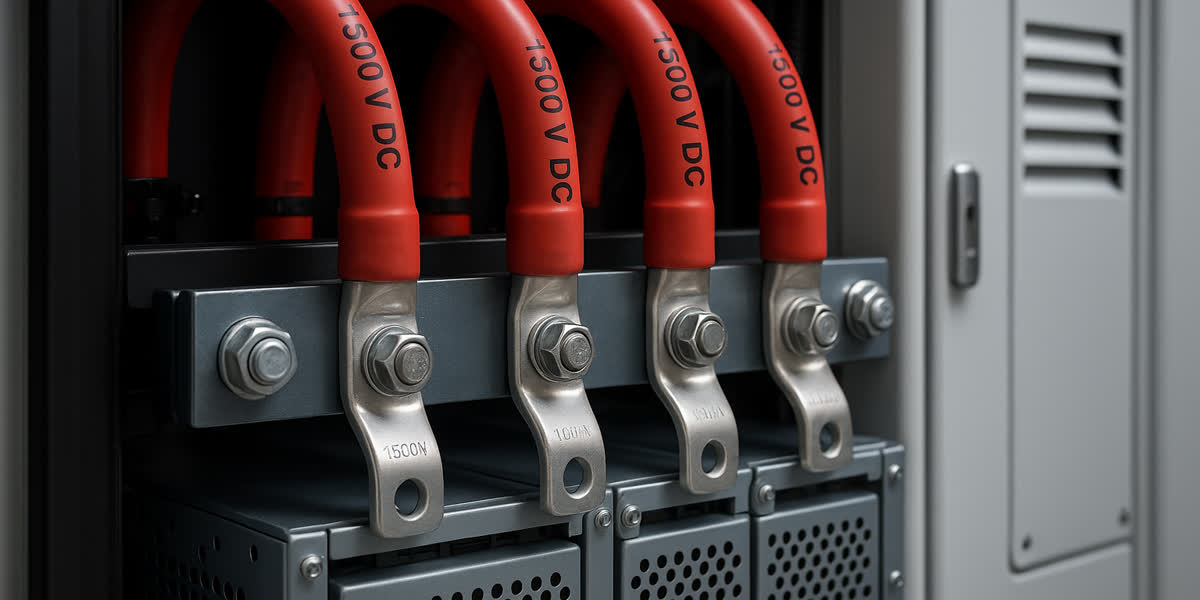
In underground vaults and pad-mounted transformers, medium-voltage distribution cables transition from aluminum power cores to copper equipment terminals. For armored lines and feeder cables, engineers utilize compression or shear-bolt bimetallic lugs enclosed in heat-shrink or cold-shrink termination kits. Applying dual-layer heat-shrink tubing with high-temperature mastic over the friction-welded bimetallic seam prevents water pooling in high-humidity subterranean manholes.
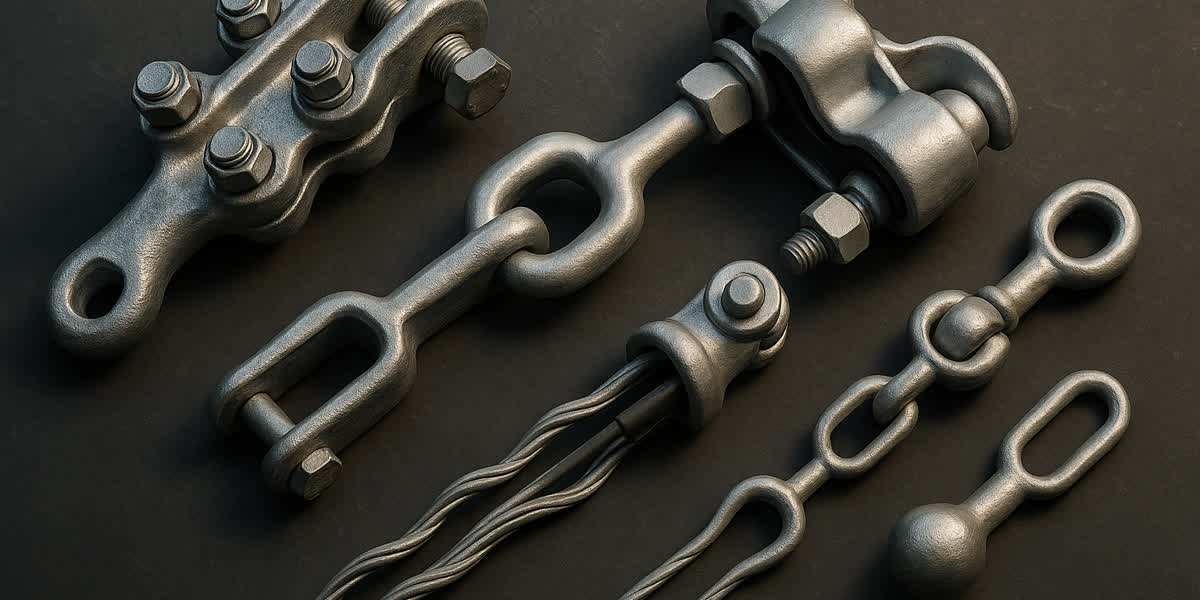
Where heavy-duty structural attachments, dead-end assemblies, and stay wires cross corrosive zones, deploying compatible overhead power fittings & hardware and properly graded galvanized steel wire strands ensures balanced galvanic potentials across structural ground anchors.
5. Technical Comparison: Bimetallic Transition Methodologies
Selecting the appropriate transition methodology requires evaluating operating voltage, continuous ampacity, mechanical cantilever loads, and environmental severity.
| Transition Method | Typical Applications | Mechanical Tensile Rating | Environmental Suitability | Relative Cost | Key Design Limitation |
|---|---|---|---|---|---|
| Friction-Welded Bimetallic Lugs | MV/LV cable terminations, transformer bushings, switchgear | High ($>95\%$ parent metal strength) | Outstanding (Sealed joint) | Moderate | Requires dedicated crimping dies or calibrated shear-bolt tooling |
| Explosion-Clad Transition Plates | Substation busbars, smelting plants, high-current DC links | Exceptional ($100\%$ shear resistant) | High (Coastal / Industrial) | High | Fixed plate geometry; cannot be shaped in field |
| Bimetallic Parallel Groove (PG) Clamps | Overhead tap connections, jumper loops, lightning arresters | Moderate (Non-tension) | Medium to High (When greased) | Low to Moderate | Bolting torque must be re-checked post-commissioning |
| Tin-Plated Aluminum Lugs | Industrial distribution panels, low-voltage breakers | Moderate | Low to Medium (Dry indoor only) | Low | Tin barrier susceptible to scratching during installation |
| Heat-Shrink Encapsulated Sleeves | Underground duct banks, direct-buried cable repairs | High (Tension or non-tension) | Outstanding (Submersible IP68) | Moderate to High | Strict heating control required during field torch application |
6. Installation Best Practices and Quality Control Checklist
To achieve a maintenance-free 40-year design life across copper-to-aluminum electrical joints, field technicians must adhere to a standardized assembly protocol:
[Step 1: Wire Brush]  ---> [Step 2: Apply Compound] ---> [Step 3: Insert & Crimp] ---> [Step 4: Torque & Seal]
Abraid Al surface to       Immediately apply oxide-       Execute calibrated hex         Apply Belleville washer,
remove native Al2O3        inhibiting paste to seal       crimp or tighten shear bolts    torque to spec, seal
film under dry clean air   micro-crevices from oxygen     until heads shear cleanly       outer seam with heat shrink
- Surface Preparation: Mechanically clean the aluminum mating surface using a stainless steel wire brush dedicated exclusively to aluminum. Never use a carbon steel or copper brush, which embeds foreign metal particles and sparks localized galvanic micro-cells.
- Immediate Application of Oxide Inhibitor: Within 30 seconds of abrasion, apply a uniform layer of zinc-loaded anti-oxidant joint compound over the aluminum contact surface to block ambient oxygen and moisture.
- Calibrated Tooling:
- For compression sleeves and lugs: Utilize precision hydraulic crimping tools with matching circumferential or hexagonal dies, working sequentially from the center out toward the barrel end.
- For shear-bolt connectors: Tighten bolts using non-impact hand ratchets until the calibrated head shears off at the certified mechanical torque limit.
- Hardware Selection for Bolted Joints:
- Use high-tensile hot-dip galvanized steel (Grade 8.8) or stainless steel (A2-70 / A4-80) bolts.
- Always install heavy-duty Belleville disc spring washers beneath the nut. Belleville washers maintain constant clamping force across fluctuating thermal cycles, compensating for aluminum creep and differential thermal contraction.
- Use flat, wide stainless steel washers beneath the Belleville washer to distribute mechanical compressive stress across the softer aluminum lug palm.
- Post-Installation Thermal Auditing: Conduct baseline infrared (IR) thermographic inspections under full load current during commissioning. Any connection displaying a temperature rise ($\Delta T$) greater than $5^\circ\text{C}$ relative to the adjacent parent conductor warrants immediate inspection and re-termination.
7. SiTong Cable's Integrated Quality Assurance & Manufacturing Standards
As an internationally certified manufacturer serving utilities across South America, Southeast Asia, the Middle East, and Africa, SiTong Cable (Zhengzhou Sitong Cable Co., Ltd.) maintains rigorous quality controls across conductor casting, drawing, stranding, and accessory integration.
- Raw Material Purity: Our aluminum rods maintain electrical conductivity exceeding $61.8\%\text{ IACS}$ for EC 1350, with iron and silicon impurity ratios tightly regulated to resist intercrystalline corrosion.
- Factory Compatibility Testing: All supplied bimetallic terminals and overhead connectors undergo cyclic electrical load testing (1000 thermal cycles at $120^\circ\text{C}$ conductor temperature) and 1000-hour neutral salt spray tests according to IEC 61238-1-3, ANSI C119.4, and ASTM B117.
- Complete System Engineering: Beyond bare and insulated conductors, SiTong Cable provides turnkey engineering packages including matched connectors, dead-end clamps, vibration dampers, and bimetallic tap hardware, guaranteeing zero compatibility mismatch in the field.
Frequently Asked Questions (FAQ)
Can aluminum cable be connected directly to a copper terminal without a bimetallic connector?
Direct mechanical connection of bare aluminum to bare copper outdoors or in unconditioned environments is strictly prohibited by electrical codes (including NEC Article 110.14 and IEC 60364-5-52). In dry, temperature-controlled indoor switchgear, tin-plated aluminum lugs rated "AL9CU" or "CU-AL" may interface with copper busbars, provided oxide-inhibiting paste and spring washers are utilized. For all outdoor, underground, or humid industrial applications, an engineered solid-state bimetallic connector or friction-welded lug is mandatory.
Why does aluminum wire creep under constant bolt torque, and how is it mitigated?
Aluminum has a lower elastic modulus and higher atomic mobility at room temperature compared to copper, causing sustained compressive stress to produce time-dependent plastic flow (creep). When standard flat washers and rigid bolts are used, this creep slackens the joint, elevating contact resistance. Installing conical Belleville spring washers provides dynamic mechanical travel, absorbing thermal expansion while maintaining sustained contact pressure throughout decades of cycling.
What is the specific purpose of zinc particles in anti-oxidant electrical joint paste?
The zinc particles suspended in high-grade electrical grease serve two purposes: they possess sharp edges that physically penetrate the insulating alumina ($Al_2O_3$) film under crimping pressure to establish microscopic electrical bridges, and their intermediate electrochemical potential provides sacrificial anodic protection that prevents pitting corrosion at the conductor boundary.
In an overhead line crossarm, should the aluminum conductor be placed above or below the copper ground lead?
The aluminum conductor must always be situated above the copper conductor. If copper were mounted higher, rain and condensation would leach microscopic copper ions downward onto the aluminum strands. These copper ions would spontaneously plate out onto the aluminum via chemical displacement, setting up thousands of microscopic galvanic cells that rapidly destroy the conductor.
What testing standards verify the long-term reliability of bimetallic cable lugs?
Bimetallic terminations are certified under IEC 61238-1-3 (compression and mechanical connectors for power cables, Part 1-3: test methods and requirements for bimetallic connectors on power cables tested on non-insulated conductors) and ANSI C119.4 (electric connectors for use between aluminum-to-aluminum or aluminum-to-copper conductors). These standards subject assemblies to 500–1000 severe current-carrying thermal shock cycles, short-circuit impulse tests, and mechanical tensile pull-out tests to guarantee mechanical and electrical stability.
For detailed product specifications, conductor stringing charts, or customized bimetallic transition hardware for your power infrastructure projects, contact the engineering team at SiTong Cable (Zhengzhou Sitong Cable Co., Ltd.):
👉 Explore our ACSR Conductor Range and AAAC Conductor Selection for transmission grids
👉 Discover our certified Overhead Line Fittings & Hardware and Bimetallic Cable Lugs
👉 Browse our complete Aerial Bundled Cable (ABC) Solutions for urban and rural distribution
👉 Consult with our technical team: Contact SiTong Cable Engineering Support
📬 Sales & Engineering Inquiries: sales@sitongcable.com | 📞 Technical Hotline: +86-371-69176007