Cable de Control: Guía Completa de Selección y Especificaciones Técnicas
Cable de Control: Guía Completa de Selección y Especificaciones Técnicas
Los cables de control son componentes esenciales en automatización industrial, sistemas eléctricos y redes de distribución, encargados de transmitir señales de control, datos de medición y energía de baja tensión. Esta guía completa cubre las especificaciones técnicas, criterios de selección, estándares internacionales y escenarios de aplicación para ayudarle a tomar las mejores decisiones de compra.
1. ¿Qué es un Cable de Control?
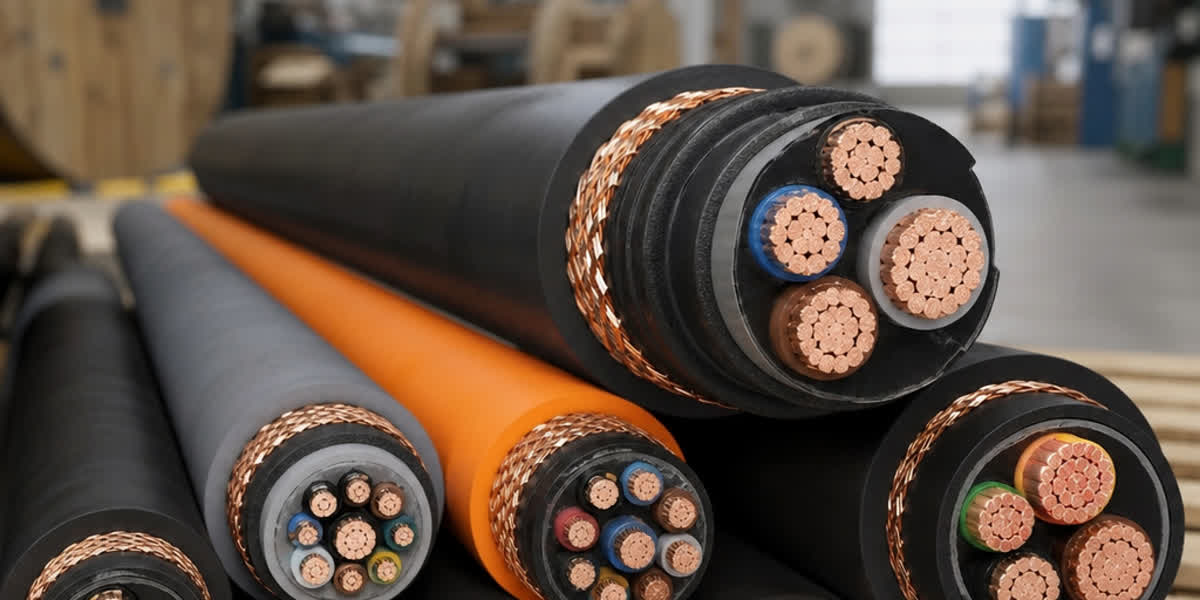
Un cable de control es un cable multipolar utilizado en sistemas de control y transmisión de señales, que típicamente conecta dispositivos de control, instrumentación, relés y aparamenta. A diferencia de los cables de potencia, los cables de control transmiten principalmente señales de control de baja tensión y baja corriente, no energía eléctrica a gran escala.
Las funciones clave de los cables de control incluyen: - Transmisión de señales: Transporte de señales de control analógicas o digitales - Control de equipos: Conexión de paneles de control a actuadores de campo - Adquisición de datos: Vinculación de sensores a sistemas PLC/DCS - Distribución de baja tensión: Alimentación de circuitos de control
2. Construcción y Clasificación del Cable de Control
2.1 Materiales del Conductor
| Tipo de Conductor | Material | Aplicación | Estándar de Referencia |
|---|---|---|---|
| Conductor de cobre | Cobre recocido desnudo | La mayoría de cables de control | IEC 60228 Clase 2/5 |
| Conductor de cobre estañado | Cobre recocido + baño de estaño | Ambientes húmedos y corrosivos | ASTM B33 |
| Conductor de aluminio | Aleación de aluminio o Al puro | Necesidades de gran distancia y bajo costo | IEC 60228 Clase 2 |
2.2 Materiales de Aislamiento
| Material de Aislamiento | Rango de Temperatura | Aplicación Típica | Estándar |
|---|---|---|---|
| PVC (Cloruro de Polivinilo) | -40°C ~ +70°C | Control industrial general | IEC 60502-1 |
| XLPE (Polietileno Reticulado) | -40°C ~ +90°C | Ambientes de alta temperatura | IEC 60502-1 |
| PE (Polietileno) | -40°C ~ +70°C | Control de comunicación, alta frecuencia | BS 5308 |
| LSZH (Bajo Humo Cero Halógeno) | -40°C ~ +70°C | Metro, hospitales, centros de datos | IEC 60754, BS 8491 |
2.3 Tipos de Blindaje
| Tipo de Blindaje | Construcción | Efectividad | Aplicación |
|---|---|---|---|
| Trenza de cobre | Trenza de cobre estañado | ★★★★★ | Ambientes de alta EMI |
| Blindaje de lámina de aluminio | Lámina de Al + hilo de drenaje | ★★★☆☆ | Industrial general |
| Blindaje de cinta de cobre | Cinta de cobre enrollada | ★★★★☆ | Interferencia de alta frecuencia |
| Blindaje compuesto | Lámina + trenza de cobre | ★★★★★★ | Instrumentos de precisión, medical |
3. Parámetros Técnicos Clave para la Selección
3.1 Número de Conductores y Sección
Los cables de control están disponibles de 2 a 61 conductores, con configuraciones comunes: 2C, 3C, 4C, 5C, 7C, 10C, 12C, 14C, 16C, 19C, 24C, 27C, 30C, 37C, 44C, 48C, 52C, 61C.
Secciones transversales estándar (mm²): - 0,5mm², 0,75mm², 1,0mm², 1,5mm², 2,5mm², 4mm², 6mm², 10mm²
3.2 Tensión Nominal
| Tensión Nominal | Aplicación |
|---|---|
| U₀/U = 300/500V | Control industrial general |
| U₀/U = 450/750V | Circuitos de control de sistemas eléctricos |
| U₀/U = 0,6/1kV | Control industrial pesado |
3.3 Temperatura de Operación
| Grado | Temp. Máx. del Conductor | Aislamiento Adecuado |
|---|---|---|
| Estándar | 70°C | PVC |
| Resistente al calor | 90°C | XLPE |
| Alta temperatura | 110°C~125°C | Caucho de silicona/EPR |
4. Comparación de Estándares de Cables de Control
| Estándar | Alcance | Requisitos Clave |
|---|---|---|
| IEC 60502-1 | Cables hasta 1kV | Espesor de aislamiento, rendimiento eléctrico |
| BS 5308 | Cables de instrumentación y control | Rendimiento de blindaje, codificación de colores |
| BS 6346 | Cables de control con aislamiento PVC | Propiedades mecánicas |
| UL 1277 | Cables de control mercado norteamericano | Retardancia a la llama, resistencia climática |
| EN 50288 | Cables de instrumentación europeos | Compatibilidad de comunicación digital |
| GB/T 9330 | Estándar chino (cables de control con aislamiento plástico) | Dimensiones, parámetros eléctricos |
5. Cable de Control vs Cable de Potencia: Diferencias Clave
| Parámetro | Cable de Control | Cable de Potencia |
|---|---|---|
| Tensión nominal | 300/500V ~ 0,6/1kV | 0,6/1kV ~ 220kV+ |
| Número de conductores | 2~61 conductores | 1~5 conductores |
| Sección del conductor | ≤10mm² | 1,5mm² ~ 2500mm² |
| Requisito de blindaje | Alto (integridad de señal) | Bajo o ninguno |
| Codificación de colores | Conductores negros + números | Colores de fase estándar |
| Uso principal | Transmisión de señales, control | Transmisión de potencia |
| Radio de curvatura | Menor | Mayor |
6. Escenarios de Aplicación Principales
6.1 Automatización Industrial
- Conexiones PLC/DCS a dispositivos de campo
- Transmisión de señales de control robótico
- Circuitos de control VFD a motor
6.2 Sistemas Eléctricos
- Circuitos de control y protección de subestaciones
- Circuitos secundarios de aparamenta
- Transmisión de señales de protección de relés
6.3 Edificios e Infraestructura
- Sistemas de control HVAC
- Sistemas de alarma contra incendios
- Sistemas de Automatización de Edificios (BAS)
6.4 Energías Renovables
- Sistemas de monitoreo de plantas solares
- Sistemas de control de turbinas eólicas
- Transmisión de señales en Sistemas de Almacenamiento de Energía (BESS)
7. Factores Clave al Elegir Cables de Control
- Condiciones ambientales: Rango de temperatura, humedad, exposición química, radiación UV
- Interferencia electromagnética: Fuentes EMI/RFI en la ruta del cable
- Método de instalación: Conducto, bandeja de cables, enterrado directo, aéreo
- Requisitos de retardancia a la llama: FR estándar, LSZH, resistente al fuego
- Requisitos de certificación: CE, UL, CCC, TUV para mercado objetivo
- Resistencia mecánica: Rendimiento a tracción, compresión y flexión
- Tipo de señal: Señales analógicas (trenza de cobre recomendada), digitales (blindaje compuesto recomendado)
8. Preguntas Frecuentes (FAQ)
P1: ¿Cuál es la diferencia entre cable de control y cable de instrumentación?
El cable de instrumentación es un tipo especializado de cable de control con rendimiento de blindaje mejorado (blindaje de par individual + blindaje general). Está diseñado para transmitir señales analógicas de bajo nivel (4-20mA, señales de termopar) y generalmente sigue los estándares BS 5308 o EN 50288.
P2: ¿Cómo selecciono el blindaje adecuado para cables de control?
Para entornos industriales generales, la lámina de aluminio con hilo de drenaje es suficiente. Para áreas con VFD, motores grandes u otras fuentes de interferencia fuertes, elija blindaje de trenza de cobre. La transmisión de señales de precisión requiere blindaje compuesto (lámina + trenza de cobre).
P3: ¿Se puede usar un cable de control como cable de potencia?
No se recomienda. Los cables de control tienen pequeñas secciones transversales de conductor (típicamente ≤10mm²) y aislamiento más delgado, lo que los hace inadecuados para cargas de corriente elevadas. La sobrecarga prolongada causará degradación del aislamiento, cortocircuitos o incendio.
P4: ¿Cuál es la longitud máxima de instalación para cables de control?
Depende del tipo de señal y la sección del conductor. Para señales analógicas 4-20mA, la longitud máxima es típicamente 1000 metros. Para señales digitales (Profibus, Modbus), la longitud depende de la tasa de transmisión, típicamente 200-1200 metros.
P5: ¿Cuál es el estándar de codificación de colores para cables de control?
Bajo GB/T 9330 (estándar chino), los conductores de cables de control usan aislamiento negro con números blancos impresos. En mercados europeos, BS 5308 utiliza conductores de colores combinados con identificación numérica.
P6: ¿Por qué es importante el cable de control LSZH?
En condiciones de incendio, los cables PVC liberan humo denso y gases tóxicos (HCl), dificultando la evacuación y extinción de incendios. Los cables LSZH producen humo mínimo y no contienen halógenos, siendo ideales para metros, hospitales y centros de datos.
P7: ¿Cuál es el radio de curvatura mínimo para cables de control?
Para instalación fija, el radio de curvatura mínimo debe ser al menos 6 veces el diámetro exterior del cable. Para instalación móvil/flexible, al menos 8-10 veces. Consulte la hoja de especificaciones del producto para valores exactos.
P8: ¿Cómo deben terminarse los blindajes de los cables de control?
Los blindajes deben conectarse a tierra usando abrazaderas de blindaje o anillos de conexión a tierra (preferiblemente conexión a tierra en un solo extremo). Evite dejar hebras de blindaje sueltas, que pueden crear efectos de antena. Use longitudes de pelado apropiadas y conecte mediante terminales de crimpado o soldadura para una resistencia de contacto mínima.
9. ¿Por Qué Elegir SiTong Cable?
Como fabricante profesional de cables de control, SiTong Cable ofrece una gama completa de productos de cable de control:
- ✅ Cobertura completa de estándares: IEC 60502-1, BS 5308, GB/T 9330, UL 1277
- ✅ Opciones de blindaje diversas: Trenza de cobre, lámina de aluminio, blindaje compuesto
- ✅ Grados de retardancia a la llama: FR estándar, Clase C/B/A, LSZH disponible
- ✅ Servicios de personalización: Número de conductores, secciones, codificación de colores personalizados
- ✅ Capacidad OEM/ODM: Capacidad anual que cubre todos los pedidos de cables de control
- ✅ Experiencia en exportación: Productos exportados a más de 50 países y regiones
Explore nuestra línea de productos de cable de control para fichas técnicas y precios.
¿Necesita ayuda para seleccionar el cable de control adecuado? Contáctenos para soporte técnico experto y una cotización.