Aerial Bundled Cable (ABC) Complete Guide: Types, Standards, Installation & Applications
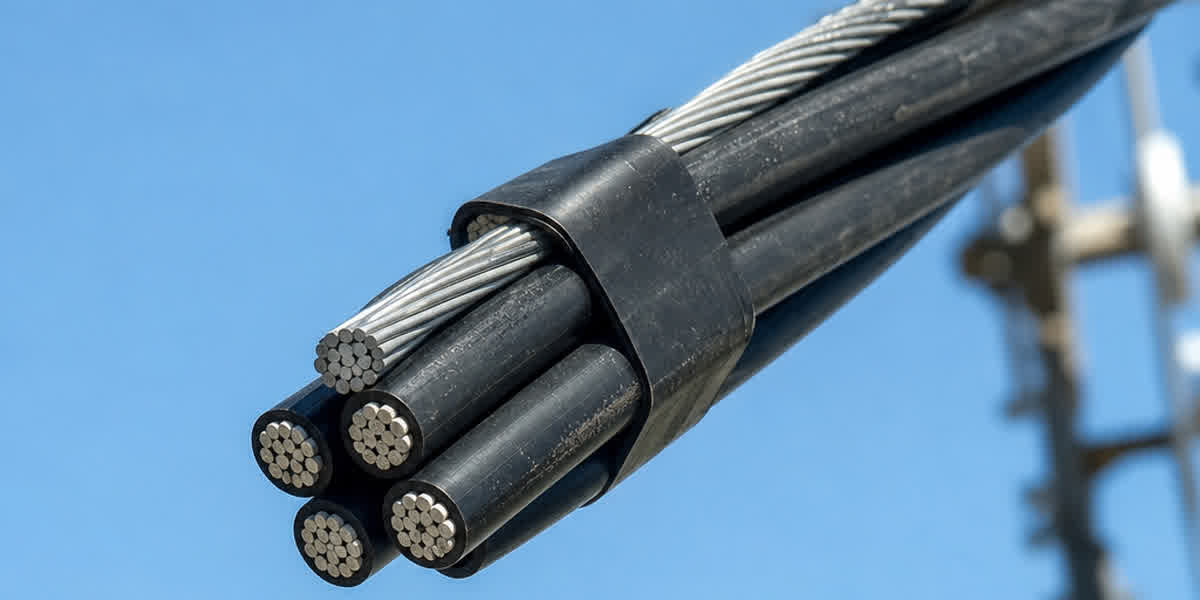
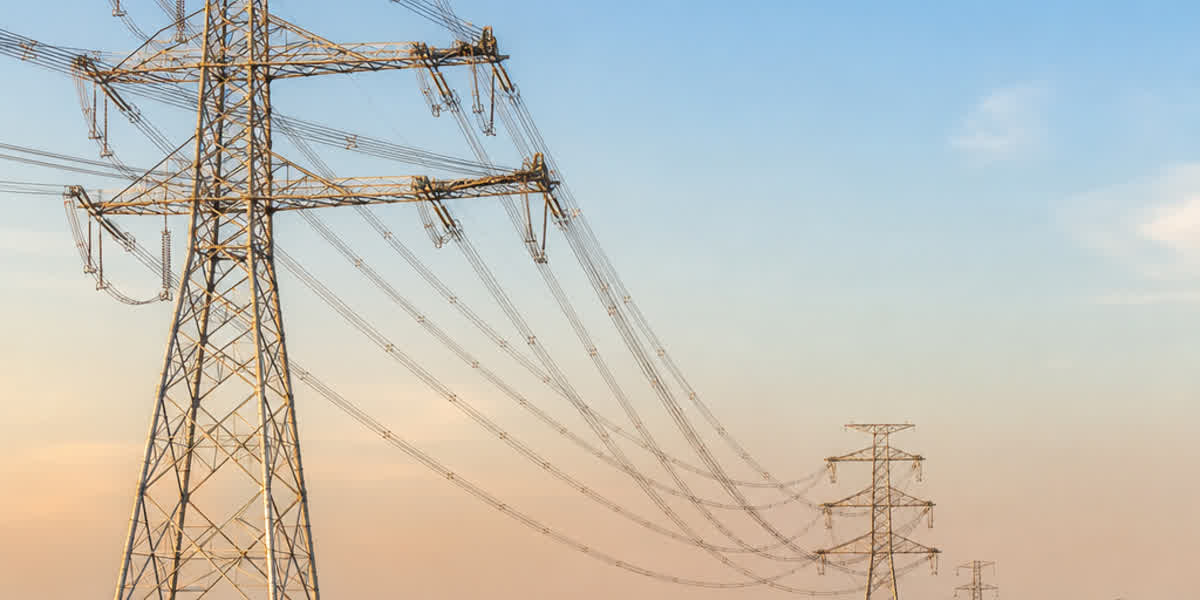
Aerial Bundled Cable (ABC), also known as Service-Insulated Power (SIP) cable or collectively insulated overhead cable, is an overhead power transmission solution consisting of multiple insulated conductors twisted together. Compared to traditional bare overhead conductors like ACSR or AAC, ABC cables offer superior safety, higher reliability, and lower line losses. They have been widely adopted in urban and rural distribution networks, industrial power supply, and temporary power installations worldwide. This comprehensive guide provides electrical engineers, procurement professionals, and project managers with detailed technical specifications, international standards, installation guidelines, and application scenarios for ABC cables.
Product Overview
Aerial Bundled Cable consists of multiple insulated phase conductors twisted together, typically including phase conductors and a neutral conductor (or messenger/supporting conductor), insulated with Cross-Linked Polyethylene (XLPE), Polyvinyl Chloride (PVC), or High-Density Polyethylene (HDPE). The core advantages over traditional bare overhead conductors (ACSR, AAC, AAAC) include:
- Enhanced Safety: Insulated conductors eliminate direct contact risks, significantly reducing electric shock and short-circuit hazards
- Space Efficiency: Bundled configuration reduces corridor width by 40%-60% compared to bare conductors
- Environmental Resilience: Insulation provides protection against trees, birds, ice loading, and other environmental factors
- Reduced Losses: Constant conductor spacing minimizes corona discharge and harmonic losses
- Low Maintenance: No need for periodic insulator cleaning, reducing operational costs
ABC cables are designed and tested to major international standards including IEC, BS, DIN, NFC, and ASTM, suitable for 0.6/1kV (Low Voltage) and 6/10kV to 12/20kV (Medium Voltage) overhead distribution networks.
Technical Specifications and Standards
Key Design Standards
| Standard | Title | Scope |
|---|---|---|
| IEC 60502-2 | Power cables with extruded insulation for rated voltages 1kV to 30kV | General MV ABC requirements |
| IEC 60038 | IEC standard voltages | Voltage rating system |
| IEC 60228 | Conductors of insulated cables | Conductor classification and resistance |
| BS 7870 | LV and MV polymeric insulated cables for use by distribution network operators | UK ABC standards |
| NFC 33-209 | Insulated conductors for overhead lines | French ABC standards |
| DIN VDE 0276 | Power cables standard | German ABC requirements |
| ASTM B230 | Aluminum Wire — Standard Specification | Conductor material |
| ISO 9001 | Quality management systems | Manufacturing quality assurance |
Conductor Specifications
ABC cable conductors are primarily aluminum or aluminum alloy. Standard cross-sections include:
| Nominal Cross-section (mm²) | Equivalent AWG/kcmil | Stranding (No. × mm) | DC Resistance at 20°C (Ω/km) |
|---|---|---|---|
| 16 | — | 7×1.70 | ≤1.91 |
| 25 | — | 7×2.14 | ≤1.20 |
| 35 | — | 7×2.52 | ≤0.868 |
| 50 | 1/0 AWG | 7×3.02 | ≤0.641 |
| 70 | 2/0 AWG | 19×2.14 | ≤0.443 |
| 95 | 4/0 AWG | 19×2.52 | ≤0.320 |
| 120 | 250 kcmil | 19×2.85 | ≤0.253 |
| 150 | — | 37×2.25 | ≤0.206 |
| 185 | — | 37×2.52 | ≤0.164 |
| 240 | 500 kcmil | 61×2.25 | ≤0.125 |
Insulation Performance
| Parameter | Low Voltage (LV) ABC | Medium Voltage (MV) ABC |
|---|---|---|
| Rated Voltage | 0.6/1kV | 6/10kV — 12/20kV |
| Insulation Material | XLPE / PVC / HDPE | XLPE |
| Insulation Thickness (Phase) | 0.7-1.0mm | 3.4-5.5mm |
| Insulation Thickness (Neutral) | 0.7-1.0mm | 2.5-5.0mm |
| Power Frequency Withstand | 3.5kV/5min | 24kV/5min |
| Maximum Operating Temperature | 90°C (XLPE) | 90°C (XLPE) |
| Short-circuit Temperature | 250°C (5s max) | 250°C (5s max) |
Main Types of ABC Cables
By Voltage Level
1. Low Voltage ABC Cable (0.6/1kV)
Primarily used for service entrance and street distribution in LV networks. Common configurations include: - 2-Core: 2×Phase (or 1 Phase + 1 Neutral), for single-phase supply - 3-Core: 3×Phase, for three-phase three-wire systems - 4-Core: 3×Phase + 1×Neutral, the most common three-phase four-wire configuration - Asymmetric configurations (e.g., 2×16mm² + 1×25mm²): Neutral conductor slightly larger than phase conductors
2. Medium Voltage ABC Cable (6/10kV — 12/20kV)
Used for urban distribution networks and rural trunk lines, featuring thicker insulation and stricter partial discharge control. Typical cross-sections range from 35mm² to 240mm², usually configured as 3-core (three-phase).
By Construction Type
1. Self-Supporting ABC Cable (SAC/SIP Cable)
Also known as SAC (Self-Supporting Aerial Cable) or SIP (Service-Insulated Power) Cable, this type integrates one or more galvanized steel wires or aluminum alloy messenger wires as the supporting element above the twisted cable core. This allows the cable to support its own weight between poles without additional catenary wires. This is the most widely used form of ABC cable globally.
2. Non-Self-Supporting ABC Cable
The insulated conductors are bundled within an outer sheath and must be suspended from a separate messenger wire or existing support structure. Used primarily for building façade installations or suspension from existing catenary systems.
3. Service Drop Cable (Duplex/Triplex/Quadruplex)
- Duplex (2-Core): Parallel insulated conductors for single-phase service drops
- Triplex (3-Core): Three twisted insulated conductors for three-phase or larger single-phase loads
- Quadruplex (4-Core): Four insulated conductors (3 phase + 1 neutral) for three-phase four-wire services
Installation and Construction Guidelines
ABC cable installation differs significantly from bare conductor stringing. Key considerations include:
1. Pole Span
| Conductor Cross-section | Max Span (Aluminum Messenger) | Max Span (Steel Messenger) |
|---|---|---|
| 16 — 35mm² | 30-40m | 40-50m |
| 50 — 70mm² | 40-50m | 50-60m |
| 95 — 150mm² | 50-60m | 60-80m |
| 185 — 240mm² | 60-70m | 70-90m |
2. Hardware and Accessories
ABC cables require specialized hardware systems: - Dead-end Clamps: For terminal and angle pole cable fixing - Suspension Clamps: For tangent pole cable support - Mid-span Joints: For intermediate conductor connection - Insulation Piercing Connectors: For branch circuit tap-offs - Surge Arresters: Required at critical points for MV ABC cables
3. Minimum Bending Radius
| Installation Condition | Minimum Bending Radius |
|---|---|
| During installation | 10× cable outer diameter |
| After installation (fixed) | 6× cable outer diameter |
4. Tension Control
- Maximum allowable tension: Not exceeding 20% of the conductor's breaking strength
- Temperature adjustment: XLPE insulation expands at operating temperature — reduce tension accordingly
- Ice/snow zones: Increase safety factor to 25% of breaking strength
Application Scenarios
Aerial Bundled Cables offer distinct advantages in these environments:
| Application | Recommended ABC Type | Key Benefits |
|---|---|---|
| Urban Distribution | MV ABC 3-core | Reduced corridor width, improved safety |
| Rural Electrification | LV ABC 4-core | Tree branch resistance, fewer outages |
| Industrial Parks | Self-supporting MV ABC | High reliability, low maintenance |
| Temporary Construction | LV ABC + messenger | Quick deployment, easy removal |
| Mountainous/Forest Areas | Self-supporting LX ABC | Ice/wind resistance, no tree clearing needed |
| Coastal/Salt-spray Zones | Corrosion-resistant ABC | HDPE insulation resists salt spray |
| Building Façade Installation | Non-self-supporting 2-4 core | Aesthetic, safe installation |
ABC Cable vs. Bare Overhead Conductors
| Comparison Item | ABC Insulated Cable | Bare Conductor (ACSR/AAC) |
|---|---|---|
| Safety | ⭐⭐⭐⭐⭐ Fully insulated | ⭐⭐⭐ Exposed conductors |
| Corridor Width | Narrow (bundled) | Wide (phase spacing required) |
| Lightning Protection | Arresters required | Self-restoring |
| Tree Contact Impact | Low (insulation withstands) | High (short circuits) |
| Ice Loading | Medium (bundle can ice) | Low-Medium |
| Line Losses | Low (constant spacing) | Medium (wind swing affects) |
| Installation Cost | Higher (special hardware) | Lower |
| Maintenance Cost | Low (minimal) | High (regular inspection) |
| Service Life | 20-30 years (XLPE) | 30-50 years (aluminum) |
Frequently Asked Questions (FAQ)
Q1: Can existing bare conductor poles be retrofitted with ABC cable?
Yes. Existing poles can be retrofitted by replacing bare conductors with self-supporting ABC cables. Corresponding dead-end clamps and suspension hardware must be installed. Pole loading must be re-calculated — ABC cables are heavier than bare conductors (insulation weight) but experience lower wind loading.
Q2: What is the difference between ABC cable and SIP cable?
"SIP" stands for "Service-Insulated Power" cable, a term commonly used in European markets, particularly France. SIP cable is a type of ABC cable — specifically, self-supporting aerial bundled cable. "ABC" is the generic term (IEC/BS), while "SIP" is the trade name used in European specifications such as NFC 33-209.
Q3: Does ABC cable insulation provide UV protection?
Yes. The insulation material (XLPE or HDPE) is compounded with carbon black stabilizers that effectively resist UV-induced degradation and embrittlement. UV aging tests are specified in IEC 60502-2 and BS 7870.
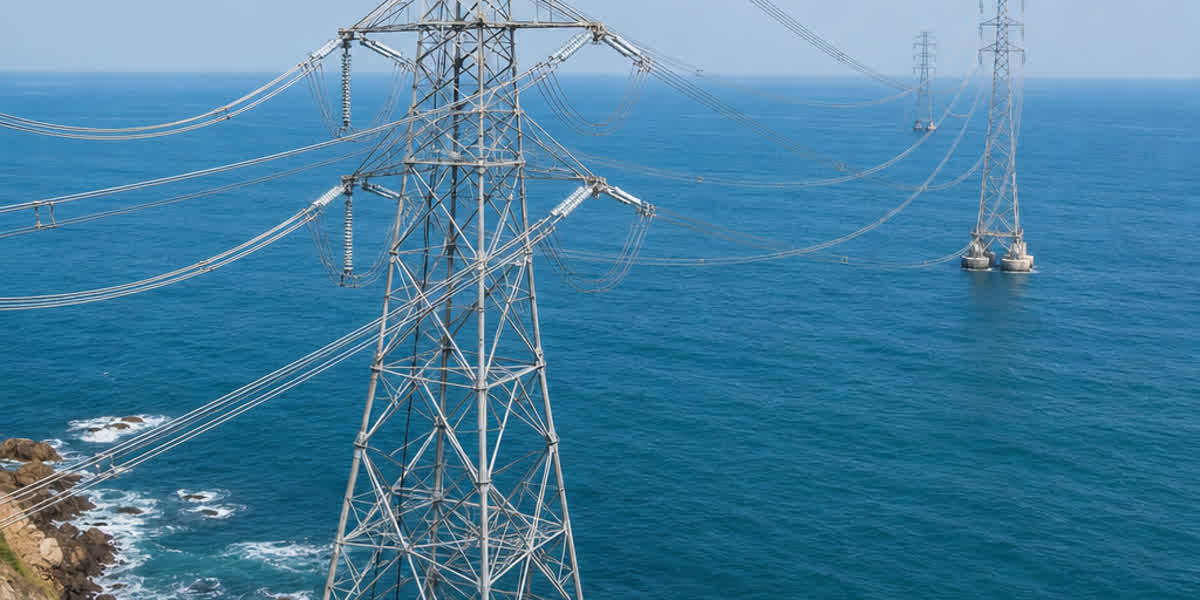
Q4: Is ABC cable suitable for coastal/salt-spray environments?
Yes. Self-supporting ABC cables with HDPE insulation offer excellent resistance to salt spray corrosion. Special stabilizers are added to prevent insulation degradation from salt penetration.
Q5: Why is the neutral conductor often larger than the phase conductors in LV ABC?
In low-voltage distribution networks, the neutral conductor in ABC cables carries unbalanced phase currents and harmonic currents, requiring larger cross-sectional area to prevent overload. A typical ratio is 3×50mm² phase + 1×70mm² neutral.
Q6: What is the maximum continuous operating temperature of ABC cable?
For XLPE-insulated ABC cables, the maximum continuous operating temperature is 90°C, with a short-circuit temperature of 250°C (maximum 5 seconds). PVC-insulated ABC cables have a maximum operating temperature of 70°C.
Q7: Are there temperature restrictions for ABC cable installation?
Yes. Installation below 0°C is not recommended as the insulation becomes brittle and prone to cracking during bending and tensioning. The ideal installation temperature range is 5°C to 40°C.
Q8: Do MV ABC cables require surge arresters?
Yes. Medium voltage ABC cables require zinc oxide surge arresters at line termination points and major branch connections to limit lightning and switching overvoltages that could damage the insulation.
Product Range
SiTong Cable offers a complete range of aerial bundled cables covering both low and medium voltage applications:
- LV-ABC Cable — For 0.6/1kV distribution networks
- MV ABC Cable — For 6/10kV to 12/20kV distribution networks
- Self-Supporting ABC Cable (XLPE SAC) — Self-supporting construction, no additional catenary required
- Duplex/Triplex/Quadruplex Service Drop Wires — Dedicated cables for building service entrance
- ABC Cable with IEC/NFC Standard — Certified to both IEC and NFC standards
Why Choose SiTong Cable?
- 15+ years of export experience, ABC cables shipped to 30+ countries worldwide
- Full certification: ISO 9001, CE, IEC, BS, NFC standard compliance
- Flexible customization: Custom conductor cross-sections, insulation materials, and packaging
- Comprehensive after-sales support: Installation guidance, technical support, and quality warranty
For product quotations or technical consultation, please contact us:
📧 sales@sitongcable.com 📞 +86-371-69176007 🌐 https://www.sitongcable.com