AAAC Conductor (All Aluminum Alloy Conductor): Complete Technical Guide — Standards, Specifications & Selection Best Practices
Introduction
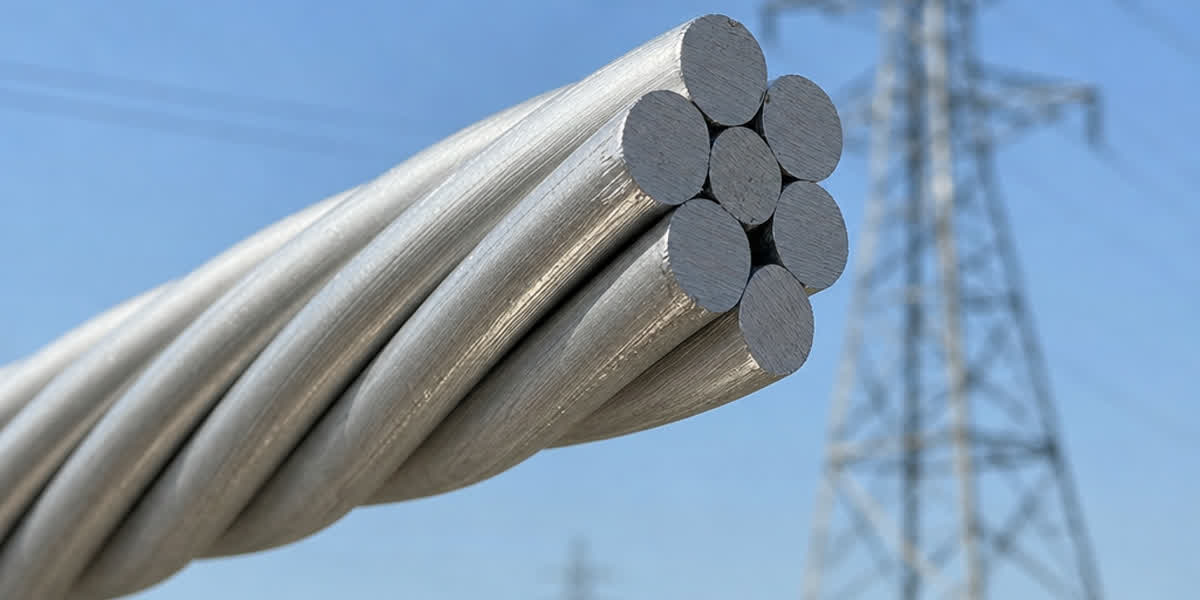
The All Aluminum Alloy Conductor (AAAC) is a concentrically stranded overhead conductor made from heat-treated aluminum alloy wires. It is widely used in medium and high-voltage transmission lines and distribution networks worldwide. Compared to All Aluminum Conductor (AAC) and Aluminum Conductor Steel Reinforced (ACSR), AAAC achieves a unique balance of strength, conductivity, and corrosion resistance — making it particularly suitable for long-span transmission lines, coastal environments, and heavily polluted industrial zones.
AAAC conductors are manufactured from 6201-T81 or 1120-T81 heat-treated aluminum alloy, offering tensile strength significantly higher than AAC and approaching that of ACSR, while weighing much less than steel-core conductors and completely eliminating bimetallic corrosion. This has made AAAC one of the fastest-growing conductor types in modern grid construction, widely adopted across North America, Europe, the Middle East, and Southeast Asia.
This comprehensive guide covers AAAC conductor technical specifications, international standards, stranding configurations, ampacity ratings, selection criteria, installation and maintenance best practices, and frequently asked questions.
Technical Specifications & Material Properties
Basic Material Parameters
AAAC conductors are primarily manufactured from 6201-T81 aluminum alloy (medium strength) or 1120-T81 aluminum alloy (higher conductivity). Key material properties:
| Parameter | 6201-T81 Alloy | Notes |
|---|---|---|
| Minimum Conductivity (%IACS) | 52.5% | ASTM B398 |
| Tensile Strength (single wire) | 295-345 MPa | Varies by wire diameter |
| Density | 2.69 g/cm³ | Slightly lower than pure aluminum |
| Modulus of Elasticity | 69 GPa | Same as AAC |
| Coefficient of Linear Expansion | 23.0 × 10⁻⁶ /°C | Same as AAC |
| Resistivity at 20°C | 3.28 × 10⁻⁸ Ω·m | ASTM B193 |
| Melting Range | 615-655°C | — |
Standard Stranding Configurations
AAAC conductors are manufactured per ASTM B399/B399M (Concentric-Lay-Stranded Aluminum-Alloy Conductors) or IEC 61089. Common stranding patterns include:
| Stranding | Wire Count | Example Section (mm²) | Typical Diameter (mm) |
|---|---|---|---|
| 7-wire | 1+6 | 16-50 | 5.1-8.9 |
| 19-wire | 1+6+12 | 70-125 | 10.8-14.5 |
| 37-wire | 1+6+12+18 | 150-300 | 16.0-22.8 |
| 61-wire | 1+6+12+18+24 | 315-500 | 23.4-29.5 |
| 91-wire | 1+6+12+18+24+30 | 500-800 | 29.5-37.2 |
AAAC Common Specifications Table (ASTM B399 / IEC 61089)
The following are the most commonly used AAAC specifications (6201-T81):
| Code Name | Nominal Area (mm²) | Stranding/Wire Dia (mm) | Overall Dia (mm) | Unit Weight (kg/km) | Rated Breaking Strength (kN) | DC Resistance @20°C (Ω/km) |
|---|---|---|---|---|---|---|
| BUTTERFLY | 21.1 | 7/1.95 | 5.85 | 58 | 6.19 | 1.3853 |
| TULIP | 26.7 | 7/2.20 | 6.60 | 74 | 7.87 | 1.0924 |
| DAISY | 33.6 | 7/2.47 | 7.41 | 93 | 9.89 | 0.8707 |
| IRIS | 42.4 | 7/2.78 | 8.34 | 118 | 12.45 | 0.6895 |
| ROSE | 53.5 | 7/3.12 | 9.36 | 148 | 15.71 | 0.5472 |
| LILY | 67.0 | 7/3.49 | 10.47 | 186 | 19.68 | 0.4363 |
| COSMOS | 85.0 | 19/2.39 | 11.95 | 235 | 24.52 | 0.3442 |
| DAFFODIL | 107.2 | 19/2.68 | 13.40 | 297 | 30.91 | 0.2734 |
| ORCHID | 126.4 | 19/2.91 | 14.55 | 350 | 36.45 | 0.2317 |
| PANSY | 161.3 | 19/3.29 | 16.45 | 447 | 46.52 | 0.1816 |
| LARKSPUR | 201.6 | 37/2.63 | 18.41 | 559 | 57.43 | 0.1454 |
| CHRYSANTHEMUM | 241.9 | 37/2.88 | 20.16 | 671 | 68.90 | 0.1211 |
| PEONY | 282.0 | 37/3.12 | 21.84 | 782 | 80.35 | 0.1038 |
| BLUEBELL | 338.0 | 37/3.41 | 23.87 | 938 | 96.07 | 0.0869 |
| PINK | 402.0 | 61/2.89 | 26.01 | 1112 | 113.07 | 0.0730 |
| HOLLYHOCK | 483.0 | 61/3.17 | 28.53 | 1337 | 135.18 | 0.0608 |
| GOLDENROD | 565.0 | 61/3.44 | 30.96 | 1565 | 157.61 | 0.0519 |
AAAC vs AAC vs ACSR vs ACAR: Comprehensive Comparison
| Parameter | AAAC (6201-T81) | AAC (1350-H19) | ACSR | ACAR |
|---|---|---|---|---|
| Conductivity (%IACS) | 52.5% | 61.2% | Lower (steel core) | 53-61% |
| Tensile Strength (MPa) | 295-345 | 170-200 | Steel ≥1240 | 200-290 |
| Weight | Light | Lightest | Heavy (steel core) | Medium |
| Corrosion Resistance | Excellent | Excellent | Galvanizing needed | Good |
| Bimetallic Corrosion | None | None | Present (steel-aluminum) | Limited |
| Sag Characteristics | Good | Fair | Excellent (high tension) | Good |
| Cost | Medium | Lowest | Medium | Higher |
| Typical Application | Transmission, coastal, industrial zones | Short-span distribution, coastal | Long-span transmission, river crossings | Medium-span transmission |
| Installation Tension | Medium | Low | High | Medium |
| Creep Performance | Excellent | Fair | Good | Good |
Key Advantages of AAAC
- High Strength-to-Weight Ratio: AAAC's tensile strength is 1.5-2 times that of AAC, with only marginally higher weight. This gives it significant advantages over ACSR in long-span applications without the dead weight of a steel core.
- No Bimetallic Corrosion: All strands are aluminum alloy — there is no galvanic corrosion between aluminum and steel as in ACSR. Ideal for coastal, chemical, and industrial pollution environments.
- Superior Sag Performance: AAAC's coefficient of thermal expansion matches aluminum, providing better hot-sag performance compared to ACSR. This ensures better ground clearance under high-temperature operating conditions.
- Lower Losses: While 6201-T81 alloy conductivity (52.5% IACS) is lower than pure aluminum, equivalent current-carrying capacity can be achieved by increasing the cross-sectional area at the same overall diameter.
- Excellent Fatigue Resistance: AAAC's resistance to aeolian vibration and galloping is superior to ACSR, reducing hardware and tower fatigue damage over the service life.
Applicable Standards
AAAC conductors are manufactured and tested to the following international standards:
| Standard | Title | Scope |
|---|---|---|
| ASTM B398/B398M | Aluminum-Alloy Wire (for Electrical Purposes) | Wire material specification |
| ASTM B399/B399M | Concentric-Lay-Stranded Aluminum-Alloy Conductors (AAAC) | Finished conductor specification |
| IEC 61089 | Round Wire Concentric Lay Overhead Electrical Stranded Conductors | International specification |
| IEC 60888 | Zinc-Coated Steel Wires for Stranded Conductors | Reference |
| BS EN 50182 | Conductors for overhead lines — Round wire concentric lay conductors | European standard |
| DIN 48201 | Overhead line conductors | German standard |
| CSA C49 | Aluminum and aluminum alloy conductors for overhead lines | Canadian standard |
| AS/NZS 1531 | Conductor — overhead | Australian/New Zealand standard |
| GB/T 1179 | Round wire concentric lay overhead electrical stranded conductors | Chinese standard |
| NBR 7271 | Aluminum and aluminum alloy conductors for overhead lines | Brazilian standard |
Application Scenarios
1. Medium & High Voltage Transmission Lines (35kV-500kV)
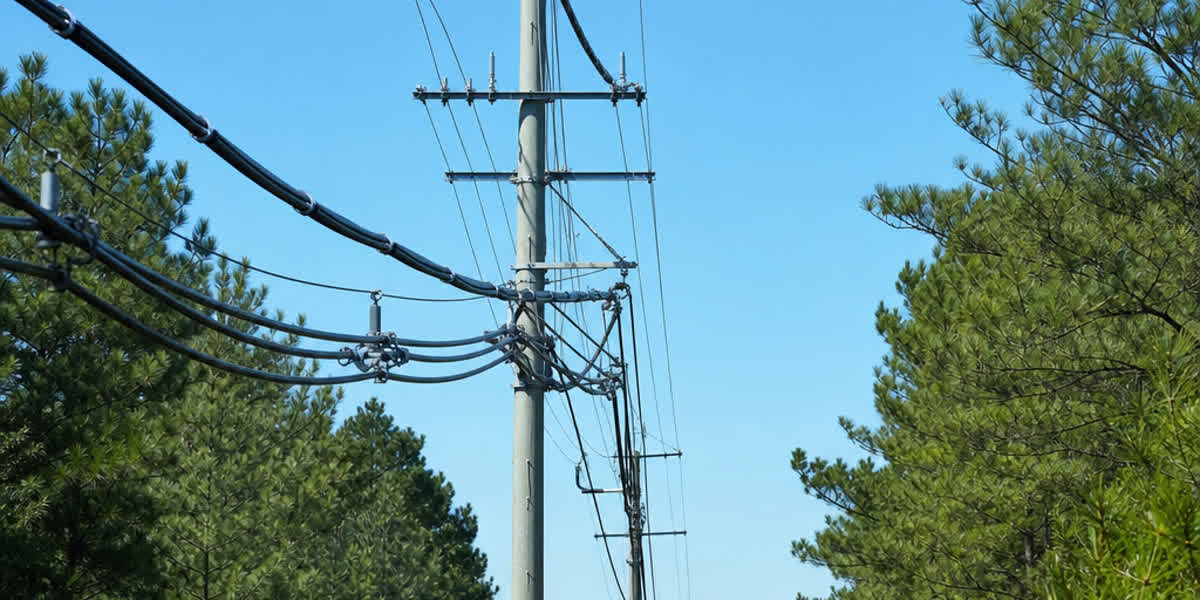
AAAC is a popular choice for 35kV to 500kV transmission lines, particularly in the Middle East, Southeast Asia, and Nordic regions. Its excellent corrosion resistance and sag characteristics make it ideal for long-distance overhead transmission.
2. Coastal & Offshore Transmission
In salt-spray corrosion environments, AAAC's immunity to bimetallic corrosion makes it the conductor of choice. Distribution networks in coastal cities such as Dubai, Singapore, and Jakarta extensively use AAAC.
3. Industrial Pollution Zones (Chemical Plants, Steel Mills, Coal Power Plants)
AAAC offers superior resistance to industrial pollutants such as sulfur gases and chlorine, with significantly lower maintenance costs compared to ACSR in similar environments.
4. Distribution Lines (10kV-35kV)
In urban distribution networks, AAAC can replace traditional all-aluminum or steel-reinforced conductors to improve line reliability and service life.
5. Mountainous Long-Span Lines
AAAC's high strength-to-weight ratio provides significant advantages in mountainous terrain and river crossings where long spans are required.
6. Solar & Wind Farm Collection Lines
Renewable energy projects demand long conductor service life and high reliability. AAAC's corrosion resistance and fatigue properties make it well-suited for solar PV and wind farm collector circuits.
AAAC Selection Guide
Step 1: Determine Electrical Requirements
- Rated voltage (kV)
- Continuous current-carrying capacity (A)
- Short-circuit current withstand (kA)
- Allowable voltage drop (%)
Step 2: Determine Mechanical Requirements
- Span length (m)
- Weather conditions (wind speed, ice thickness, temperature range)
- Safety factor (typically 2.5-3.0)
- Sag limitations
Step 3: Select Cross-Section
Based on ampacity and voltage drop requirements, select the appropriate nominal cross-section from the AAAC ampacity table below (reference values at 40°C ambient, 1000 W/m² solar, 0.6 m/s wind):
| Nominal Area (mm²) | Ampacity (A) | Typical Voltage Class |
|---|---|---|
| 33.6 | ~120 | 10-35 kV Distribution |
| 67.0 | ~190 | 10-35 kV Distribution |
| 107.2 | ~270 | 35-110 kV Transmission |
| 161.3 | ~350 | 35-220 kV Transmission |
| 241.9 | ~460 | 110-220 kV Transmission |
| 338.0 | ~560 | 220-500 kV Transmission |
| 483.0 | ~710 | 220-500 kV Transmission |
| 565.0 | ~790 | 330-500 kV Transmission |
Note: Actual ampacity must be calculated using professional software based on specific weather conditions and conductor parameters.
Step 4: Select Compatible Hardware
AAAC conductors require dedicated aluminum-alloy fittings: - Strain Clamps: Aluminum alloy to avoid bimetallic contact corrosion - Splice Joints: Hydraulic or bolted aluminum alloy splices - Suspension Clamps: Preformed helical rod type recommended to minimize stress concentration - Vibration Dampers: Stockbridge dampers or spiral vibration dampers recommended
Step 5: Economic Assessment
Perform a total cost of ownership (TCO) analysis including: - Initial material cost - Installation cost - Expected service life (typically 40-60 years) - Maintenance frequency and cost - Line loss cost (calculated over full lifecycle)
Installation & Maintenance
Installation Guidelines
- Tension Control: Maximum stringing tension should typically be 15%-20% of rated breaking strength. Avoid conductor contact with ground or tower steel during stringing.
- Bending Radius: Minimum bending radius during installation should not be less than 20 times the conductor diameter.
- Connection Preparation: Remove oxide film from contact surfaces, immediately apply oxide-inhibiting compound, and crimp to specified torque.
- Jumper Installation: Jumper sag should coordinate with main conductor sag to avoid phase-to-phase flashover during wind.
Maintenance Recommendations
- Conduct a full inspection in the first year of service, then every 3-5 years
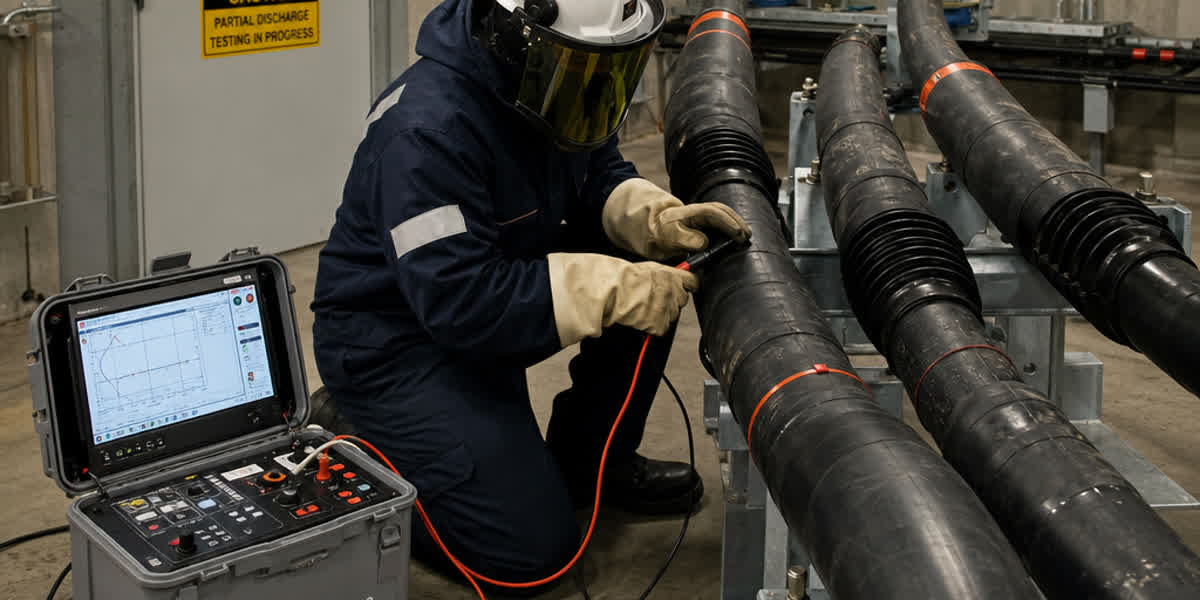
- Check splice joints and strain clamps for abnormal temperature rise (using infrared thermography)
- Inspect conductor surface for corrosion pitting or mechanical damage
- Check for foreign objects after high winds
FAQ
Q1: What is the main difference between AAAC and AAC? A: AAAC uses high-strength aluminum alloy (6201-T81), with approximately 1.7 times the strength of AAC (1350-H19 pure aluminum), but slightly lower conductivity (52.5% vs 61.2% IACS). AAAC suits lines requiring higher mechanical strength; AAC suits short-span distribution where conductivity is the priority.
Q2: Can AAAC replace ACSR? A: In many scenarios, yes. AAAC weighs approximately 30% less than ACSR at the same overall diameter, but has lower tensile strength. A full mechanical and electrical re-calculation is needed when replacing. AAAC is significantly better in corrosion resistance.
Q3: What is the expected service life of AAAC? A: Under normal conditions, AAAC conductors have an expected service life of 40-60 years. In coastal or industrial pollution environments, this remains 30-50 years (with regular maintenance) — far outperforming ACSR in similar conditions.
Q4: Does AAAC require special connectors? A: Yes — use dedicated aluminum-alloy connectors. Avoid copper or dissimilar metal connectors to prevent galvanic corrosion. Both compression and bolted connections are acceptable; ensure tooling and procedures meet manufacturer specifications.
Q5: How does AAAC perform at high operating temperatures? A: AAAC performs well at continuous operating temperatures of 90°C and short-term emergency temperatures of 120°C. Its hot-sag performance is superior to ACSR, as ACSR's high-temperature sag is more affected by steel core creep.
Q6: How can I distinguish AAAC from AAC? A: AAAC (6201-T81) wires are harder and more elastic — they spring back noticeably when bent. AAC (1350-H19) is softer and stays bent. Resistivity measurement can also confirm (AAAC has slightly higher resistance).
Internal Links
- AAC Conductor: Complete Technical Specification and Selection Guide
- ACSR Conductor Complete Guide: Technical Specifications & Selection
- ACSR vs AAAC vs ACSS: Ultimate Technical Comparison Guide
- ACAR Conductor Complete Technical Guide: Standards, Specifications & Selection
- LV Power Cable Selection Guide
- Cable Purchasing Guide
- SiTong Cable Products – Overhead Conductors
This technical guide is provided by SiTong Cable Engineering Department for reference purposes. Please consult a professional engineer for specific project selections.