ABC Cable (Aerial Bundled Cable) — Complete Technical Guide: Standards, Specifications, Construction & Selection for LV Overhead Distribution Networks

2026-07-22 | Zhengzhou Sitong Cable | technical
ABC Cable (Aerial Bundled Cable) — Complete Technical Guide: Standards, Specifications, Construction & Selection for LV Overhead Distribution Networks

ABC Cable (Aerial Bundled Cable) — Complete Technical Guide: Standards, Specifications, Construction & Selection for LV Overhead Distribution Networks

Aerial Bundled Cable (ABC) has revolutionised low-voltage overhead power distribution by combining multiple insulated conductors into a single self-supporting bundle. Unlike traditional bare-wire open conductors, ABC systems offer superior reliability, safety, and longevity in both urban and rural distribution networks. This comprehensive guide examines ABC cable construction, applicable international standards, key technical specifications, and practical selection criteria for engineers and specifiers.

What is ABC Cable? Construction and Core Components

ABC cable is a factory-assembled bundle of phase conductors and a neutral messenger/support conductor, all fully insulated with cross-linked polyethylene (XLPE) or high-density polyethylene (HDPE). The conductors are twisted together around a central messenger, which bears the mechanical load of the installation.

Conductor Materials

ABC cables typically use one of two conductor types:

  • All-Aluminum Conductors (AAC): Lightweight and highly conductive, AAC stranded conductors are the most common choice for ABC phase conductors. They comply with BS 215 and IEC 61089 standards for concentric-lay-stranded aluminum wires.
  • Aluminum Alloy Conductors (AAAC): For installations requiring higher tensile strength — such as longer spans or areas with higher ice/wind loading — AAAC (Aluminum Alloy 6201) conductors offer a superior strength-to-weight ratio. These conform to BS EN 50183 and ASTM B399/B941.

The neutral messenger is typically an AAC or AAAC conductor of larger cross-section, as it must support the entire cable weight over pole-to-pole spans.

Insulation System

The insulation layers are critical to ABC cable performance:

  • Base insulation: Cross-linked polyethylene (XLPE) — rated for continuous operation at 90 °C normal, 130 °C emergency, and 250 °C short-circuit — provides excellent electrical, thermal, and mechanical properties. Some designs use HDPE for specific low-cost applications.
  • Weather-resistant outer sheath: Black HDPE or special carbon-black-filled XLPE provides UV resistance and weatherability for continuous outdoor exposure over 25+ years of service life.
  • Colour coding: Phase conductors are identified by continuous colour stripes (typically brown, black, grey for phases; blue for neutral) embedded in or printed on the insulation, enabling fast identification during installation and maintenance.

Messenger Configuration

ABC cable for LV distribution (0.6/1 kV rated) employs a fully self-supporting design where the neutral conductor also serves as the messenger. The messenger is either:

  • Concentric-laid messenger: Phase conductors are helically laid around a central neutral/messenger conductor
  • Parallel-laid messenger: Conductors run parallel in a figure-8 or flat configuration

The concentric design is preferred in most international applications because it provides perfect bundle symmetry, reduces wind loading, and simplifies stringing.

International Standards Governing ABC Cable

Multiple international and national standards define the performance, testing, and installation requirements for ABC cables:

Standard Scope Key Requirements
IEC 60502-2 Power cables with extruded insulation for rated voltages 6–30 kV General construction, test methods
IEC 60038 Standard voltage levels Defines LV as 230/400 V and 277/480 V systems
BS EN 50397-1 Covered conductors for overhead lines — Part 1: Covered conductors Insulation thickness, mechanical properties
BS 7870-3 LV and MV polymeric insulated cables for use in telecommunications and distribution networks ABC-specific construction details
NFC 33-041 / NF C 33-041 French standard for insulated conductors for overhead networks Widely referenced in Francophone and MENA markets
DIN VDE 0276-605 German standard for power distribution cables ABC cable performance under German grid conditions
HD 603 S1 Distribution cables of rated voltage 0.6/1 kV Harmonised European specifications for LV cables

Additionally, many national utilities adopt internal specifications that reference these standards with modifications for local climatic conditions. For instance, projects in Southeast Asia often require enhanced UV resistance, while alpine installations specify lower-temperature brittleness thresholds.

Technical Specifications by Application

LV ABC for Residential Distribution (0.6/1 kV)

The most widely deployed ABC is rated 0.6/1 kV for low-voltage distribution from pole-mounted transformers to residential and light commercial customers.

Typical conductor cross-sections:

Conductor Label Phase Area (mm²) Neutral Area (mm²) Approx. Current Rating (A)
3×16 + 25 16 25 75
3×25 + 35 25 35 95
3×35 + 50 35 50 120
3×50 + 70 50 70 145
3×70 + 70 70 70 185
3×95 + 50 95 50 220
3×120 + 70 120 70 260

Current ratings are indicative for aluminium conductors at 40 °C ambient, 90 °C conductor temperature, with solar radiation of 1000 W/m² and wind speed of 0.6 m/s, in accordance with IEC 60364-5-52.

Mechanical and Environmental Specifications

Parameter Typical Value
Rated voltage 0.6/1 kV
Test voltage 3.5 kV AC / 10 kV DC (4 h)
Max. continuous conductor temperature 90 °C
Max. short-circuit temperature (5 s) 250 °C
Minimum bending radius 12× cable diameter (installation), 8× (permanent)
UV resistance ≥ 2000 h accelerated weathering per ISO 4892-2
Temperature range −40 °C to +90 °C
Service life ≥ 30 years under normal conditions

Advantages of ABC Over Bare-Wire Overhead Systems

1. Improved Reliability and Reduced Fault Rates

Because each phase conductor in an ABC system is fully insulated, phase-to-phase and phase-to-ground faults caused by vegetation contact, animal bridging, wind-induced clashing, or salt pollution are virtually eliminated. Utilities report 60–80 % fewer unplanned outages after converting from bare-wire to ABC distribution networks.

2. Enhanced Public Safety

The fully insulated assembly eliminates the risk of accidental contact with live conductors. This is especially important in: - Urban areas where buildings, trees, and pedestrian traffic are in close proximity to lines - School zones and public spaces where climbing children or falling branches pose risks - Agricultural areas where tall machinery (grain augers, irrigation booms) operates near overhead lines

3. Narrower Corridor Width

ABC requires only 0.5–1.0 m of corridor width compared to 3–6 m for bare-wire open conductors, enabling line placement in constrained urban right-of-ways. This significantly reduces land acquisition costs and environmental impact.

4. Lower Installation and Maintenance Costs

ABC systems are installed in a single stringing operation rather than pulling each phase separately. The bundled design also means fewer cross-arms, insulators, and pole-top hardware items. Maintenance is reduced because vegetation management — a major ongoing cost for bare-wire systems — can be relaxed since ABC is tolerant of tree contact.

5. Reduced Electrical Losses

The insulation reduces leakage current even in humid or salt-laden environments. Additionally, the compact geometry reduces the inductive reactance of the line, improving voltage regulation over long distribution runs compared to spaced bare conductors.

6. Theft Deterrence

Because ABC conductors are insulated and require specialised stripping tools, copper theft — a growing problem in many markets — is significantly reduced compared to bare neutral conductors.

Selection Criteria for ABC Cable Projects

When specifying ABC cable for a distribution project, engineers should evaluate the following parameters systematically:

1. Voltage Rating and System Configuration

Confirm the system voltage: most residential networks use 230/400 V three-phase four-wire (TN-C or TN-S systems). Verify neutral earthing configuration — some designs require the neutral messenger to be earthed at every pole, while others use PEN (Protective Earth + Neutral) configurations.

2. Conductor Material Selection

For standard LV distribution, AAC conductors (complying with BS 215) are the most cost-effective option. For longer spans exceeding 50–60 m, or in areas with high wind/ice loading, AAAC (6201 alloy) offers approximately 50 % higher tensile strength with only a 10–15 % cost premium, making it the preferred choice for challenging terrain.

3. Cross-Section Sizing

Sizing must account for: - Current-carrying capacity (ampacity) — use IEC 60364-5-52 derating factors for bundling, ambient temperature, and solar heating - Voltage drop — typically limited to 5 % at the farthest customer under peak load - Short-circuit rating — ensure the conductor can withstand the maximum prospective fault current for the clearing time of the upstream protection device - Mechanical loading — messenger section must be sufficient for the span length, conductor weight, and loading district (wind/ice per IEC 60826 or national code)

4. Accessories and Hardware

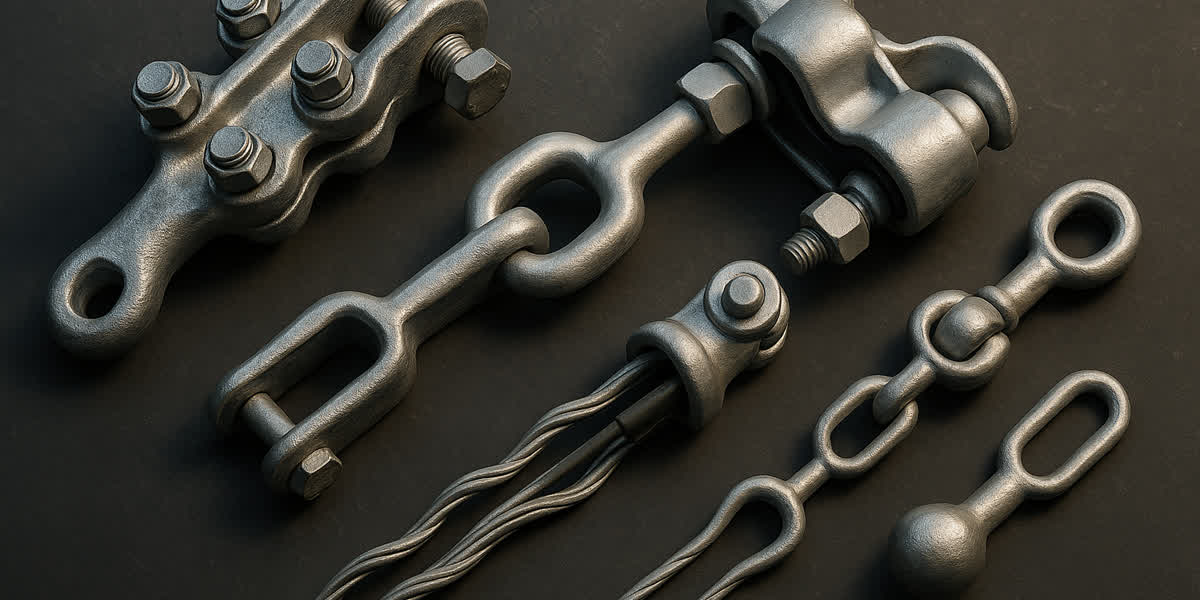
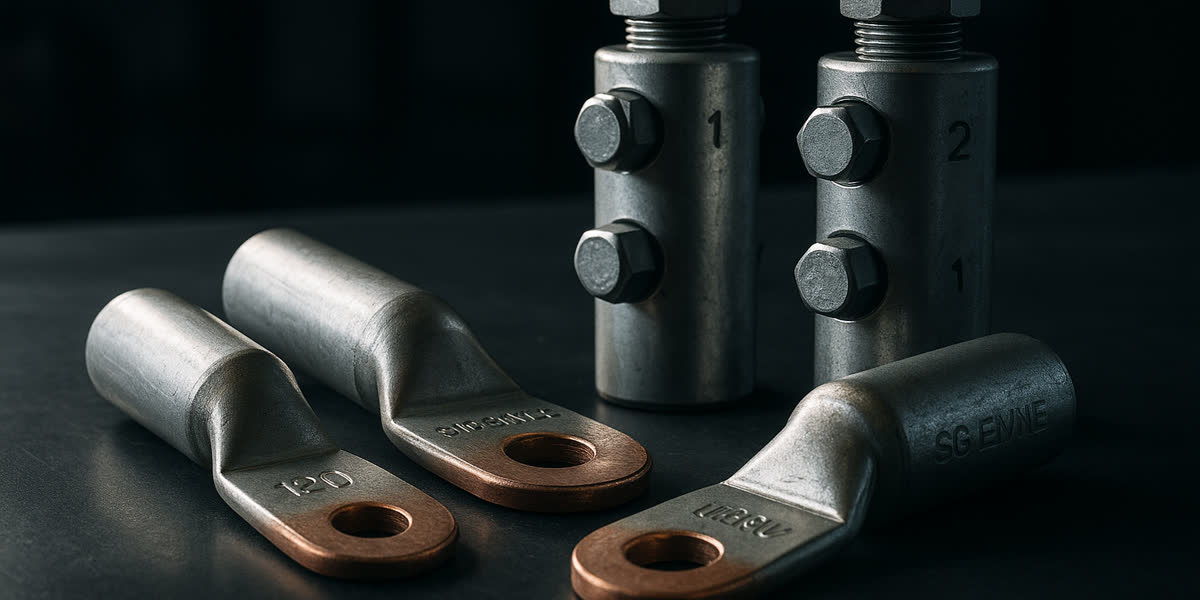
A complete ABC installation requires: - Preformed dead-end clamps — for messenger termination at poles - Insulated piercing connectors (IPCs) — for making service drops without stripping the insulation - Mid-span jointing kits — for repair or branch connections - Suspension clamps — for messenger support on intermediate poles - Line-post insulators — in designs where the messenger is not grounded

IPCs are a critical innovation: they pierce the insulation with stainless steel teeth to make electrical contact while maintaining environmental sealing, enabling safe, tool-free service connections without de-energising the main line.

5. Environmental Considerations

  • Solar radiation: In tropical markets, specify enhanced UV-stabilised HDPE or XLPE sheathing
  • Salt spray: Coastal installations benefit from additional anti-corrosion treatment on messenger clamps and hardware
  • Pollution class: Heavy-industrial or coastal pollution may require increased creepage distance on line-post insulators

Installation Best Practices for ABC Cables

Proper installation is essential to realise the reliability benefits of ABC:

  1. Pre-stringing inspection: Verify conductor condition, insulation integrity, and accessory compatibility. Always store cables on reels in shade below 40 °C.
  2. Stringing tension: Follow the manufacturer's sag-tension tables precisely. ABC cables have lower thermal expansion than bare conductors; over-tensioning can damage the messenger during cold snaps.
  3. Bending radius: Never exceed the minimum bending radius (typically 12× cable diameter during pulling). Use proper pulling grips rather than direct tension on conductors.
  4. Pole hardware: Use corrosion-resistant galvanised or stainless steel fittings. The messenger should be positively bonded at each pole to earth for safety.
  5. Service connections: Always use insulated piercing connectors rather than stripping the phase conductors. Ensure the IPC's current rating matches the service load.
  6. Documentation: Record span lengths, tension settings, and accessory types for future maintenance reference.

Frequently Asked Questions

What is the difference between ABC cable and tree wire / spacer cable?

ABC cable is a self-supporting fully insulated bundle for LV distribution (0.6/1 kV), while tree wire / spacer cable is a covered (semi-insulated) medium-voltage product typically 5–35 kV, installed with spacers on a separate messenger. ABC is fully insulated so phase-to-phase contact is completely prevented; tree wire has a thinner covering designed primarily to prevent flashover from vegetation contact.

What standards apply to ABC cable?

The primary standards are IEC 60502-2 (general construction), BS EN 50397-1 (covered conductors), and national specifications such as NFC 33-041 (France), DIN VDE 0276-605 (Germany), and HD 603 S1 (harmonised European). Always confirm which standard your local utility mandates.

Can ABC cable be used for both LV and MV distribution?

Standard ABC is designed for LV (0.6/1 kV) applications. For medium-voltage distribution (6–35 kV), engineers typically select power cable systems or covered conductor products like spacer cable / tree wire with appropriate insulation levels.

How long is the service life of ABC cable?

Properly installed ABC cable has a service life exceeding 30 years. The XLPE insulation is resistant to thermal ageing, UV degradation, and moisture ingress when the system is correctly specified for the environment. Regular visual inspection every 5 years is recommended to check for mechanical damage or accessory degradation.

What is the maximum span length for ABC cable?

Typical maximum spans range from 40–60 m for standard LV ABC installations, depending on conductor cross-section, loading district, and messenger size. Longer spans are possible with larger messenger sections and AAAC alloy conductors. Consult the manufacturer's sag-tension data for project-specific limits.

How does ABC cable compare to underground cable for distribution?

ABC is significantly less expensive than underground cable (30–50 % lower installed cost), faster to deploy, and easier to access for repairs. However, underground cable offers better aesthetics, zero weather-related outage risk, and greater public safety in high-traffic areas. ABC is the preferred solution for most overhead residential distribution projects where budget constraints exist.

Conclusion

ABC cable represents a mature, standards-backed technology that delivers substantial reliability, safety, and cost advantages over traditional bare-wire overhead distribution. By understanding the construction details, applicable standards, and proper selection criteria detailed in this guide, distribution engineers can confidently specify ABC systems for new line builds, network extensions, and bare-wire conversion projects. For project-specific technical assistance and pricing, contact the Sitong Cable engineering team with your voltage, span, and loading requirements.

For further reading on related conductor technologies, see our guides on AAC conductors and AAAC conductors, or explore our full range of aerial bundled cable products.