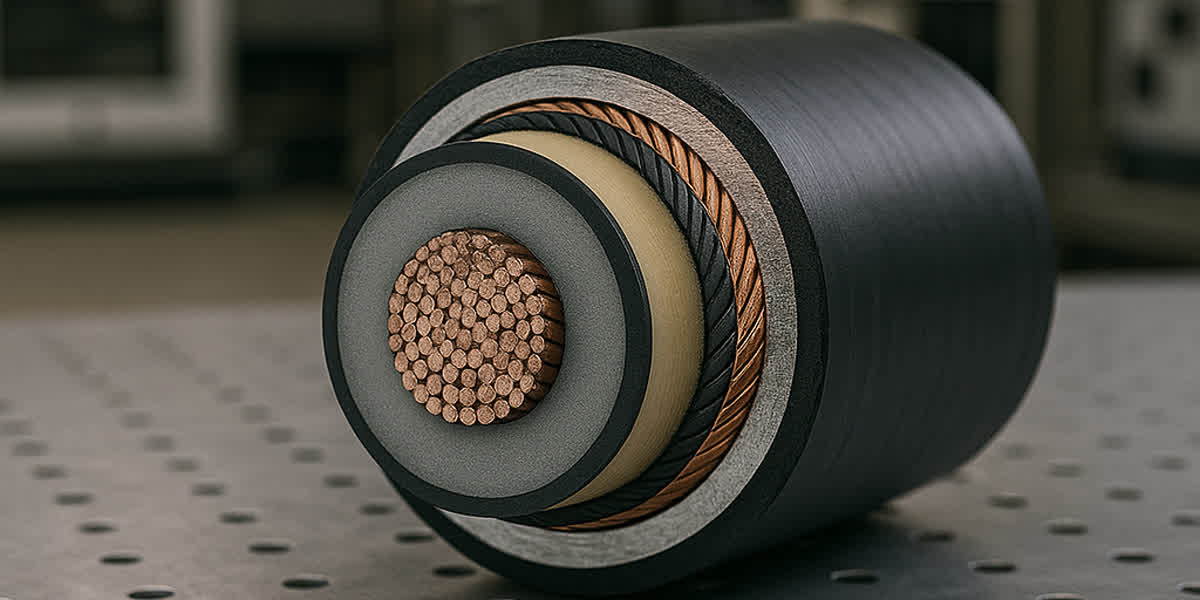
International Cable Standards Comparison: IEC vs ASTM vs BS vs UL — Complete Guide for Engineers & Buyers
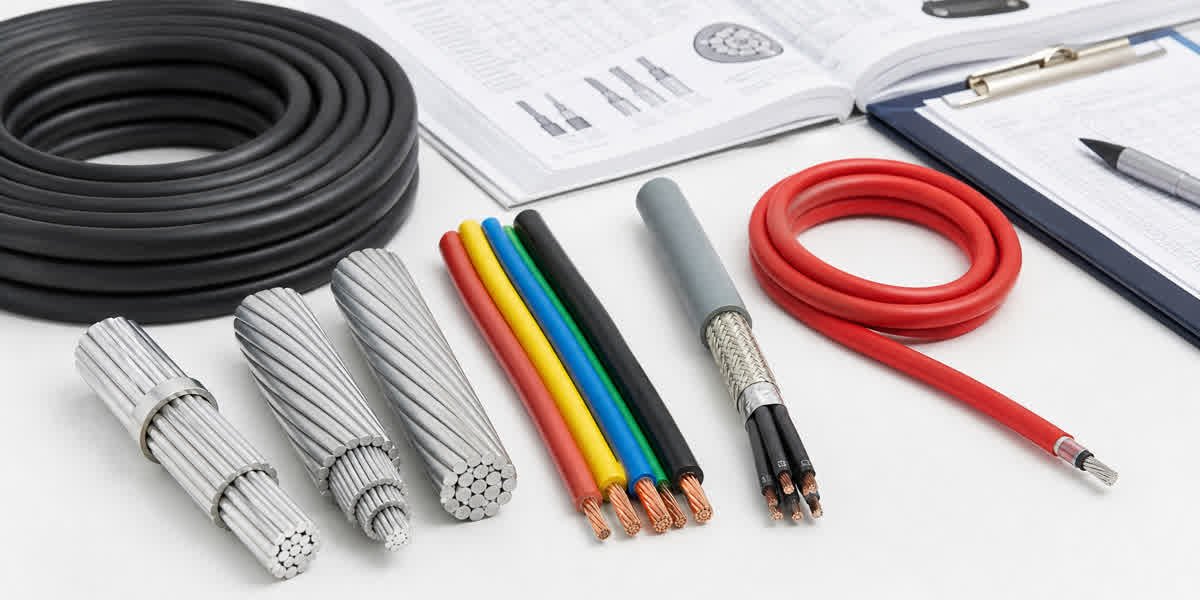
International Cable Standards Comparison: IEC vs ASTM vs BS vs UL — Complete Guide for Engineers & Buyers
Introduction
How to choose the right cable standard: compare IEC, ASTM, BS, and UL specifications for conductors, power, building, solar and control cables.
Cable standards are the language of the global wire and cable industry. A single conductor can be manufactured to IEC, ASTM, BS, or UL specifications — and the differences between them affect material properties, test methods, dimensions, and market acceptance. For procurement engineers, distributors, and EPC contractors, knowing which standard applies to which product and market is not optional: it determines whether your cable passes inspection, earns certification, and performs safely for decades. This guide breaks down the four major standards families, maps them to cable product types, and gives you a practical framework for cross-standard selection.
Key Takeaways
- IEC standards are the global baseline, accepted in 170+ countries and harmonized into European EN standards.
- ASTM standards dominate the Americas for bare overhead conductors (ASTM B231, B232, B399) and are written for North American material and stranding conventions.
- BS standards (BS 215, BS 5467, BS 7870) remain mandatory or highly preferred in the UK, Middle East, Africa, and former Commonwealth markets.
- UL standards (UL 83, UL 44, UL 4703) are the compliance route for the North American market, tied to the NEC and product certification.
- The same cable type can be specified under different standards — the key is matching the standard to the destination market and application.
1. Why Cable Standards Matter
Standards exist for one reason: safety and interoperability. A cable is a safety-critical component. When it fails, the consequences range from nuisance tripping to fires, electrocution, and multi-day grid outages. Standards set the minimum bar for:
- Conductor material — purity of copper (IEC 60228, ASTM B3/B49) and aluminum (IEC 61089, ASTM B233), conductivity requirements (100% IACS for annealed copper, 61% IACS for EC-grade aluminum), and tensile strength.
- Dimensions and tolerances — cross-sectional area, number of wires, stranding geometry, and insulation thickness.
- Electrical performance — DC resistance at 20 °C, voltage rating, and insulation resistance.
- Mechanical properties — tensile strength, elongation, and bend performance.
- Test methods — how samples are prepared, conditioned, and tested so results are repeatable across laboratories.
- Marking and documentation — how the cable is identified on the jacket and in test certificates.
A cable that meets IEC 60502-1 for LV power is not automatically compliant with BS 5467 or UL 1277. Each standard family has its own test regime, and market regulators enforce their local standards at customs and at site inspection. Sourcing the wrong standard is one of the most common (and most expensive) mistakes in international cable procurement.
2. The Big Four Standards Bodies: Overview
| Body | Full Name | Region of Influence | Typical Products Covered | Key Characteristic |
|---|---|---|---|---|
| IEC | International Electrotechnical Commission | Global (170+ countries); harmonized into EN in Europe | All cable types: conductors, power, control, solar | Consensus-based international baseline; EN-harmonized versions are legally binding in EU |
| ASTM | ASTM International (formerly American Society for Testing and Materials) | Americas, global for materials specs | Bare overhead conductors (B-series), copper/aluminum wire | Material-centric, specification-driven; widely referenced in project tenders worldwide |
| BS | British Standards Institution (BSI) | UK, Middle East, Africa, Commonwealth | LV/MV power (BS 5467/6622/6724), ABC (BS 7870), conductors (BS 215), control (BS 5308) | Historical authority in former Commonwealth grids; often mandatory in utility specifications |
| UL | Underwriters Laboratories | North America (USA/Canada) | Building wire (UL 83/44), solar cable (UL 4703), tray cable (UL 1277) | Product certification + safety testing; tied to NEC adoption |
In Europe, IEC standards are adopted as EN standards (e.g., IEC 60502 → EN 60502), then as national standards (BS EN 60502 in the UK, DIN EN 60502 in Germany). This means a harmonized EN standard is functionally an IEC standard with European amendments — and compliance with EN is legally required for CE marking of cable products in the EU.
3. Conductor Standards: AAC, AAAC, ACSR
Bare overhead conductors are the backbone of transmission and distribution networks. Three standards families dominate their specification:
| Standard | Title | Covers | Typical Conductor |
|---|---|---|---|
| IEC 61089 | Round Wire Concentric Lay Overhead Electrical Stranded Conductors | AAC, AAAC, ACSR, ACAR in one unified document | Global projects |
| ASTM B231 | Aluminum Conductors, Concentric-Lay-Stranded | AAC | Americas, global tenders |
| ASTM B232 | Aluminum Conductors, Steel-Reinforced (ACSR) | ACSR | Americas, global tenders |
| ASTM B399 | Concentric-Lay-Stranded Aluminum-Alloy 6201-T81 Conductors | AAAC | Americas, global tenders |
| BS 215 | Specification for Overhead Line Conductors (Parts 1 & 2) | AAC (Part 1), ACSR (Part 2) | UK, Middle East, Africa, Asia |
Key technical differences:
- Material grades: IEC 61089 covers aluminum grades A1 (hard-drawn EC grade, 61% IACS) and A2/A3 (heat-treated alloys), plus steel grades S1A/S1B. ASTM B231 specifies EC-H19 hard-drawn aluminum (1350-H19); ASTM B399 specifies 6201-T81 alloy with a minimum conductivity of 52.5% IACS and a 20% higher tensile strength than EC grade.
- Stranding conventions: Both IEC and ASTM use concentric lay stranding with the same standard configurations (7, 19, 37, 61, 91 wires), but preferred size tables differ — IEC 61089 uses nominal cross-section in mm², ASTM uses AWG/kcmil.
- Steel core for ACSR: ASTM B232 defines galvanized steel core wire to ASTM B498 (Class A/B/C galvanizing); BS 215 Part 2 defines its own core wire grades. IEC 61089 references IEC 60888 (zinc-coated steel wire).
- Testing: IEC 61089 specifies tests per IEC 61232 and IEC 60104; ASTM specifies tests per the relevant B-series standard with its own sampling and retest rules.
Typical equivalence example: ACSR "Hawk" (26/7 stranding) is defined in ASTM B232 with an aluminum area of 477 kcmil (241.7 mm²). The IEC 61089 equivalent is roughly a 242 mm² conductor with 26 aluminum wires and 7 steel wires. When a tender in Dubai specifies BS 215 Part 2 for ACSR, and another in Chile specifies ASTM B232, a manufacturer can produce a compliant product to either — but the certificate, test report, and markings must match the specified standard exactly.
For specification and selection help, see our AAC conductors, ACSR conductors, and AAAC conductors product ranges — all manufactured to IEC 61089, ASTM B231/B232/B399, and BS 215.
4. Power Cable Standards: LV & MV
For low-voltage (0.6/1 kV) and medium-voltage (up to 33 kV) power cables, the standards landscape varies sharply by market:
| Standard | Title | Scope | Market |
|---|---|---|---|
| IEC 60502-1 | Power cables with extruded insulation for rated voltages 1 kV to 3 kV (Part 1: LV) | LV power cables, XLPE/PVC insulated | Global |
| IEC 60502-2 | Power cables 6 kV to 30 kV (Part 2: MV) | MV power cables, XLPE insulated | Global |
| BS 5467 | XLPE-insulated armoured cables for LV/MV (0.6/1 kV and 11/33 kV) | SWA cables | UK, Middle East, Africa |
| BS 6622 | XLPE-insulated armoured cables for 3.3 kV to 33 kV | MV SWA cables | UK, Middle East, Africa |
| BS 6724 | LSZH (low smoke zero halogen) armoured cables | SWA cables, LSZH sheath | UK, EU projects |
| ICEA S-95-658 | Extruded insulation power cables rated above 46 kV (NEMA WC 71) | HV cables | North America |
| UL 1072 | Medium-voltage power cables | MV cables | North America |
Key differences to watch:
- Voltage designation: IEC/BS use U₀/U (e.g., 0.6/1 kV, 8.7/15 kV, 19/33 kV). North American practice uses phase-to-phase voltage only (e.g., 5 kV, 15 kV, 35 kV), and UL 1072 classes cables by 100% and 133% insulation levels.
- Conductor classes: IEC 60228 defines Class 1 (solid), Class 2 (stranded), Class 5 (flexible) conductors with exact resistance limits. North American MV cables typically use compact-stranded copper or aluminum with resistance per ICEA/NEMA tables — compact stranding is the norm, while IEC Class 2 permits both compact and non-compact.
- Armour: BS 5467/6622 specify galvanized steel wire armour (SWA) with exact wire diameters and bedding requirements; IEC 60502-2 permits armour types (wire or tape) but the details differ. UL 1277 tray cables use a different armour/interlocked concept.
- Fire performance: BS 6724 adds LSZH requirements (IEC 60754-1/2 for halogen content, IEC 61034 for smoke density, IEC 60332-3 for flame spread). IEC 60502 alone does not mandate these — they must be specified separately, which is why UK utility specs often demand BS 6724 for public buildings and tunnels.
- Test voltages: MV cable type tests differ — IEC 60502-2 uses 4U₀ AC and lightning impulse tests; UL 1072 uses its own test voltage tables. A cable certified to IEC 60502-2 will not automatically pass a UL 1072 type test, and vice versa.
For LV and MV projects, browse our power cable range (0.6/1 kV to 19/33 kV, XLPE insulated, manufactured to IEC 60502, BS 5467/6622, and ICEA S-95-658) and our control cable range for instrumentation and automation circuits.
5. Building Wire & Electric Wire Standards
Building wire is where UL and NEC dominate — and where cross-standard confusion is most common:
| Standard | Title | Scope | Market |
|---|---|---|---|
| UL 83 | Thermoplastic-Insulated Wires and Cables | THHN, THWN-2, THW building wire | North America |
| UL 44 | Rubber-Insulated Wires and Cables | XHHW, XHHW-2, RHH/RHW | North America |
| NEC Article 310 | Conductors for General Wiring | Ampacity tables, insulation ratings, marking | North America |
| IEC 60227 | PVC-insulated cables (harmonized H07V-K, H05V-K) | Single-core building wire | Europe, global |
| IEC 60228 | Conductors of insulated cables | Conductor classes and resistance | Global |
| BS 6004 | PVC-insulated cables for electric power and lighting | 6491X single-core, 6242Y twin | UK |
Key differences:
- Temperature ratings: THHN is rated 90 °C dry / 75 °C wet; THWN-2 is 90 °C dry and wet. XHHW-2 is 90 °C dry and wet with a cross-linked polyethylene insulation. European H07V-K is rated 70 °C (PVC) with a nominal voltage of 450/750 V, versus 600 V for most UL building wires.
- Conductor sizing: North America uses AWG (14, 12, 10, 8 … 4/0) and kcmil above 4/0; IEC/BS use mm² (1.5, 2.5, 4, 6, 10 …). A 12 AWG conductor is 3.31 mm² — not a standard IEC size. Substituting one for the other requires a resistance-equivalence check, not a size-name match.
- Ampacity basis: NEC Table 310.16 (now 310.15(B)(16)) gives ampacities for 30 °C ambient with correction factors; IEC 60364-5-52 uses installation-method-based current-carrying capacities with different reference conditions. Ampacity values for the same conductor size can differ by 10–20% between the two systems — always use the code of the destination country.
- Marking: UL wire must bear the UL mark, conductor size (AWG), insulation type (e.g., "THHN/THWN-2"), voltage rating, and temperature rating, printed at regular intervals. IEC/BS cables are marked with the harmonized code (e.g., H07V-K) and manufacturer.
For residential, commercial, and solar-adjacent wiring, see our electric wire range (THHN/THWN-2, XHHW-2, and IEC/BS harmonized wires) and our solar cable range for PV systems.
6. Solar (PV) Cable Standards
The solar market has its own fast-moving standards:
| Standard | Title | Scope | Market |
|---|---|---|---|
| EN 50618 | Electric cables for photovoltaic systems | H1Z2Z2-K single-core PV cable, 1.5–35 mm² | Europe (replaced TÜV 2PfG 1169) |
| UL 4703 | Photovoltaic Wire | PV wire, 600 V / 1000 V / 2000 V | North America |
| IEC 62930 | Halogen-free, low-smoke cables for PV (H1Z2Z2-K) | International harmonized PV cable | Global |
Key differences:
- Insulation compound: EN 50618 requires cross-linked (XLPO) or electron-beam cross-linked insulation with 120 °C maximum conductor temperature and 90 °C continuous rating. UL 4703 permits XLPE or EPDM-type insulation and defines its own temperature classes (90 °C, 105 °C, 125 °C, 150 °C).
- Voltage ratings: European PV cables are rated 1.5 kV DC (U₀/U = 0.6/1 kV AC); UL PV wire is rated 600 V, 1000 V, or 2000 V DC.
- Sizing: EN 50618 uses mm² (1.5–35 mm²); UL PV wire uses AWG (18–4/0 typically). A 6 mm² European PV cable is roughly equivalent to a 10 AWG UL PV wire — again, resistance equivalence matters.
- Testing: EN 50618 includes UV resistance (EN 50618:2017 Annex), ozone, and acid resistance tests; UL 4703 requires the UL horizontal flame test and wet insulation resistance tests per UL 44/UL 83 methodology.
7. Control & Instrumentation Cable Standards
For control, instrumentation, and SCADA circuits:
| Standard | Title | Scope | Market |
|---|---|---|---|
| BS 5308 | Instrumentation cables (Parts 1 & 2) | PVC/LSZH insulated, screened instrumentation cables | UK, Middle East, Asia |
| EN 50288 | Multi-element metallic cables (Parts 1–7) | Analog/digital data and control cables, incl. VFD cables | Europe |
| UL 13 | Power-Limited Circuit Cables | CL2, CL3, PLTC instrumentation cables | North America |
| UL 1277 | Type TC tray cables | Industrial control and tray cables | North America |
| IEC 60502-1 | LV power cables (used for power-limited control) | Control cables 0.6/1 kV | Global |
Screening and shield performance — braid coverage, transfer impedance, and termination practice — are covered in detail by BS 5308 Part 2 and EN 50288, which specify screening types and electrical performance values that IEC 60502 does not address for control applications. For PLC, DCS, and VFD circuits, choose the standard that your panel designer and site inspector recognize.
8. How to Read a Cable Designation
Cross-standard reading is a practical skill. Examples:
- IEC 60228 Class 2 — "Class 2" means stranded conductor (not solid, not flexible). A 240 mm² Class 2 aluminum conductor has a maximum DC resistance of 0.125 Ω/km at 20 °C.
- ASTM B232 "Drake" — code word for 795 kcmil 26/7 ACSR: 26 aluminum wires, 7 steel wires, aluminum area 795 kcmil (402.8 mm²).
- BS 5467 "SWA" — steel wire armour; a 4-core 25 mm² 0.6/1 kV XLPE/SWA/PVC cable has defined armour wire diameter (~1.6 mm) and bedding thickness.
- UL 83 "THWN-2" — T=thermoplastic, H=heat-resistant (90 °C), W=wet-rated, N=nylon jacket, 2=dual-rated 90 °C wet/dry.
Always check the resistance and ampacity tables of the destination standard — the name is a label, the numbers are the specification.
9. How to Choose the Right Standard for Your Market
| Destination / Project | Recommended Standard | Why |
|---|---|---|
| EU/Europe | EN (harmonized IEC): EN 60502, EN 50618 | CE marking requires EN compliance; harmonized standards are legally binding |
| USA/Canada | UL 83/44/4703/1277 + NEC | NEC adoption makes UL-listed wire mandatory for building occupancy |
| UK, Middle East, Africa | BS 215, BS 5467/6622/6724, BS 7870, BS 5308 | Utility specifications historically reference BS; LSZH often required |
| Latin America | IEC 61089 (conductors), IEC 60502 (power) + local annexes | IEC baseline with country-specific annexes (e.g., ABNT in Brazil) |
| Asia (SEA, South Asia) | IEC 60502, IEC 61089, BS where specified | Mix of IEC and BS in utility tenders; always read the tender spec |
| Global/export projects | IEC as baseline, ASTM/BS by tender | IEC gives widest acceptance; tender wins with the specified family |
FAQ
Q1: Is IEC 60502 equivalent to BS 5467? A1: No — they are related but not interchangeable. IEC 60502-1 covers LV power cables up to 3 kV; BS 5467 covers XLPE-insulated armoured cables at 0.6/1 kV and 11/33 kV with specific armour wire, bedding, and LSZH options. A cable built to IEC 60502 will not automatically meet BS 5467's armour and fire requirements. Check the tender specification's exact standard and clause references.
Q2: What is the difference between ASTM B231, B232, and B399? A2: ASTM B231 covers all-aluminum conductors (AAC, 1350-H19). ASTM B232 covers aluminum conductors with steel reinforcement (ACSR). ASTM B399 covers 6201-T81 aluminum-alloy conductors (AAAC), which offer roughly 20% higher tensile strength than EC-grade aluminum at 52.5% IACS conductivity. IEC 61089 covers all three types in one document.
Q3: Can a cable certified to IEC be used in the USA? A3: Generally no for building wire and tray cable — the US market requires UL-listed products under the NEC, and UL certification involves its own construction and test requirements (UL 83, UL 44, UL 1277). For bare overhead conductors, ASTM specifications are the norm, though some utilities accept IEC equivalents by mutual agreement. Always confirm with the authority having jurisdiction (AHJ).
Q4: Is THHN the same as H07V-K? A4: No. THHN (UL 83) is a 600 V, 90 °C dry/75 °C wet thermoplastic wire with a nylon jacket, sized in AWG. H07V-K (IEC 60227) is a 450/750 V, 70 °C flexible PVC single-core wire sized in mm². They are used in different markets with different ampacity tables, and cannot be substituted without re-engineering the circuit.
Q5: Why do BS 5467 and IEC 60502 give different test voltages for MV cables? A5: The two standards use different test regimes. IEC 60502-2 type-tests MV cables at 4U₀ AC with a lightning impulse test at specified peak values (e.g., 95 kV for 8.7/15 kV cable). BS 6622/5467 MV tests follow a similar but not identical matrix, and UL 1072 uses its own voltage classes. Because test voltage, duration, and pass criteria differ, certification under one standard does not guarantee compliance with another.
Conclusion
Choosing the right cable standard is a market-entry decision, not a paperwork detail. IEC gives you the widest global acceptance and is the backbone of European harmonized standards. ASTM defines the material and stranding world of bare conductors in the Americas and in tenders worldwide. BS remains the reference for the UK, Middle East, and Commonwealth utility networks, with its distinctive armoured and LSZH requirements. UL is the non-negotiable route into North America.
When you specify a cable, name the standard explicitly — including the part number and year where relevant (e.g., IEC 60502-1:2021, ASTM B232/B232M-21, BS 5467:2016). This removes ambiguity, speeds up inspection, and protects you from substitution claims.
Need a cable manufactured to a specific standard? Contact our engineers for a specification review and quotation — we supply AAC, ACSR, AAAC, ACAR, power, control, solar, and OPGW cables to IEC, ASTM, BS, and UL standards with full test certificates. Contact us for a free consultation.
This guide is for general technical reference. Always verify the latest edition of the applicable standard and local regulatory requirements before procurement.